
Table of Contents
Not every pipe that carries water is meant to carry drinking water. The line running to your kitchen tap, overhead tank, or a hospital ward sees daily contact with water people actually consume, making pipe selection a safety decision rather than a plumbing afterthought.
Understanding why potable water pipes matter starts with recognising three things that decide whether a pipe is fit for the job: material quality, the application it’s rated for, and whether it carries relevant certification confirming both.
Get even one of these wrong, and even a leak-free installation can still compromise water safety. This guide covers what certified pipes are, why certification matters, and how to choose correctly.
Key Takeaways
- Potable water pipes must be manufactured and certified specifically for drinking-water contact, not general plumbing use.
- Certification confirms material safety and manufacturing quality, though installation still affects final water quality.
- Material grade, wall thickness, and pressure rating all influence whether a pipe stays safe over time.
- Using uncertified or improperly installed pipe increases contamination risk, even when the plumbing looks correctly installed.
- Matching the pipe to its intended use, hot, cold, or pressure line, matters as much as certification itself.
What Are Certified Potable Water Pipes?
Potable water pipes are pipes specifically manufactured and tested for carrying water intended for human consumption, cooking, and daily household use. Not every plastic or metal pipe on the market can claim that. A certified drinking water pipe gets checked against material, safety, and performance requirements built for that exact use.
Certification usually comes down to a few core areas:
- Material composition: the compound has to be food-grade, with nothing in it that could leach into the water at unsafe levels.
- Manufacturing consistency: dimensions, wall thickness, and pressure tolerance all get tested against whatever standard applies to that pipe type.
- Marking and traceability: a certified pipe carries this information printed right on the body, including the standard number, size, pressure class, and manufacturer or licence details.
Potable water pipe certification isn’t a single universal stamp. Different materials, such as CPVC, UPVC, HDPE, and others, are assessed under their own specific standards, since each has different chemical and thermal behaviour.
So checking the actual print on a pipe matters more than trusting a general product description. A pipe without visible, verifiable markings shouldn’t be assumed suitable for drinking water, regardless of how it’s marketed.
Why Is Certification Important for Drinking Water Pipes?
Buyers and installers can’t just take a manufacturer’s word for it that a pipe is safe for drinking water. That’s what certification is for. It gives them something documented to point to instead. In India, this falls under the Bureau of Indian Standards, which lays out potable water standards in India covering:
- Material composition
- Dimensional accuracy
- Pressure testing
- How much lead, cadmium, and similar substances a pipe is allowed to contain
So what does a certified pipe actually guarantee? All of these below.
- It’s built for the job: the pipe is meant for potable-water contact from the start. It hasn’t been repurposed from something designed for drainage or industrial use.
- The material doesn’t work against you: compliance here means the extractable substances that could leach into water sitting in the pipe or flowing through it stay within safe limits, and this has actually been checked, not assumed.
- The manufacturing holds up: wall thickness stays consistent, and pressure performance is tested against set benchmarks rather than taken on faith.
It’s worth being clear about what potable water pipe certification does not guarantee.
It confirms the pipe itself meets its material and manufacturing standard.
But, it doesn’t account for poor installation, incompatible fittings, or contamination introduced elsewhere in the plumbing system.
Certification is a necessary condition for safe water delivery, not a complete one on its own; the rest of the system still needs to be built and maintained correctly for that assurance to carry through to the tap.
What Are the Benefits of Using Certified Potable Water Pipes?
Choosing certified potable water pipes over generic or uncertified alternatives affects far more than compliance paperwork. The practical benefits show up across daily use and long-term performance.
| Benefit | What It Means in Practice |
| Suitability for drinking water | The material has been tested and confirmed safe for direct contact with water |
| Reliable plumbing performance | A consistent pressure rating means fewer bursts and joint failures over time |
| Durability | Holds up against hard water, UV exposure, and the daily cycling of pressure |
| Corrosion resistance | Being plastic-based, these pipes don’t rust or scale the way metal lines do |
| Compliance | Backed by documented Indian Standards, which makes inspections and approvals more straightforward |
| Reduced contamination risk | Cuts down the chances of unsuitable materials leaching into the water being stored |
A safe pipe for drinking water doesn’t just pass a one-time test. It’s engineered to hold its properties over:
- Years of continuous use
- Temperature swings
- Pressure changes
- General wear any plumbing system experiences
Choosing uncertified piping to save on upfront cost often shifts that cost downstream, into repairs or water quality issues that are harder to trace back to their source.
The gap between certified and uncertified piping tends to widen with time rather than stay fixed. A pressure test passed on day one doesn’t confirm how a pipe behaves after years of hard water and repeated pressure cycling. Certification testing is built to account for these long-term conditions.
How Do Certified Pipes Help Protect Drinking Water Quality?
Pipe selection is one link in a longer chain that determines what actually reaches your tap. A safe pipe for drinking water contributes to that chain in a few concrete ways:
- Material
Food-grade compounds used in certified pipes are formulated to resist leaching, biofilm growth, and chemical interaction with the water they carry, unlike lower-grade or recycled plastics sometimes used in uncertified alternatives.
- Manufacturing controls
Consistent wall thickness and smooth internal bore surfaces, verified during certification testing. The result? Reduction in rough patches and micro-gaps where bacteria and sediment can accumulate over time. A certified drinking water pipe is tested for this kind of long-term internal cleanliness, not just initial water tightness.
- Installation
Even a fully certified pipe can introduce contamination risk if joints are poorly sealed, incompatible fittings are used, or the pipe is damaged during fitting.
Pipe selection is genuinely one part of overall water safety, not the whole of it. Certification narrows the risk at the material level, while proper installation and system maintenance carry that protection through to the point of use.
What Should You Consider When Choosing Potable Water Pipes?
Knowing how to choose drinking water pipes comes down to weighing several factors together, not just going by price. Here are the core things to consider for potable water pipes:
- Intended application: Whether the line is for hot, cold, or general pressure supply, since each calls for different material properties.
- Certification and standards: Verify if the pipe is rated for potable use under the relevant Indian Standard.
- Pipe material: CPVC works for hot lines, UPVC suits cold supply, and HDPE is meant for buried runs.
- Size and pressure rating: This should match your building’s water pressure and expected flow.
- Water temperature: Hot water lines need materials rated above the water’s actual temperature.
- Fittings compatibility: Mismatched pipe and fitting materials are one of the most common causes of failure.
- Installation method: Solvent-weld, threaded, or fusion joints suit different pipe types.
Check Certification and Product Markings
Before buying, review the pipe itself, not just the packaging. Learning how to identify potable water pipes starts with checking for printed markings:
- The standard number
- Size
- Pressure class,
- Manufacturer details
You can verify genuine potable water pipe certification this way; a pipe with no visible markings, or markings that don’t match its material’s standard, shouldn’t even be in the buying conversation.
Consider the Plumbing Application
The right pipe also depends on where it’s going. A safe plumbing pipe for home use covering a kitchen or bathroom line has different requirements from one feeding an outdoor irrigation run. Matching the pipe to its approved application, rather than assuming one pipe suits every job, keeps a plumbing system performing as intended.
Also Read: Home Plumbing Pipes: A Guide to Types and How to Choose the Right One
Where Can Potable Water Pipes Be Used?
Potable water pipes serve a wide range of settings, always according to each product’s individual specifications and certifications rather than a blanket assumption that any certified pipe suits every scenario.
- Residential: Kitchen and bathroom supply lines, overhead tank connections, and terrace plumbing runs, where a safe plumbing pipe for home use is essential for daily drinking and cooking water needs.
- Commercial: Hotels, offices, and retail spaces, where consistent water pressure and compliance documentation matter for both day-to-day safety and periodic inspection purposes.
- Institutional: Hospitals, schools, and hostels, where reliable, contamination-resistant supply lines serve large numbers of people daily without interruption.
Household plumbing remains the most common context where this certification matters, simply because it’s where certified material quality has the most direct, daily impact on the people using it.
In short, it doesn’t matter what the setting is; the underlying principle stays the same: match the certified pipe to its documented application, and verify that certification before installation rather than after a problem appears.
Sintex Potable Water Pipes: Features and Applications
Sintex manufactures a defined range of certified drinking water pipes built for Indian water conditions, including hard water, high summer temperatures, and variable daily pressure. Within our range, two product lines are specifically positioned for potable-water use:
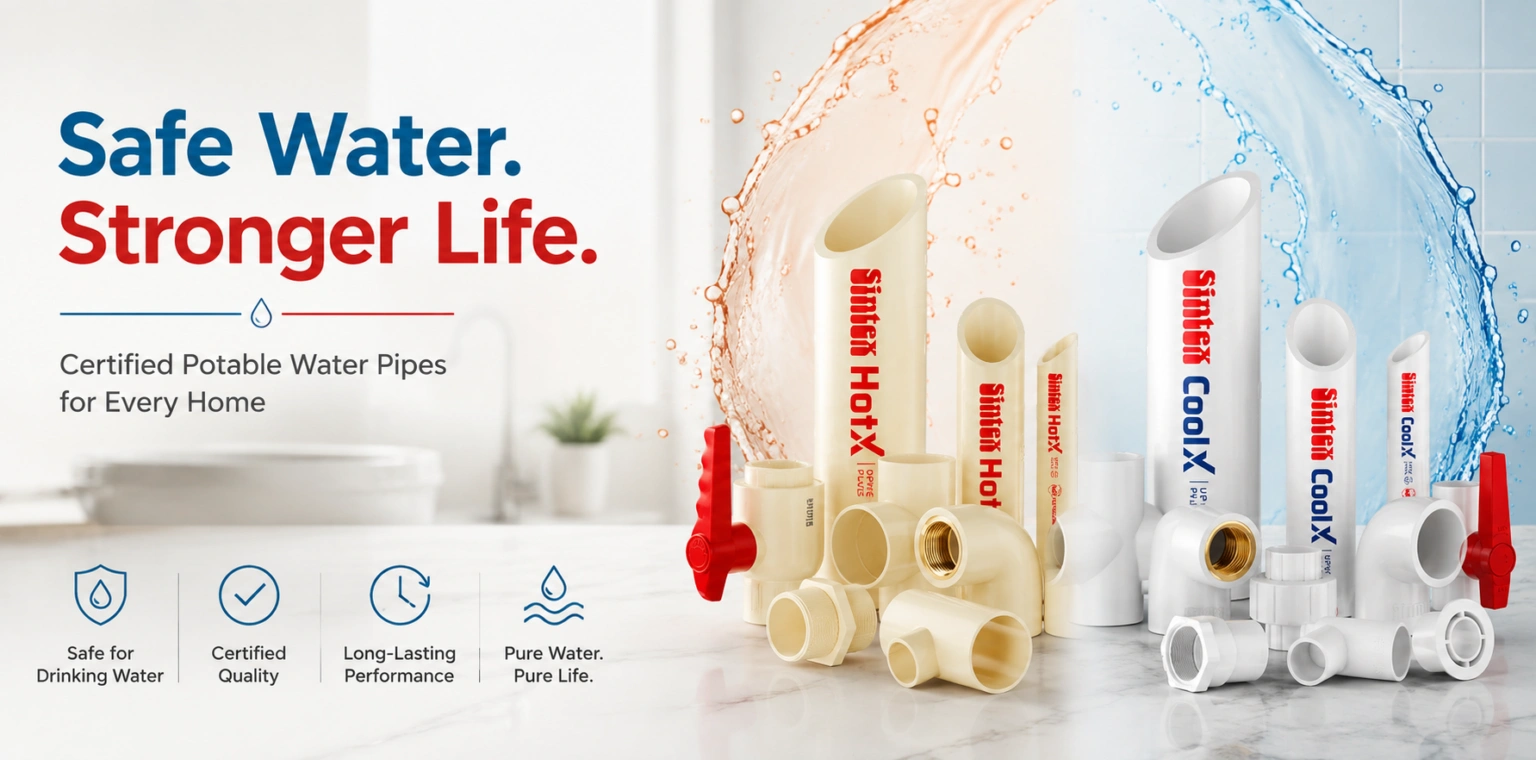
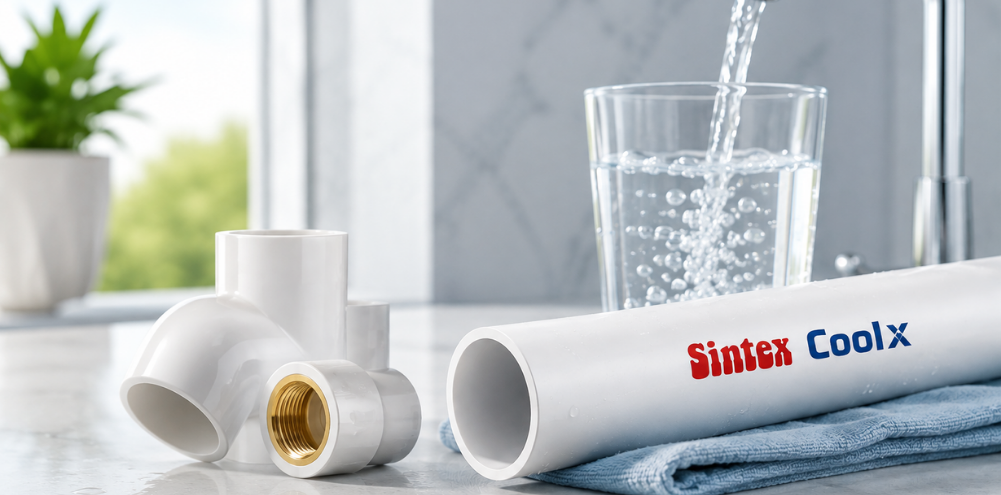
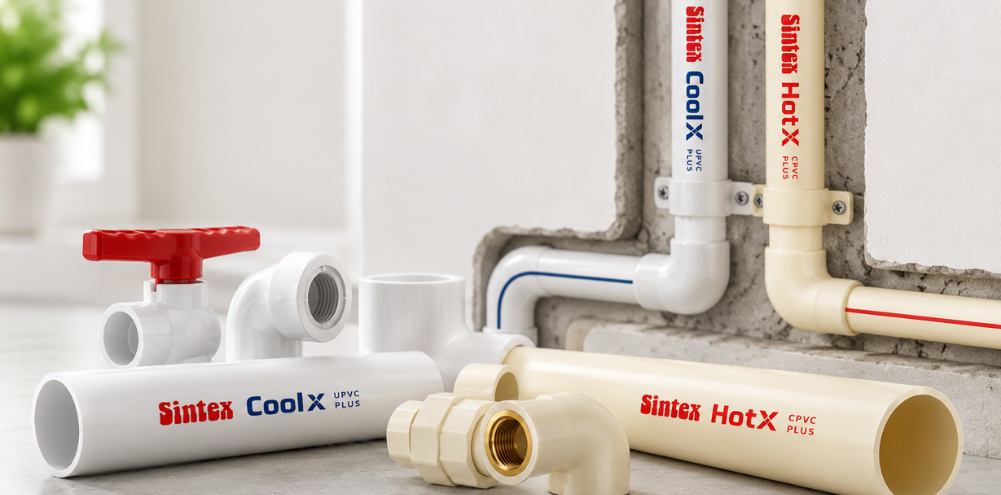
- Sintex CoolX UPVC Plus: a UPVC pipe manufactured to IS 4985 for cold water supply, built with antimicrobial protection inside the bore and rated for potable use in homes and commercial buildings.
- Sintex HotX CPVC Plus: a CPVC pipe manufactured to IS 15778 for hot and cold water supply, carrying the same antimicrobial protection and rated to handle continuous hot-water service without softening.
Both are made using virgin, food-grade compounds and carry ISI and BIS certification against their respective Indian Standards, with markings printed directly on the pipe body for verification.
We also manufacture other pipe ranges, including AgriX for irrigation and UltraX OPVC for high-pressure distribution, though these serve different applications and shouldn’t be assumed interchangeable with the certified drinking-water lines.
For any specific project, checking the certification and application listed for that exact product remains the reliable way to confirm suitability, rather than assuming brand-wide coverage.
How Do Sintex Pipes Support Safe and Reliable Water Supply?
A safe pipe for drinking water depends on more than a single certification stamp; it depends on consistent manufacturing and material choices carried through the entire product line:
- Material
Sintex’s CoolX UPVC Plus and HotX CPVC Plus pipes are built from virgin food-grade compounds rather than recycled material, which reduces the risk of extractable contaminants reaching stored or flowing water.
- Antimicrobial protection
Both ranges include protection formulated into the pipe bore itself, intended to inhibit bacterial, fungal, and algal growth between routine cleanings rather than relying on water treatment alone.
- Manufacturing standard
Production is carried out against the applicable Indian Standard for each material, IS 4985 for UPVC cold-water pipe and IS 15778 for CPVC hot-and-cold pipe, which sets the framework for potable water standards in India that these products are assessed against.
- Fitting compatibility
Sintex pairs its pipes with a matched fittings range, including solvent-weld and brass-insert options, since mismatched pipe and fitting materials are a common cause of joint failure, regardless of how well-certified the pipe itself is.
How to Choose the Right Sintex Pipe for Your Water Supply Needs?
Knowing how to choose drinking water pipes from Sintex’s range starts with identifying your actual application rather than picking by price alone.
| Your Need | Consider | Why |
| Hot water supply (geysers, kitchens) | Sintex HotX CPVC Plus | Rated for continuous hot-water service under IS 15778 |
| Cold water supply (bathrooms, taps) | Sintex CoolX UPVC Plus | Antimicrobial, certified to IS 4985 for potable use |
| High water pressure or multi-storey runs | Confirm pressure class (SDR/PN rating) | Matches pipe strength to your building’s actual head pressure |
| Irrigation or borewell lines | Sintex AgriX (non-potable duty) | Built for field conditions, not intended for drinking supply |
Beyond matching application to product line, a few practical checks help confirm suitability:
- Water temperature the line will actually carry, since hot lines need CPVC-grade heat tolerance.
- Expected pressure at that point in the building, checked against the pipe’s rated pressure class.
- Pipe diameter for the flow required at that fixture or riser.
- Fittings compatibility with whatever is already installed on site.
Learning how to identify potable water pipes correctly also means reading the specification sheet for the exact product rather than assuming an entire range shares identical certification.
For this reason, Sintex publishes product-specific documentation, and checking it before purchase is the most reliable way to confirm a pipe’s suitability for your particular water supply needs.
Yes. Sintex's CoolX UPVC Plus and HotX CPVC Plus pipes carry potable water pipe certification against IS 4985 and IS 15778, respectively, with ISI and BIS marks printed on the pipe body. Certification applies to these specific product lines, not the entire Sintex pipe range.
Sintex's potable water pipes comply with the relevant potable water standards in India set by the Bureau of Indian Standards, specifically IS 4985 for UPVC cold-water pipe and IS 15778 for CPVC hot-and-cold pipe. These pipes carry markings confirming the applicable standard directly on the pipe body.
Sintex’s CoolX and HotX ranges use virgin food-grade compounds and are manufactured against their respective Indian Standards. Both ranges also carry antimicrobial protection integrated throughout the pipe material, not just on the inner surface, so the protection covers the entire pipe structure over its service life. Together, these make them a safe choice for drinking water in both residential and commercial plumbing systems.
CoolX UPVC Plus and HotX CPVC Plus are Sintex's certified drinking water pipe lines, rated for cold and hot water supply respectively. Other ranges serve different duties and are not intended for potable water: ReclaimX handles greywater and reclaimed water, AgriX is built for irrigation, and UltraX OPVC covers high-pressure distribution.
Sintex's certified potable water pipes are designed for residential kitchen and bathroom supply, overhead tank connections, and commercial hot and cold water plumbing. Product documentation for each range confirms the exact intended application, application limits, and pressure rating before installation begins.
Learning how to choose drinking water pipes starts with checking whether it's for hot or cold water, since that changes the material and grade you need. From there, check the pressure rating and diameter your building requires in Sintex's product-specific documentation. Make sure the fittings you plan to use are actually compatible.
Sintex publishes product-specific documentation covering material, standard compliance, and application for each pipe range. To find out how to identify potable water pipes suited to your project, check the official literature directly rather than relying on general product descriptions or third-party listings.