

Why CPVC Pipes Are the Best Choice for Hot & Cold Water Supply
Share
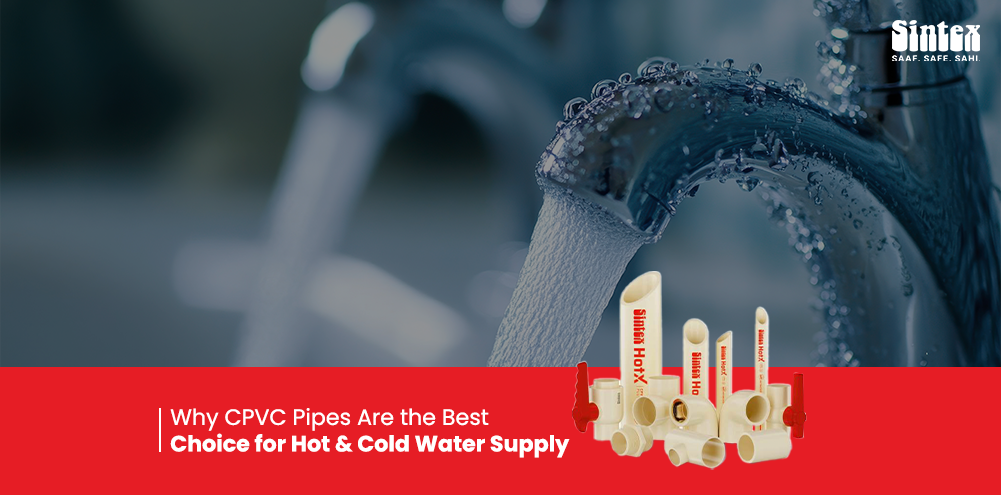
Table of Contents
A CPVC pipe is a chlorinated polyvinyl chloride pipe, a plastic supply line built to carry water at temperatures up to about 93°C. That heat rating is the whole reason it matters, and it is why CPVC has become the default for hot and cold water plumbing in homes, hotels, and hospitals. If you are weighing up whether CPVC is the right pipe for your hot and cold lines, this guide starts with what it actually is and why it suits the job. After that comes how it goes in, and how it measures up against UPVC.
Pick the wrong material and the cost shows up later, as a softened pipe, a cracked joint, or water you would rather not drink. A Hot CPVC Pipes line is built to take the heat and the pressure that ordinary plastic pipes cannot. The sections below explain why, without the sales pitch.
Key Takeaways
- CPVC pipes are rated to carry water up to 93°C, making them the right choice for hot water lines where ordinary plastic fails.
- Unlike metal pipes, CPVC does not corrode or scale, so the water stays clean and the flow stays strong over time.
- CPVC is certified safe for drinking water, covering both hot and cold supply in homes, hotels, and hospitals.
- Solvent-welded joints mean no blowtorch, no flame, and a faster install compared to metal alternatives.
- UPVC works fine for cold-only lines, but the moment hot water enters the picture, CPVC is the one built for it.
- Installed correctly and kept within its pressure and temperature limits, a CPVC line can last 50 years or more.
What Are CPVC Pipes?
CPVC starts life as ordinary PVC. The difference is an extra chlorination step that lifts the chlorine content and, with it, the temperature the pipe can take. Regular plastic pipe gives up somewhere around 60°C. CPVC keeps going to roughly 93°C, which is hot enough for a geyser line, a kitchen tap, or a continuous industrial hot water feed.
There is more to it than heat, though. CPVC is certified for potable water, so it carries drinking water without leaching anything nasty into the supply. Put a CPVC line in and you are not just moving water from one room to another. You are putting in something that stays safe to drink from for years.
Why Choosing the Right Pipe Matters?
The pipe is the part of a building nobody sees and everybody depends on. Get it wrong and the failures are not subtle. A weak or low-grade pipe rusts. It springs leaks. Under real pressure and heat it can split outright, usually inside a wall, where you find out far too late.
That is why so many homeowners, plumbers, and builders have moved over to CPVC for their hot and cold lines. It holds up over the long run. It behaves the same from one length to the next. And it takes hot and cold supply in its stride without trading away safety to do it.
What are the Benefits of Using CPVC Pipes for Hot and Cold Water?
The case for a cpvc pipe for hot and cold water comes down to a handful of things it does better than the alternatives. Here is where it earns its keep.
1) Thermal Resistance
This is the headline. A CPVC line carries water at 93°C without softening, warping, or losing its pressure rating. Plain plastic pipe cannot. Run hot water through the wrong plastic and it sags, deforms at the joints, and eventually gives out. CPVC was made for the heat, so the hot supply is exactly where it belongs.
2) Corrosion-Free
Metal pipe rusts and scales over the years. CPVC does not corrode at all, no matter how long water sits against it. No rust means no brown tinge in the first draw of the morning, and no metallic taste working its way into the supply. The bore stays clean, so the flow holds up instead of slowly choking on scale.
3) Long Service Life
Because nothing corrodes it and chlorine does not break it down, a CPVC line keeps performing for decades. There is none of the patch, replace, patch again cycle you get with pipe that degrades early. Fit it properly and it tends to outlast the renovation that put it in.
4) Easy Installation
CPVC joints are solvent welded, not soldered or threaded onto metal. No blowtorch, no flame, no hot work near finished surfaces. A clean cut, the right cement, a firm push, and the joint is made. That keeps the install quick and the labour cost down.
Sintex HotX CPVC Plus adds an NXT anti-microbial layer on top of all that, holding up under high pressure and temperatures to 93°C while keeping the water on the safe side.
CPVC vs UPVC Pipes: Key Differences
A lot of buyers get stuck on one question: CPVC or UPVC? The short answer is in the table.
| Feature | CPVC Pipes | UPVC Pipes |
| Temperature tolerance | Up to ~93°C | Up to ~60°C |
| Best use | Hot and cold water supply | Cold water supply |
| Flexibility | More flexible, less brittle | Rigid and less forgiving |
| Value | Strong long-term value on hot lines | Economical where only cold water runs |
| Safety | Certified for potable hot and cold water | Safe for cold water only |
Put the two side by side and the call makes itself. The moment hot water is in the picture, CPVC is the one rated to handle it. UPVC stays on the cold lines, where it does perfectly well.
Also, Read: What Are CPVC Pipes?
How to Install CPVC Pipes
A CPVC pipe installation is well within reach of a careful hand, as long as the steps run in order and nothing gets rushed. Here is the overview.
- Measure and cut. Cut the pipe square with a wheel cutter or a fine-tooth saw, then deburr the edge inside and out. A ragged or angled cut is the first thing that ruins a joint.
- Prep and apply solvent cement. Wipe the pipe end and the fitting socket clean and dry. Apply CPVC-grade solvent cement, the kind made for CPVC and nothing else, to both surfaces. PVC cement will not bond it.
- Make the joint. Push the pipe fully home into the socket, give it a quarter turn to spread the cement, and hold it there for a few seconds so it does not creep back out. A small bead of cement around the rim tells you the coverage was right.
- Let it cure. This is the step people skip and regret. The joint needs its curing time before it sees any pressure, and that time stretches in cold or humid weather. Go by the cement maker’s set and cure figures rather than guessing.
- Seal threads and pressure test. Where the line meets a threaded metal fitting, wrap the male thread with PTFE tape to seal it. Once everything has cured, run a pressure test to the system’s rating and walk the whole run looking for weeps before you close anything into a wall.
Real-Life Uses of Sintex HotX CPVC Plus
Where does all of this actually end up? In a home, it runs the bathroom and kitchen hot lines and ties into the overhead tank, anywhere hot and cold get used side by side day after day. Hotels and hospitals lean on it harder, since they need hot water running more or less constantly for bathing, kitchens, and cleaning. On the industrial side, factories moving hot fluid around choose CPVC because it holds up to the temperature without complaint.
CPVC Pipes & Fittings That Make a Difference
A pipe run is only as good as what holds it together. Good CPVC connectors and brass fittings are cut to grip high torque and take the pressure without backing off, which is what keeps a system from springing a leak under stress. It counts double in multi-storey buildings, where the water pressure further down the stack runs naturally higher.
Final Thoughts
The choice between CPVC and UPVC really comes down to one question: is there hot water in the line? If there is, CPVC is the pipe rated to carry it safely for the long haul. If the run is cold only, UPVC does the job for less.
For a new home or a commercial project, CPVC covers the hot and cold supply. It takes the heat, it is certified safe for drinking water, and it lasts. Pair it with the right fittings and a careful install, and you are left with a water system you can leave alone and trust for years.
Because it is rated for the temperature and most plastics are not. CPVC carries water up to about 93°C without softening or shedding its pressure rating, which is exactly what a hot supply line throws at it. UPVC and ordinary PVC start to give way well before that, so they stay on the cold side.
For the supply lines running to and from a domestic geyser or water heater, yes, CPVC is a standard and safe choice within its 93°C rating. What it cannot do is sit right against an open flame or a heating element. Keep CPVC to the pipework, and leave the heater's own high-temperature connections to the parts built for that heat.
Around 93°C at the top end, which covers normal domestic and most commercial hot water. Push it past that, especially under pressure, and you are outside what the material is rated for. For anything running hotter than that on a sustained basis, the spec moves to metal.
Installed properly and kept within their pressure and temperature limits, CPVC lines commonly run 50 years or more. What shortens them is long UV exposure with no protection, or constant running right at the top of the heat range. Kept indoors or insulated, they go the distance.
Categories
Year
Related blogs