
Table of Contents
Water tank colours can influence how much solar heat the outer surface absorbs and how much light reaches the stored water. Darker surfaces generally absorb more solar energy, while lighter ones reflect more. Algae growth is also affected by light, suitable temperatures, nutrients, and water conditions. The tank’s opacity, number of layers, UV protection, placement, and maintenance all shape the final result. So when choosing a tank for home use, colour deserves attention, but it should be assessed together with construction, exposure to sunlight, and how the tank will be maintained.
Key Takeaways
- Light water tank colours can help reduce solar heat absorption in exposed locations.
- Tank opacity is important for limiting sunlight penetration into stored water.
- Colour alone does not determine whether algae will grow inside a tank.
- Sunlight exposure, cleaning, and construction should also be kept in mind when choosing a tank.
Does the Colour of a Water Tank Affect Water Temperature?
Yes, the colour of a tank can influence heat absorption because darker surfaces generally absorb more incoming solar radiation, while lighter surfaces reflect more of it. That can make the outer wall of a dark tank warmer when both tanks receive the same amount of direct sunlight.
The effect on stored-water temperature is less straightforward. Heat still has to move through the tank wall and into the water. The final temperature depends on several factors:
- Hours of direct sunlight
- Tank volume
- Wall thickness and material
- Exterior colour
- Insulation
- Shade and airflow
- Ambient temperature
- Water turnover
A light-coloured tank on an exposed rooftop may absorb less solar heat than a similar dark tank, but poor insulation or long hours of direct sun can still raise the water temperature. Likewise, a dark tank placed in shade may stay cooler than a light tank exposed to intense afternoon sun.
The tank’s orientation and the time of day also matter because rooftop surfaces can receive intense afternoon radiation. Heat absorption is therefore useful as one buying criterion, especially in hot climates, but the tank’s location and construction influence the result as well.
Does a Dark-Coloured Water Tank Absorb More Heat?
Yes, dark-coloured tanks generally absorb more heat and radiation from sunlight than a lighter-coloured tank. Black colour and other dark surfaces have lower reflectivity, so more incoming solar energy is absorbed by the outer wall.
This does not create one fixed increase in water temperature. The amount of heat that reaches the stored water depends on how long the tank stays in direct sun, how thick the wall is, whether any insulating layer is present, the tank’s total water volume, and how often fresh water enters.
For a rooftop tank exposed for many hours each day, lighter exterior colours can help reduce heat absorption and solar heat gain. The wall still needs to remain opaque enough to stop sunlight from reaching the water inside.
When comparing tank colours, check both the exterior finish and the complete wall construction instead of judging the tank by colour alone.
Does a Triple-Layer Water Tank Help Keep Water Cooler?
The main advantage of a triple-layer water tank is the ability to assign different functions across the wall structure. Buyers should check these functions rather than relying on layer count as a performance measure.
- Inner layer: Food-grade material forms the surface in contact with stored water.
- Middle layer: Opaque material limits the amount of light entering through the tank wall.
- Outer layer: UV protection helps the exterior material withstand prolonged sunlight exposure.
Together, these layers can support safe storage, light control, and outdoor durability. Each function remains distinct, particularly the difference between blocking light and protecting the tank material from UV exposure. Neither feature provides the same thermal effect as a dedicated insulating layer.
Some insulated tanks use polyurethane foam between structural layers to reduce temperature variation. An opaque layer can support algae control by limiting light, while insulation has the more direct role in slowing heat movement into or out of the stored water. Sintex Pure Plus, for example, uses triple-layer construction with a food-grade inner layer, black light-blocking middle layer, and UV-protected outer layer. When comparing tanks, ask what each layer is designed to do rather than choosing by layer count or water tank colours alone.
Also Read: Water Tank Layers: Do They Actually Matter? A Sintex Guide

Can Sunlight Increase Algae Growth in a Water Tank?
Yes, sunlight exposure can increase the chance of algae growth. Algae use light for photosynthesis along with nutrients such as nitrogen and phosphorus to grow. With the right water temperature and storage conditions, algae can develop very quickly.
For a household tank, a practical concern is around how much light reaches the stored water. A covered, opaque tank limits the amount of sunlight reaching stored water, reducing one of the conditions that supports algae growth.
When carrying out water tank maintenance:
- Keep the lid closed and secure
- Use an opaque tank body
- Check vents, fittings, and other openings
- Reduce direct sunlight exposure where practical
- Remove sediment and deposits during cleaning
- Avoid long periods of water stagnation
Keeping the tank dark, covered, clean, and regularly maintained helps create less favourable conditions for algae growth.
Does Tank Colour Affect Algae Growth?
Tank colour can affect algae growth indirectly through heat and light absorption. The exterior colour may influence how warm the tank surface becomes, while the wall’s opacity determines how much light reaches the stored water.
These two effects should be considered separately. A black, opaque tank can absorb more solar heat while allowing very little light through the wall. A light-coloured tank can absorb less heat and still control algae effectively when its construction includes an opaque layer.
Water tank colours therefore provide only part of the picture. Algae growth also depends on:
- Direct sunlight exposure
- Tank opacity
- Nutrients in the water
- Water temperature
- Stagnation
- Lid security
- Sediment and cleanliness
- Maintenance frequency
A pale tank with a translucent wall may allow more light inside than a light-coloured multi-layer tank designed to block it. Similarly, a black tank in full sun may run warmer than a shaded tank.
For algae control, check opacity and light blocking first, then consider exterior colour as part of heat management. The lid and openings also deserve attention because light can enter from above even when the tank wall itself is opaque.
Which Water Tank Colour Helps Prevent Algae Growth?
No single exterior colour can guarantee algae prevention. The more useful feature is opacity, because algae need light for photosynthesis. A tank wall that blocks visible light helps keep the stored water dark and reduces one condition that supports growth.
Black pigmentation is effective at restricting light penetration, which is one reason black has long been common for outdoor water tank colours. Modern multi-layer tanks can achieve the same light-blocking function with an opaque middle layer while using a lighter exterior colour.
Beyond colour and opacity concerns for algae control, also check that the lid closes securely and the tank does not have any exposed openings where light can enter from. Place it in an area that minimises the amount of direct sunlight the tank receives, preferably under some shade.
Which Water Tank Colour Is Best for Hot Climates?
Where rooftop tanks receive prolonged direct sunlight, lighter water tank colours can help reduce solar heat absorption. Darker surfaces tend to absorb more incoming radiation, although actual water temperature depends on more than exterior colour. Other features to check include:
- Opaque construction to limit light penetration
- UV protection for prolonged outdoor exposure
- A secure lid and other openings
- Tank placement and available shade
- Suitable capacity for regular water turnover
- Insulation where temperature control is important
- Durable material and proper support
Note that UV protection and thermal insulation perform different jobs. UV stabilisation helps protect the tank material from sunlight-related degradation, while insulation slows heat transfer between the outside environment and the stored water.
In very hot locations, an insulated tank can provide more meaningful temperature control than a colour choice alone. Where insulation is not required, a lighter exterior combined with opaque construction and sensible placement can help manage solar heat gain.
Rooftop exposure, surrounding reflected heat, and the number of hours spent in direct sun can change the result considerably. The best colour therefore depends on climate, exposure, wall design, and the level of temperature control the household needs.
Also Read: Sintex TruPuf: The Perfect Water Tank for India’s Climate Extremes
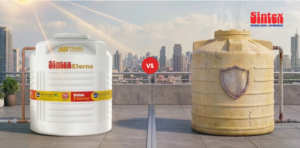
Are Black Water Tanks Better Than White Water Tanks?
Black and white tanks each have practical strengths. Their performance depends on heat absorption, opacity, UV protection, construction, and where the tank is installed.
| Factor | Black Tank | White Tank |
| Solar heat absorption | Generally higher | Generally lower |
| Light blocking | Strong when the wall is fully opaque | Depends on wall construction and opacity |
| UV performance | Carbon black can provide strong UV protection to polyethylene | Requires suitable UV stabilisation and pigments |
| Surface temperature in sun | Usually higher under similar exposure | Usually lower under similar exposure |
| Algae control | Good when light penetration is blocked | Can also be effective when the wall is opaque |
A black tank can be useful where opacity and outdoor UV resistance are priorities. A white tank can reduce heat absorption in exposed locations, provided the complete wall still blocks light.
Modern multi-layer tanks can combine a light exterior with an opaque middle layer, which helps separate heat management from light blocking. That makes construction more important than a simple black-versus-white decision.
The installation site can shift the balance further. A shaded black tank may experience less solar heating than a white tank placed in direct afternoon sun. Compare the complete tank, including UV protection, wall design, location, and maintenance requirements, before choosing between the two.
Why Are Most Plastic Water Tanks Black?
Black has long been a common colour for outdoor polyethylene tanks because black performs more than one function. It provides dark pigmentation, helps make the wall opaque, and is widely used to protect polyethylene from UV degradation during outdoor exposure. Opacity also reduces the amount of sunlight that can pass through the wall and reach stored water. This can help limit conditions that support photosynthetic algae.
Modern water tank colours are more varied because manufacturers can use other UV-stabilising systems and multi-layer construction.
- A tank may have a white, blue, green, or yellow exterior while using an opaque darker middle layer to block sunlight.
- When comparing tanks, check the material, UV protection, wall opacity, layer design, and installation conditions.
So, while black remains a practical option, modern construction allows manufacturers to separate exterior appearance from the light-blocking and UV-protection functions inside the tank wall.
Other Factors That Affect Water Temperature and Algae Growth
Water temperature and algae growth depend on several conditions beyond colour. Good water tank maintenance should consider the full storage environment.
- Direct sunlight: Longer exposure can increase solar heat gain and provide light if the tank wall or openings allow it through.
- Tank location: Shade can reduce direct heating, especially during the hottest part of the day.
- Opacity: A wall that blocks light helps keep the stored water dark.
- Number and type of layers: Different layers may provide food-contact safety, opacity, UV protection, strength, or insulation.
- Insulation: A dedicated insulating layer slows heat transfer more directly than layer count alone.
- Water turnover: Water stored for long periods has more time to warm and may develop poorer storage conditions.
- Lid and openings: Secure covers reduce light, debris, insects, and contamination.
- Source-water quality: Nutrients and biological material may enter with the incoming supply.
- Cleaning: Sediment and deposits can create conditions that support unwanted biological growth.
- Tank capacity: Oversized storage can extend residence time when daily household use is low.
- Surrounding surfaces: Hot roofs and walls can add to the thermal load around an exposed tank.
A tank can therefore perform differently in two homes even when the colour and capacity are identical. Placement, climate, filling pattern, construction, water quality, and maintenance determine how those design features perform in daily use. Checking these factors together gives a more useful picture than relying on colour as a stand-alone indicator.
How to Prevent Algae in Your Water Tank
Regular water tank cleaning is one part of algae prevention, and the wider goal is to reduce light, contamination, and stagnation at the same time.
Use these steps:
- Keep the tank covered. A secure lid limits sunlight, dust, insects, leaves, and other contaminants entering from above.
- Use an opaque tank. Check that the complete wall blocks visible light from reaching the stored water.
- Reduce direct sunlight where practical. Sensible placement or shade can lower solar heating.
- Check vents and fittings. Keep openings protected and repair gaps that allow light or contamination into the tank.
- Maintain regular water turnover. Choose a capacity that suits household demand so water does not remain stored unnecessarily long.
- Clean the tank on schedule. Remove sediment, slime, and deposits before they build up.
- Investigate green growth promptly. Recurring algae may point to light entry, contamination, or maintenance problems.
- Check the incoming water. Source water can introduce nutrients, sediment, and microorganisms.
If visible algae returns soon after cleaning, check for translucent areas, a loose lid, prolonged stagnation, sediment buildup, or contamination in the incoming supply before repeating the same maintenance cycle. An opaque, covered, clean tank with regular turnover creates less favourable conditions for algae throughout the year.

Also Read: How Often Should You Do Water Tank Cleaning?
How to Choose the Right Water Tank for Your Home
Choosing an overhead water tank for home use starts with understanding the installation conditions. A rooftop tank exposed to strong afternoon sun has different requirements from one placed in a shaded service area.
Use this checklist before buying:
| Check | What to Look For |
| Colour | Lighter or darker colours, keeping in mind light exposure and local climate |
| Opacity | Confirm that the complete wall blocks visible light |
| Layers | Ask what each layer is designed to do |
| UV protection | Check that the tank is intended for outdoor exposure |
| Insulation | Consider it where water temperature is a major concern |
| Material | Use food-grade material suitable for drinking-water storage |
| Capacity | Match household use and supply frequency |
| Lid | Choose a secure, well-fitting cover |
| Cleaning access | Make sure inspection and cleaning are practical |
| Certification and warranty | Confirm traceable product information |
Include water tank colours in the decision alongside construction and placement. A light exterior may reduce heat absorption, while an opaque middle layer can limit light penetration. A darker tank may offer strong opacity but absorb more solar heat in exposed locations.
Capacity also affects day-to-day performance. A tank that is much larger than household demand can keep the same water in storage for longer, while an undersized tank may create frequent shortages. Check daily consumption, supply frequency, available roof or ground space, and structural support before deciding.
Maintenance access deserves equal attention. The lid, inlet, outlet, overflow, and interior should be accessible enough for inspection and scheduled cleaning.
The right combination depends on climate, placement, water use, maintenance access, and how much temperature control the household requires.
Why Choose Sintex Water Tanks?
Choosing the right overhead water tank for home use becomes easier when you consider your location, climate, storage needs, and desired level of temperature control. Sintex offers a range of thoughtfully designed options to suit different homes and installation requirements.
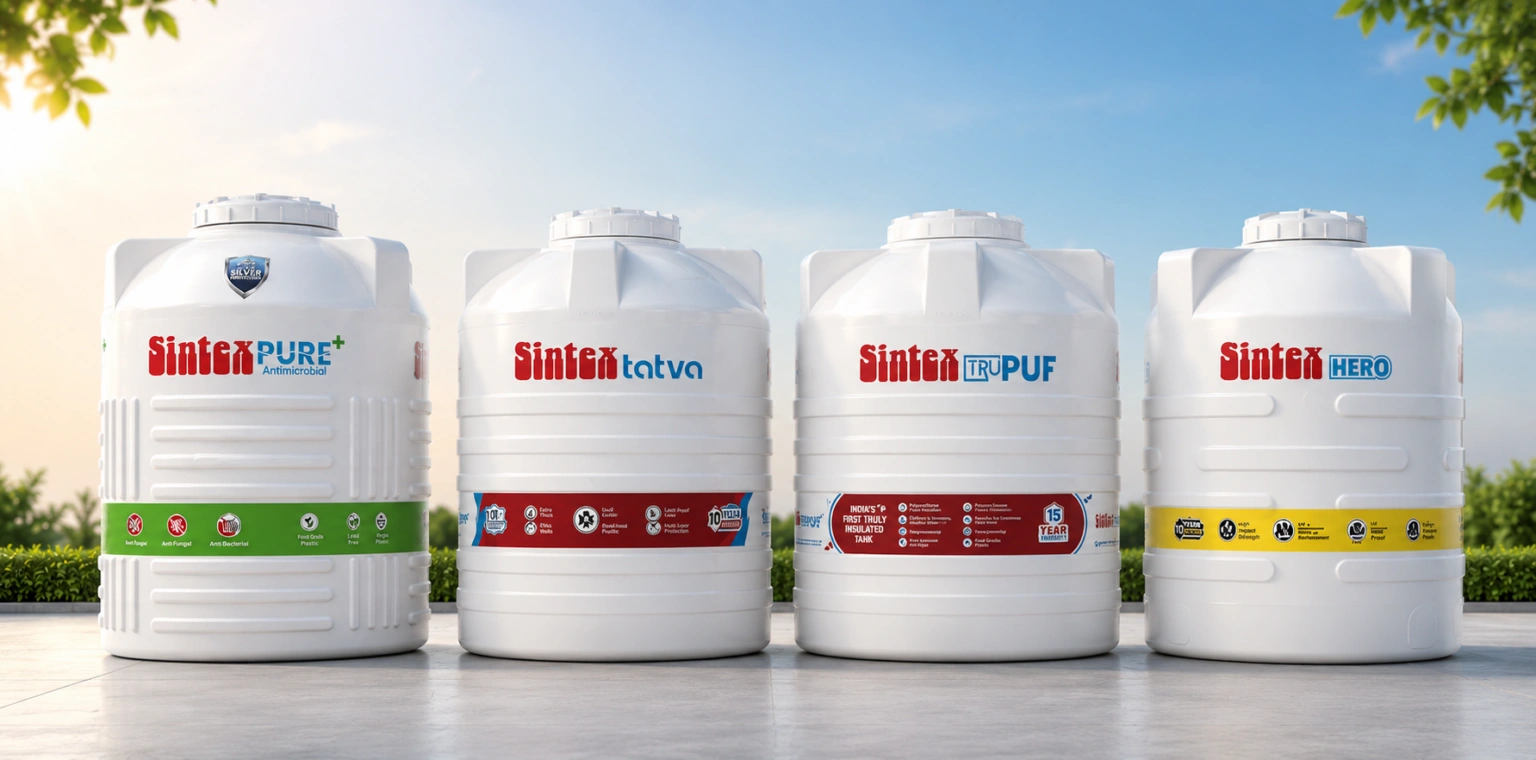
- Sintex Pure Plus features triple-layer construction with a food-grade inner layer, a black middle layer designed to block sunlight, and a UV-protected outer layer. Available in multiple exterior colours, it gives you greater flexibility in appearance without compromising on light-blocking construction.
- Sintex Tatva includes an Additional Reliable Protective Shield designed to help protect against extreme temperature variations for homes in areas with intense weather conditions.
- Sintex TruPuf uses 50 mm polyurethane foam insulation to help reduce heat transfer and manage temperature changes more effectively in areas where temperature is a concern.
- Sintex Hero is another practical triple-layer option for residential use. It features food-grade virgin plastic, a black middle layer, UV-stabilised construction, and a UV-protected threaded lid.
Before choosing a model, compare these features with your tank location, capacity requirements, sunlight exposure, available space, and maintenance access. The best choice is one that suits your installation needs, not just the tank’s exterior colour.
Conclusion
Tank colour can influence solar heat absorption, while stored-water temperature and algae growth also depend on sunlight exposure, opacity, tank construction, water conditions, location, and maintenance. When choosing a water tank for home use, compare the exterior colour with UV protection, light blocking, insulation, capacity, and cleaning access. Keep the tank covered, opaque, properly sized, and regularly maintained to manage the conditions that can increase heat gain or support algae growth over time.
There is no single best water tank colour for every home. Lighter exteriors can reduce solar heat absorption, while the tank should remain opaque enough to block light from reaching stored water. When choosing a water tank for home use, consider climate, exposure, construction, UV protection, placement, and maintenance.
Yes, water tank colours can influence stored-water conditions indirectly through heat absorption and light penetration. The final water quality also depends on source water, tank opacity, lid security, stagnation, contamination, and maintenance. Colour should therefore be considered alongside hygiene and construction rather than used as a quality indicator by itself.
Neither black nor white is universally a better colour. Black tanks can provide strong opacity and carbon-black UV protection, while white tanks generally absorb less solar heat. Heat absorption, light blocking, UV stabilisation, wall construction, installation location, and climate should all be compared before choosing between black and white.
To prevent algae in your water tank, keep the tank opaque and properly covered. Reduce unnecessary direct sunlight, maintain regular water turnover, protect vents and openings, and schedule water tank cleaning before deposits build up. If algae returns repeatedly, inspect the tank for light entry, contamination, sediment, and problems with the incoming water supply.
To stop algae from growing in your water tank, start by checking whether light is entering through the tank wall, lid, vent, or fittings. Clean sediment and visible growth, keep the tank covered, reduce prolonged sunlight exposure, and improve water turnover. Ongoing water tank maintenance should also include checking source-water quality and repairing damaged openings.
A triple-layer tank may help manage temperature when one of its layers is designed to reduce heat transfer. Other layers may serve food-contact, opacity, UV protection, or strength functions. Water tank colours, direct sunlight, insulation, wall thickness, placement, and water turnover also influence stored-water temperature.