Table of Contents
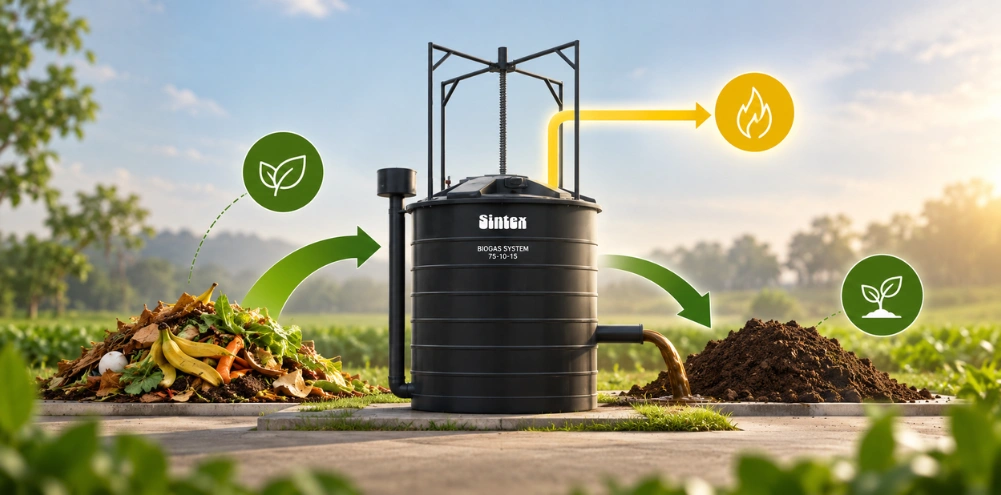
A biogas plant turns organic waste into renewable energy, but the value of the process does not stop with gas production. The biogas slurry left after anaerobic digestion contains nutrients and organic matter that can continue through the resource cycle instead of being discarded. This makes biogas slurry management an important part of sustainable plant operation. Collection, storage, separation, treatment and reuse all help preserve the value of the material after digestion. Depending on the plant and intended application, slurry can be used in liquid form, separated into solid and liquid fractions, dried, composted or processed further through digestate management. In this article, we explore how to manage this post-digestion output as a practical resource and extend the environmental and economic value created by the biogas plant.
Key Takeaways
- Biogas slurry is a valuable output of anaerobic digestion that can support nutrient recovery and agricultural reuse.
- Good digestate management keeps nutrients in productive use instead of losing them through poor storage or disposal.
- Store slurry in suitable containment that protects nutrient value and prevents leakage or runoff, with solid and liquid fractions separated.
- Use drying, composting or further processing to match agricultural application and nutrient content, crop demand or soil condition.
- Treat digestate management as part of plant efficiency, because good handling turns a residual stream into a useful resource.
What Is Biogas Slurry and How Is It Generated?
Biogas slurry is the semi-liquid material that remains after organic feedstock has passed through anaerobic digestion. During digestion, microorganisms break down biodegradable matter in the absence of oxygen. Part of the organic carbon is converted into biogas, mainly methane and carbon dioxide, while the remaining material exits the digester as slurry or digestate.
The digestate from biogas plant operations can contain water, partially stabilised organic matter, nitrogen, phosphorus, potassium and other nutrients. Its exact composition depends on the feedstock, water content, retention time and digestion process.
Raw slurry is the organic material entering the digester, often mixed with water. Biogas slurry or whole digestate is the material leaving the digester. If it is separated mechanically, it becomes liquid and solid treated digestate fractions. Additional drying, composting or nutrient-recovery steps can then produce treated digestate suited to different uses. Its physical form can also change substantially after separation or treatment.
Also Read: What Is a Biogas Plant and How Does It Work?
Biogas Slurry vs Digestate: Understanding the Difference
Biogas slurry and biogas digestate originate from the same anaerobic digestion process, but the terms differ in scope and how they are commonly used.
| Aspect | Biogas Slurry | Digestate |
| Typical Meaning | Refers to the semi-liquid material discharged from a biogas digester | Broad term for the residual material left after anaerobic digestion |
| Physical Form | Commonly present as a pumpable or flowing slurry | Can be whole digestate or separated into liquid and solid fractions |
| Processing Stage | Often refers to material before significant post-treatment | Can include separated, dried, composted or otherwise processed material |
| Common Context | Frequently used in farm, household and community biogas discussions | Common in technical, commercial and waste-management contexts |
| Management Focus | Storage, handling and direct or processed agricultural use | Separation, treatment, nutrient recovery, storage and end-use planning |
The distinction becomes most useful after processing begins. Once the material is separated or treated, digestate management provides a clear way to describe the different fractions and their individual handling or reuse routes.
How Is Biogas Slurry Managed After Digestion?
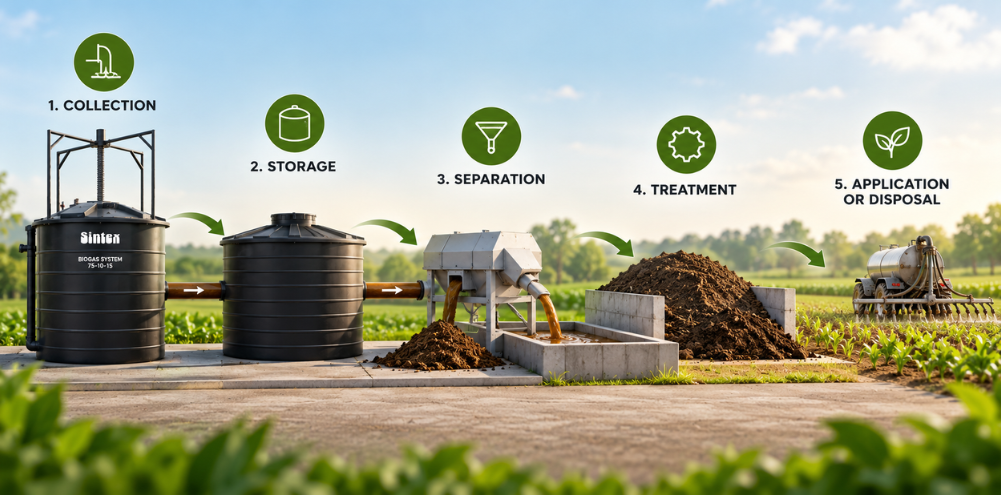
Biogas slurry management starts as soon as it leaves the digester. Each stage is planned around safe handling, treatment and final use.
- Collection: Move slurry from the digester into suitable tanks, pits or other handling infrastructure while preventing leakage and uncontrolled runoff.
- Storage: Keep the material securely contained until treatment, transport or application. Proper storage also helps conserve nutrients and protect nearby soil and water.
- Separation: Divide slurry into solid and liquid fractions where this improves handling, reduces transport burden or supports different end uses.
- Treatment: Use drying, dewatering, composting or other processing methods to prepare digestate for its intended application.
- Application or Disposal: Direct suitable digestate towards agricultural use based on nutrient requirements and applicable rules. Material unsuitable for reuse should follow an appropriate treatment or disposal route.
Good biogas plant waste management also requires records of slurry volumes, storage conditions, treatment steps and destination. The management plan should match plant size, feedstock, seasonal agricultural demand and available storage capacity. Planning ahead prevents slurry from becoming an operational bottleneck.
Biogas Slurry Treatment and Processing Methods
Biogas slurry treatment can make digestate easier to store, transport and use. The treatment process selected should reflect the material’s composition, plant scale and intended end use
| Treatment Method | How It Works | Main Purpose |
| Solid-liquid separation | Screw presses, centrifuges, screens or filter presses divide digestate into solid and liquid fractions. | Improves handling and creates separate treatment or reuse streams. |
| Drying | Removes moisture from separated solids. | Reduces weight and volume for storage, transport or further processing. |
| Composting | Aerobically stabilises solid digestate. | Produces a more stable material for use as a soil amendment. |
| Evaporation | Removes water from liquid digestate. | Reduces volume and concentrates dissolved nutrients. |
| Membrane treatment | Uses filtration to separate water from dissolved or suspended material. | Concentrates nutrients and can produce a cleaner liquid fraction. |
| Ammonia recovery | Captures ammoniacal nitrogen from digestate. | Reduces nitrogen losses and produces a concentrated nitrogen-rich stream. |
| Pelletisation | Compresses dried solid digestate into pellets. | Improves storage, transport and application. |
For digestate management, the treatment route should match the material characteristics and intended end use. Nutrient concentration can be increased in recovered fractions, improving nutrient recovery, transport efficiency and potential for further fertiliser formulation.
Uses of Biogas Slurry in Agriculture
The uses of biogas slurry in agriculture depend on its quality, nutrient content, moisture level and the needs of the receiving crop and soil. When managed appropriately, digestate can return nutrients and organic matter to agricultural land instead of being treated only as a waste stream.
Common forms of agricultural use of digestate include:
- Applying suitable liquid digestate to soil as a nutrient source
- Incorporating separated solid digestate into cultivated land
- Using composted digestate as a soil amendment
- Supplying nitrogen, phosphorus, potassium and micronutrients where crop demand supports their use
- Improving nutrient recycling within farms that supply feedstock to the biogas plant
- Processing solids into enriched or pelletised products where this is technically and commercially suitable
Application should be based on nutrient analysis, soil condition, crop requirements, timing, irrigation practices and local rules. Overapplication can waste nutrients and increase the risk of ammonia loss, runoff or leaching. Agricultural use works best when digestate is treated as a nutrient input that needs the same planning as other fertiliser sources. Testing helps guide that decision.
Biogas Slurry as Fertiliser: Benefits & Applications
A well-managed biogas slurry fertiliser can return useful nutrients to the soil while reducing the need to dispose of digestate as waste. Anaerobic digestion retains much of the feedstock’s mineral nutrients, and part of the organic nitrogen can be converted into ammonium, which is readily available to plants.
Key benefits of biogas slurry as manure include:
- Nutrient recovery: Biogas slurry can return nitrogen, phosphorus, potassium and micronutrients to agricultural land.
- Organic matter return: Digestate can contribute organic material to soils, depending on feedstock and processing.
- Reduced waste burden: Agricultural reuse can lower the amount of slurry requiring separate disposal.
- Crop nutrition: Plant-available nutrients in digestate can support better crop growth.
- Circular nutrient use: Nutrients contained in organic waste can return to crop production.
- Reduced dependence on some mineral fertiliser inputs: Suitable digestate may replace part of the nutrient requirement otherwise met through conventional fertilisers.
Use organic fertiliser from biogas slurry cautiously. Excessive application can contribute to ammonia loss, nutrient imbalance, runoff or leaching. Feedstock quality, contaminants, crop demand and soil conditions should therefore guide application.
Storage & Handling Best Practices for Digestate
Good digestate management depends on having enough suitable storage for the period between production and reuse or further treatment. Storage should be leak-resistant, accessible for inspection and removal, and designed to prevent uncontrolled runoff or contamination of surrounding soil and water.
- Useful digestate storage methods include tanks or lined containment for liquid material and protected storage areas for separated solids.
- Covering liquid storage can help reduce odour, ammonia loss and avoidable emissions while also limiting rainwater entry.
- Long exposure to sun and air can reduce nutrient value, particularly through ammonia loss. Storage should support nutrient conservation as well as containment.
- Operators should consider mixing or settling, access for pumps or tankers, safety around gases and the volume produced between agricultural application periods.
- There is no universal storage duration for all biogas slurry. Required capacity depends on production rate, crop-use timing, weather, treatment plans and applicable local requirements.
Challenges in Biogas Slurry Management
Biogas slurry management can become difficult when the plant produces more material than can be stored, treated or used nearby. High moisture content increases transport volume and cost, while poor storage can lead to odour, ammonia loss, runoff or contamination.
Seasonal demand is another challenge. Slurry is produced throughout the year, even when land application is unsuitable or unnecessary. Variable feedstock can also change nutrient concentration and handling characteristics, making a fixed application process unreliable.
Weak biogas plant waste management planning can also create bottlenecks after digestion. Plants may have adequate gas-handling equipment but insufficient storage, separation or transport capacity for the digestate. These problems can be reduced by planning the slurry route alongside the digester, including storage volume, treatment method, nearby agricultural demand and a compliant fallback option when reuse is not possible.
Also Read: How to Set Up a Biogas Plant: A Technical Guide
How Biogas Slurry Supports Circular Waste Management
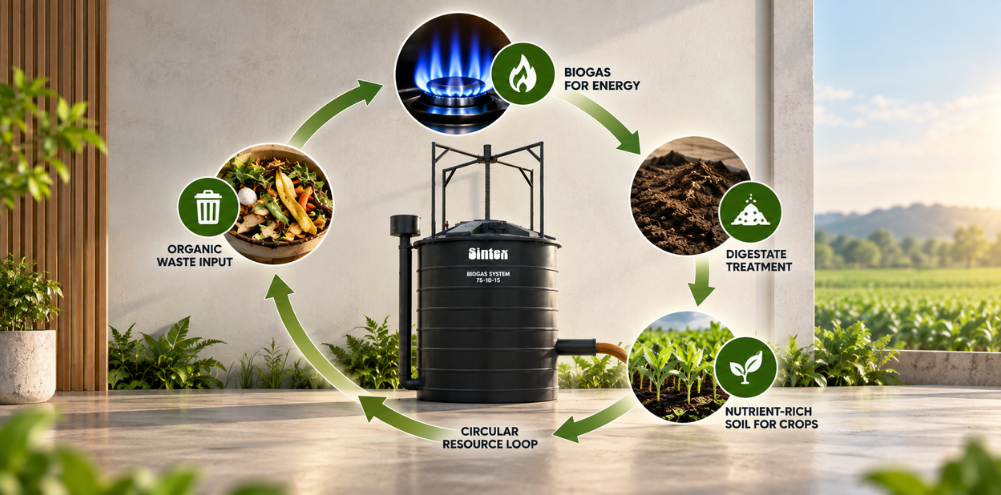
Good biogas plant waste management links energy recovery with material and nutrient recovery. Instead of ending with gas production, the process can create a wider resource loop:
Organic residues enter the digester, biogas is captured for energy, and the remaining digestate can be stored, treated and returned to productive use instead of being discarded.
The agricultural use of digestate can close part of this loop by returning nutrients and organic matter to soils that produce crops, fodder or other biomass. Separation and further processing can also create liquid and solid product streams that are easier to transport or apply.
This circular system depends on good biogas slurry management. Important conditions include:
- Suitable and controlled feedstock
- Stable digestion
- Adequate slurry storage
- Appropriate treatment
- Nutrient-conscious agricultural application
- Prevention of runoff and contamination
When these elements are managed well, digestate recovery can reduce waste, return nutrients to productive use and improve the overall resource efficiency of the biogas system.
Conclusion
Biogas slurry adds another layer of value to anaerobic digestion by turning nutrients left after gas production into a useful agricultural resource. With the right approach to storage, separation, treatment and application, digestate can support nutrient recovery, improve waste utilisation and strengthen the circular benefits of biogas systems. Managing slurry effectively also helps biogas plants get more value from the organic waste they process. If you want to turn everyday organic waste into useful energy and nutrient-rich slurry, explore the Sintex Biogas Plant for a smarter approach to waste recovery.
Biogas slurry is the semi-liquid material left after organic feedstock undergoes anaerobic digestion. It contains water, partially stabilised organic matter and nutrients such as nitrogen, phosphorus and potassium. Its exact composition varies with feedstock and digestion conditions.
Biogas slurry forms when microorganisms break down organic material inside an anaerobic digester. Biogas is released during digestion, while the remaining liquid and solids leave the system as slurry or digestate. Consistency varies with feedstock, dilution and plant design.
Biogas slurry and digestate often refer to the same post-digestion material. Slurry usually describes the semi-liquid digester effluent, while digestate is the broader technical term and may include whole, liquid, solid or further-processed fractions.
Yes, biogas slurry can be used as fertiliser when its nutrient content, quality and application rate suit the crop and soil. Feedstock, possible contaminants and local requirements should also be considered before direct agricultural application.
Biogas slurry as manure can return nitrogen, phosphorus, potassium, organic matter and micronutrients to soil. It supports nutrient recycling, reduces the amount of residual material requiring disposal and may replace part of the mineral fertiliser requirement.
Biogas slurry should be kept in suitable leak-resistant storage that prevents runoff and protects surrounding soil and water. Covering liquid storage can reduce odour, rainwater entry and nutrient losses. Capacity should match production volume and planned use.
Digestate may be separated into liquid and solid fractions before agricultural use. The solid fraction can be dried or composted, while liquid digestate can be stored or further treated. Larger plants may also use nutrient-recovery processes.
Biogas slurry can be safe for crops when its quality, nutrient concentration and application rate are appropriate. Suitability depends on feedstock, digestion conditions, possible contaminants, soil condition and crop requirements. Testing is useful where quality is uncertain.
Biogas digestate commonly contains nitrogen, phosphorus, potassium, organic matter and smaller amounts of other plant nutrients. Their concentrations vary with feedstock, dilution and processing, so nutrient analysis is more reliable for application planning than a standard composition.
Good digestate management improves sustainability by recovering value from material left after gas production. Suitable storage, treatment and agricultural use can conserve nutrients, reduce waste and support a circular system that produces renewable energy and useful agricultural inputs.