Table of Contents
Most kitchen bins in Indian homes hold a mix of things: vegetable peels, leftover dal, an empty milk packet, a chips wrapper, sometimes a broken spoon. A biogas plant can use only part of that. The microbes inside a digester break down organic material in the absence of oxygen, so anything that isn’t plant or animal matter just gets in the way.
That’s why food waste segregation is the first step in biogas plant waste management. When you keep the food fraction clean, the digester gets steady feed. A biomethanation plant can’t deliver reliable gas if its feedstock is contaminated.
It’s also the law now. The Solid Waste Management Rules, 2026, in force since 1 April 2026, make four-stream segregation at source mandatory, with waste split into wet, dry, sanitary and special care streams. Wet waste covers kitchen waste, vegetables, fruit peels, meat and flowers, and the rules send it for composting or bio-methanation.
Key Takeaways
- Your biogas digester feedstock should be clean, biodegradable food and kitchen waste.
- Food waste segregation keeps plastic, glass, metal and sanitary waste out, and the SWM Rules 2026 send those items to other streams.
- Food waste processing for biogas usually means sorting, chopping into small pieces and mixing with water.
- Feeding the right quantity every day matters as much as what you feed.
Understanding Food Waste as Biogas Feedstock
Food waste is organic, which is why it works as a biogas digester feedstock: microbes can digest it. Inside a sealed digester, they break it down without oxygen. The gas they give off is around 50 to 75% methane, with roughly 30 to 40% carbon dioxide. What’s left flows out as slurry you can use as manure.
This makes food waste for biogas plant use a good fit wherever kitchens run every day, from homes and hostels to dhabas, hotels and canteens. The catch is that food waste isn’t uniform. Its composition depends on where it comes from, so a hostel mess and a sweet shop produce very different feed.
Organic doesn’t automatically mean ready to feed, either. Every plant has a daily feed limit and needs the waste mixed with water in a set ratio, so check your plant’s feeding guidance before you start.
Also, Read: What Is a Biogas Plant and How Does It Work?
Types of Food Waste Suitable for Biogas Plants
These kinds of food waste for biogas plant feeding can go into a digester once they’re separated from everything else.
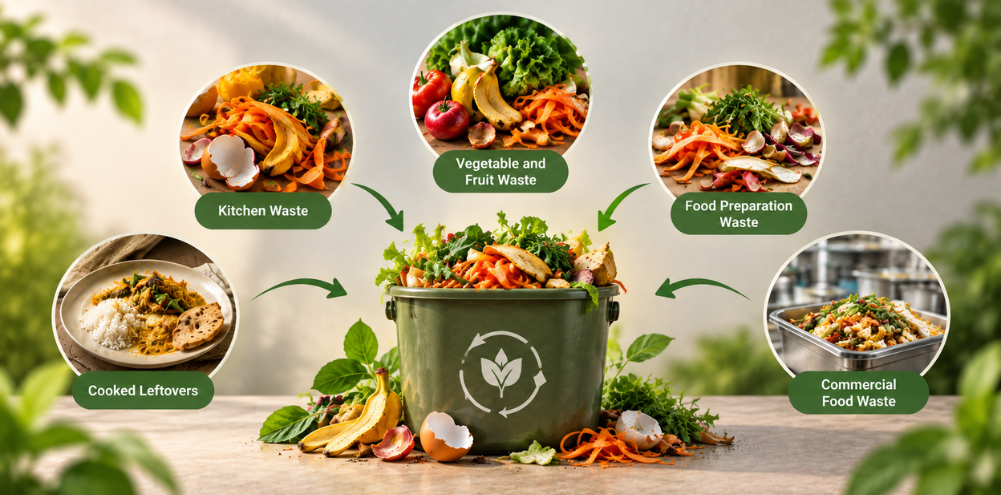
1. Kitchen Waste
Vegetable peels, fruit peels, leftover rice, dal, sabzi and stale rotis make good kitchen waste for biogas plant feed. Keep packets, foil and cutlery out of this bin.
2. Vegetable and Fruit Waste
Spoiled vegetables, trimmings and rejected fruit from mandis and grocery stores can go in too. Cut big pieces down first, because research on food waste digestion reports higher methane yield at smaller particle sizes.
3. Food Preparation Waste
Restaurant, hotel and canteen kitchens throw out trimmings and rejected ingredients every day. A separate bin at the prep counter keeps this stream clean from the start.
4. Cooked Leftovers
Plate waste from homes, messes and wedding functions works as food waste for biogas plant feeding once spoons, tissues and plastic are picked out. Leftovers change a lot from day to day, so collect them the same way every time.
5. Commercial Food Waste
Restaurants, hotels, clubs, resorts, hostels, institutes, religious establishments, industrial canteens and hospitals are among the users for whom biogas plant suits best. All of them produce food waste daily and in bulk.
In practice, the right organic waste for biogas production is the waste you can collect clean and in a steady quantity, every single day.
What Should NOT Enter a Biogas Digester?
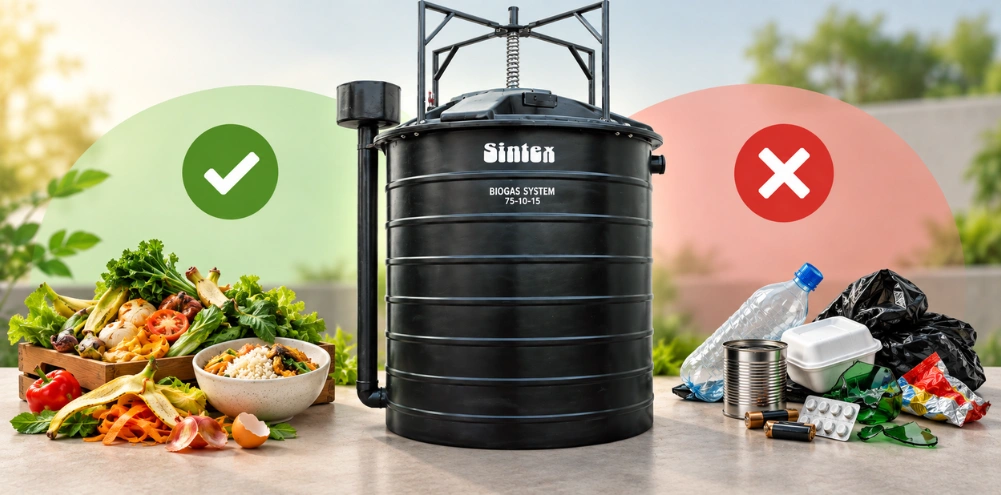
Anything microbes can’t break down isn’t biogas digester feedstock, and anything the rules send to a different stream should stay out of the digester too. Here’s where each common item belongs instead.
| Material | Where it goes under the SWM Rules 2026 | Why it stays out of the digester |
| Plastic packets, wrappers and bottles | Dry waste, sent to a Material Recovery Facility | It isn’t organic, so microbes can’t digest it |
| Glass and metal, including foil and cutlery | Dry waste, sent to a Material Recovery Facility | It isn’t organic, so microbes can’t digest it |
| Paper, wood and rubber | Dry waste, sent for sorting and recycling | The rules route these for recycling, not bio-methanation |
| Meat, bones and excess fat | Keep separate and follow the plant operator’s feedstock guidance; use an appropriate organic-waste processing route where necessary | Generally discouraged in household digesters; industrial plants may require pre-treatment. |
| Flowers and floral waste | Wet waste, for appropriate composting or bio-methanation | Use only if permitted by the plant’s design and guidelines. |
| Diapers and sanitary napkins | Sanitary waste, wrapped and stored separately | The rules require this stream to be kept apart |
| Medicines, paint cans, bulbs and mercury thermometers | Special care waste, handed to authorised agencies or collection centres | The rules give these items their own collection route |
Plastic is the one that sneaks in most often, usually as a milk packet or a pickle pouch thrown in with leftovers. Empty packaged food into the wet bin and put the pouch in the dry bin.
Cleaning products need the same attention. Phenyl, floor cleaners and detergent water aren’t food waste, so keep them away from the bin that feeds your digester.
Food Waste Processing Before Feeding the Digester
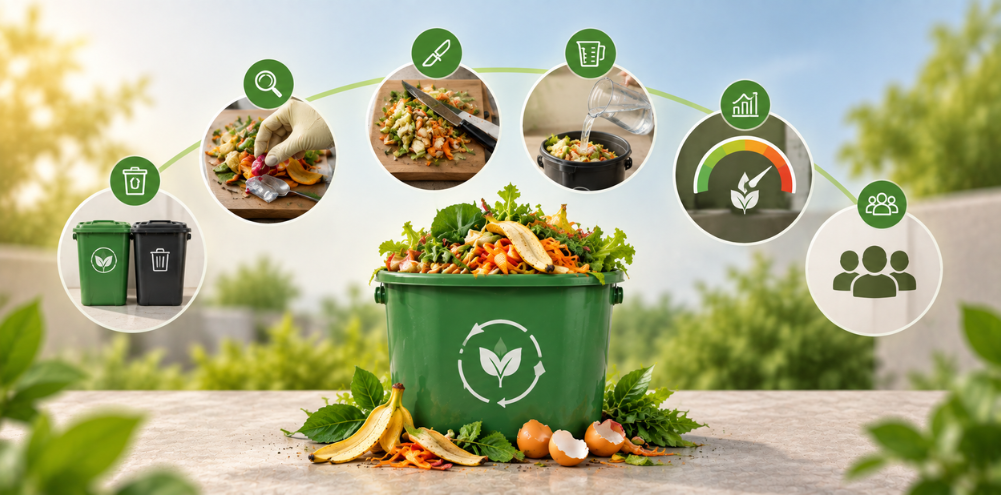
Collecting food waste separately is only the start. Food waste processing for biogas gets that waste ready for your plant, usually in five steps.
- Segregate at the source: food waste segregation starts with one bin for food and kitchen scraps and another for dry waste, kept right where the waste is produced.
- Pick out contaminants: check the wet bin before feeding. A spoon or wrapper is far easier to lift out now than after mixing.
- Chop it small: cut large peels and whole vegetables into small pieces. Mechanical cutting reduces particle size and gives microbes more surface area to work on.
- Mix with water: Sintex’s 1 m³ plant, for example, takes 10 to 12 kg of food waste with 12 to 15 litres of water a day.
- Feed daily, in the same quantity: daily feeding decides whether a plant lasts, and a plant sized well beyond your waste output stays underfed.
Also, Read: How to Set Up a Biogas Plant: A Technical Guide
How Waste Segregation Improves Biogas Plant Performance
Clean food waste segregation helps your plant in a few practical ways:
- Steadier gas: contaminated biogas digester feedstock is one of the reasons biomethanation plants can’t deliver reliable gas.
- Cleaner slurry: when plastic and glass stay out of the digester, the slurry you take out for manure doesn’t carry bits of them either.
- Less rework at feeding time: pre-sorted waste goes straight to chopping and mixing, with no second round of picking.
- More value from dry waste: mixed waste contaminates recyclables and cuts their value, so a clean dry bin is worth more to your kabadiwala too.
Segregation won’t make every kilo of food waste give the same amount of gas, because food waste varies. It gives the digester the same kind of feed each day, which makes the plant’s output easier to predict.
Managing Kitchen & Commercial Food Waste for Biogas Production
Kitchen waste for biogas plant use works best when sorting becomes part of the daily kitchen routine. At home, that can be a small lidded container next to the chopping board for peels and scraps, with a separate bin for packets and bottles.
Hotels, restaurants, canteens and hostels handle larger and more varied volumes, so staff need clear rules on what goes where. A simple flow for a commercial food waste biogas setup looks like this:
Food preparation → Separate collection → Contaminant check → Chopping and mixing → Daily feeding
This already works in Indian towns. Vengurla Municipal Council in Maharashtra required a restaurant producing 90 kg of waste a day to install a biogas plant on its premises, and the plant gives the kitchen nearly four and a half hours of cooking gas.
The SWM Rules 2026 also put bulk kitchens on the hook. A bulk waste generator is any entity with a floor area of 20,000 sq m or more,water use of 40,000 litres a day or more, or waste of 100 kg a day or more. These generators must process wet waste on site as far as possible, or obtain an Extended Bulk Waste Generator Responsibility (EBWGR) certificate. In hilly areas and islands, hotels and restaurants must process their wet waste on site under norms set by the state pollution control board.
Common Food Waste Management Mistakes in Biogas Plants
Even a well-built plant struggles when biogas plant food waste management slips. Watch out for these mistakes:
- Sharing one bin: a single bin for everything lets plastic, foil and glass into the food stream.
- Feeding without a check: expecting the digester to cope with a stray spoon or wrapper that should have been picked out earlier.
- Buying on cost alone: choosing a plant on price instead of daily waste output leads to gas shortages or an underfed digester.
- Skipping chopping and water: whole vegetables and dry feed miss the food waste processing for biogas that the plant is designed around.
- Binning packaged food whole: expired food is organic, but the pouch it came in isn’t.
Wet waste isn’t always suitable for every digester. Household plants generally discourage meat, bones and excess fat, while industrial plants may require pre-treatment. Add meat, bones or flowers only if permitted by the manufacturer’s feeding guidelines.
bones or flowers only if permitted by the manufacturer’s feeding guidelines.
Best Practices for Effective Biogas Feedstock Management
Good biogas plant waste management comes down to a few daily habits. Use this checklist to keep your biogas digester feedstock clean and steady:
Keep two bins at the source
- Label them clearly, especially in commercial kitchens where staff change shifts.
Check the wet bin before every feed
- Lift out spoons, tissues, foil and packets by hand.
Remove contaminants before chopping
- Once waste is chopped and mixed, a wrapper is much harder to spot.
Feed what your plant is sized for
- Follow the daily waste and water quantities for your plant’s capacity.
Note big changes in feed
- A wedding week or festival leftovers can change what goes in, so keep an eye on gas output afterwards.
Train everyone who handles the waste
- Cooks, cleaners, housekeeping staff and whoever feeds the plant all need to know what belongs in the wet bin.
Conclusion
Food waste segregation decides how much of your kitchen waste actually turns into gas. Keep food and kitchen scraps in their own bin, keep plastic, glass, metal and sanitary waste out, and feed the plant a steady daily quantity.
Sintex Biogas Plant takes cow dung, food and kitchen waste and turns it into biogas for cooking, along with slurry you can use as manure. It’s sized for homes as well as for restaurants, hotels, hostels and canteens, and a plant fed 100 kg of food waste a day saves 130 to 135 kg of commercial gas a month.
Kitchen scraps, fruit and vegetable waste, food preparation residues, cooked leftovers, bakery waste and suitable food-processing waste can be used as biogas digester feedstock. The waste should be properly segregated and free from plastic, glass, metals and other contaminants before entering the digester.
Plastic, food packaging, glass, metals, stones, chemicals, solvents, batteries, sanitary waste and other non-biodegradable materials should not enter a biogas digester. These materials do not provide useful organic feedstock and can interfere with equipment, increase preprocessing requirements or contaminate the digestate.
Food waste segregation ensures that the digester receives a cleaner and more consistent organic feedstock. Removing plastic, glass, metals and other contaminants can protect processing equipment, reduce operational problems and allow a greater proportion of the incoming material to contribute to biogas production.
Yes, kitchen waste can be used for biogas generation when it contains suitable biodegradable material. Vegetable peels, fruit waste, leftover food and preparation scraps are common examples. Before feeding, the waste should be checked for packaging and other contaminants and processed according to the digester's requirements.
Waste quality can influence both digestion and plant operation. Clean, biodegradable material provides useful organic matter, while contaminated or highly variable feedstock can create processing and operational challenges. Moisture, particle size, organic composition and the presence of inhibitory substances can also affect digestion performance.
There is no single best feedstock for every anaerobic digester. A good feedstock is biodegradable, consistently available, relatively clean and compatible with the plant's design. Food waste can be a valuable option because it contains readily biodegradable organic matter, while some plants may also use a suitable combination of organic feedstocks.
Food waste should first be segregated and inspected to remove plastic, glass, metal, stones and other contaminants. Depending on the plant, further food waste processing for biogas may include depackaging, screening, shredding, grinding, pulping or mixing. The prepared feed should then be supplied consistently according to the plant's operating requirements.
Yes. Hotels, restaurants, cafeterias, institutional kitchens and food-processing businesses can generate suitable commercial food waste biogas feedstock. Effective segregation, dedicated collection, contamination checks and appropriate preprocessing are important because commercial kitchens can generate large and varied quantities of food waste.