
Commercial Water Storage Solutions

Frequently Asked Questions
What is the difference between GRP and SMC?
GRP (Glass Reinforced Plastic) and SMC (Sheet Moulding Compound) are both durable, corrosion-resistant composite materials used in commercial storage tanks, but they differ in composition and manufacturing. GRP is made by reinforcing plastic with fine glass fibers and is usually fabricated through hand-layup or filament-winding, making it flexible and suitable for custom shapes or larger one-piece tanks. SMC, on the other hand, is a ready-to-mould composite of resin, glass fibers, and fillers, produced by compression moulding under heat and pressure, resulting in uniform thickness and a smooth finish. While GRP offers flexibility and adaptability, SMC provides precision, consistency, and is ideal for modular panel tanks in commercial and industrial applications. Both materials ensure long-lasting, reliable storage solutions.
Which type of water storage tank is best for commercial use?
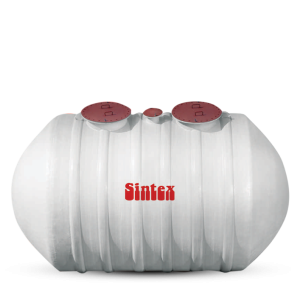
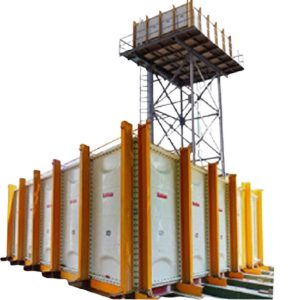
For commercial use, the best water storage tanks are those that combine durability, high capacity, and low maintenance. Options like GRP (Glass Reinforced Plastic) and SMC (Sheet Moulding Compound) tanks are highly reliable for such applications. Sintex commercial tanks, made using advanced GRP and SMC technology, are designed to handle large volumes while ensuring corrosion resistance and long service life. GRP tanks work well for custom or underground installations, whereas modular SMC panel tanks are ideal for above-ground setups where easy assembly and scalability are needed. The right choice ultimately depends on your storage capacity, space availability, and project requirements, but Sintex offers dependable solutions for all types of commercial water storage needs.
How do I decide the right capacity for my commercial water tank?
Deciding the right capacity for a commercial water tank requires understanding your daily consumption, operational demand, and backup needs. Start by calculating the total amount of water used in a day, including domestic use such as restrooms, cleaning, and kitchens, as well as industrial or process-related consumption. It’s also important to consider peak usage hours—times when water demand is highest—to ensure a steady and uninterrupted supply.
For commercial spaces like hotels, factories, complexes, or institutions, it’s recommended to include an additional 20–30% capacity as a safety margin for emergencies, maintenance, or supply fluctuations. The installation area also matters—underground tanks (like Sintex GRP models) are ideal for larger capacities and space-saving needs, while above-ground SMC panel tanks work best for easy installation and modular expansion.
Sintex commercial storage tanks are available in various sizes and configurations, allowing you to choose one that fits your exact requirements. For the most accurate selection, consulting a Sintex expert or dealer can help you determine the right capacity based on your site, water usage pattern, and storage goals.
What factors affect the cost of a commercial water tank?
The cost of a commercial water tank depends on several key factors, starting with capacity and material type. Larger tanks naturally cost more due to the higher volume of material used. The material choice—such as GRP (Glass Reinforced Plastic) or SMC (Sheet Moulding Compound)—also affects pricing, as each offers different benefits in terms of strength, durability, and finish.
Other factors include the installation type (above-ground or underground), site conditions, and any customisation requirements like insulation, fittings, or special coatings. Transportation and handling costs can also vary depending on the tank’s size and delivery location.
Sintex commercial water tanks are designed to provide long-term value with minimal maintenance, which helps reduce overall lifecycle costs. For an accurate estimate, it’s best to consult a Sintex representative, who can suggest the most cost-effective option based on your project requirements and site conditions.
Do commercial water tanks require maintenance?
Yes, commercial water tanks do require regular maintenance to ensure water quality, durability, and optimal performance. Over time, sediment, algae, and impurities can accumulate inside the tank, affecting both water purity and storage efficiency. Routine cleaning helps prevent contamination and ensures the tank remains safe for long-term use.
It’s recommended to schedule periodic inspections to check for leaks, cracks, or corrosion—especially in underground or high-capacity systems. Components like inlet and outlet valves, joints, and lids should also be examined for proper sealing.
Sintex commercial water tanks are built using high-quality GRP and SMC materials that resist corrosion and microbial growth, reducing the frequency of maintenance. However, following a regular cleaning and inspection schedule will help extend the tank’s lifespan and maintain consistent water quality for your operations.
Can commercial water storage tanks be customized?
Yes, commercial water storage tanks can be fully customized to meet specific capacity, space, and application requirements. Depending on your project, customization can include variations in size, shape, panel configuration, color, and fittings. For instance, you can choose between underground GRP tanks for space-saving installations or modular SMC panel tanks that can be easily expanded or relocated.
Custom features such as inlet and outlet positioning, insulation layers, access manholes, and internal coatings can also be tailored to suit the type of water being stored—whether for industrial, commercial, or potable use.
Sintex commercial storage tanks are designed with flexibility in mind, allowing you to configure a solution that perfectly fits your site layout and usage pattern. The Sintex team can help assess your requirements and provide a custom-engineered tank that delivers efficiency, safety, and long-term reliability.
How quickly can a commercial water tank be installed?
The installation time for a commercial water tank mainly depends on its type, capacity, and site conditions. Generally, SMC panel tanks from Sintex are quicker to install since their modular panels are pre-fabricated and assembled on-site. With proper groundwork, they can often be installed within a few days, making them ideal for projects that need fast setup.
GRP underground tanks take a little longer as they require excavation, base preparation, and sealing before placement. However, once the foundation is ready, the process is efficient and straightforward.
In most cases, with a well-prepared site and professional support, Sintex commercial tanks can be installed promptly while maintaining quality and safety standards. This ensures your water storage system is ready for use quickly, with minimal disruption to your operations.