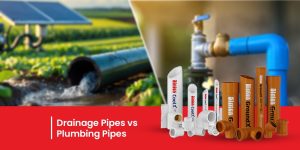

Understanding the Difference Between PVC and SWR Pipes
Share
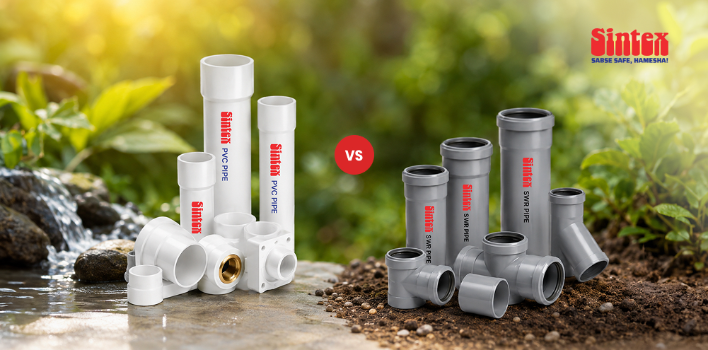
Table of Contents
Walk into any hardware shop and you’ll find two types of pipes that look almost identical. White. Smooth. Lightweight. But pick the wrong one for your application and you’ll run into real problems.
Here’s what most people get wrong when they search “PVC vs SWR pipe.” They treat it as a competition, as if one pipe wins and the other loses. But PVC and SWR don’t compete. They split the job between them. PVC brings clean water into your home under pressure. SWR drains waste water and rainwater out by gravity. A properly built plumbing system runs both types side by side, each doing a completely different job.
Getting that distinction right upfront saves time, money, and a lot of avoidable rework.
Key Takeaways
- PVC pipes carry pressurized clean water into buildings. SWR pipes drain waste, soil water, and rainwater out.
- They don’t replace each other. Every properly plumbed home uses both.
- SWR operates on gravity, not pressure. PVC operates under pressure from a pump or municipal supply connection.
- Ring-fit joints on SWR pipes allow fast installation and easy disassembly for maintenance.
- Sintex manufactures both pipe types to national quality standards for residential, commercial, and industrial projects.
What is a PVC pipe?
PVC stands for polyvinyl chloride. These pipes carry water from a source into your home, pushing it through walls and floors under continuous pressure. Drinking water lines. Kitchen cold water supply. Bathroom feeds. Garden irrigation. Borewell connections.
The material resists rust and corrosion. It’s lightweight, which makes installation easier. And the smooth inner bore reduces friction so water moves efficiently through the line. Sintex manufactures PVC pipes built for consistent performance across homes, farms, and commercial buildings throughout India.
One important note: standard PVC can’t handle thermal stress. For hot water supply lines, CPVC is the right choice.
What is an SWR pipe?
SWR stands for Soil, Waste, and Rainwater. The name tells you the job exactly.
Bathroom drain lines. Kitchen sink outlets. Toilet waste stacks running down through multiple floors. Rainwater pipes dropping off a terrace. All of that moves through SWR systems.
These pipes work on gravity, not pressure. A plumber installs them at a calculated slope so waste flows downward and out of the building without any pump assistance. What separates them from supply pipes isn’t just the direction of flow. It’s the entire engineering principle. No pressure rating required, because gravity does all the work.
Ring-fit joints make SWR installation quick. Each socket contains a rubber ring. Push the next pipe section in until you feel it seat. Done. And if a blockage forms deep in the drainage line later, the joint pulls apart by hand. Sintex offers a full range of SWR pipes and fittings for residential, commercial, and industrial drainage needs.
The Difference Between SWR Pipes and PVC Pipes: A Side-by-Side Look
When you actually compare them, the difference between SWR pipes and PVC pipes comes down to two things: direction and pressure. PVC pushes clean water in. SWR lets waste flow out.
| PVC Pipes | SWR Pipes | |
| Role | Supplies clean water into the building under pressure | Drains waste water and rainwater out of the building by gravity |
| Flow direction | Water travels inward and upward through the supply line | Waste flows downward and out through a sloped drain |
| Jointing method | Solvent cement creates a permanent, pressure-rated joint | Rubber ring push-fit joints; disassemble easily for maintenance |
| Wall thickness | Standard pressure-rated walls | Thicker walls, especially in soil-waste variants |
| Sunlight resistance | Best suited for indoor or underground installation | UV-stabilized for outdoor and rooftop exposure |
| Pressure rating | Built for pressurized supply | Non-pressurized gravity drainage only |
Where does each pipe go in a building?
PVC vs SWR pipes meaning becomes clearest when you map each type to its actual location in a building.
PVC pipes go wherever pressurized water travels into the structure:
- Main water supply from a municipal connection or borewell
- Kitchen cold water lines
- Bathroom supply pipes feeding taps and showerheads
- Garden and irrigation systems
- Electrical conduit for cables
SWR pipes go wherever drainage happens and water needs to exit:
- Bathroom and toilet waste stacks
- Kitchen drain lines running to the main sewer
- Rainwater downpipes from terraces and rooftops
- Balcony and terrace floor drains
- Hospital and hotel drainage systems that require hygienic waste removal
For hot water supply in kitchens or bathrooms, CPVC pipes are the correct choice over standard PVC.
What are they actually made of?
Both pipe types start with PVC resin. But the manufacturing differs.
SWR pipes use uPVC, which is unplasticized PVC. Manufacturers leave out plasticizers during production. The result is a harder, more rigid pipe that behaves a lot like cast iron, without the rust. Standard supply-side PVC includes plasticizers that allow a small degree of flexibility.
Why does that matter? Because rigid walls handle the knocks and chemical exposure inside a drain line far better than a flexible pipe would.
SWR pipes also split into two variants based on what they carry. One handles rainwater and ventilation, with a smooth bore interior that resists blockages. The other handles soil and waste discharge, with thicker walls for extra durability. You’ll also find self-fit options that need no cement, ring-fit versions with pre-installed rubber seals, and UV-resistant grades for outdoor runs.
How do you install each pipe type?
Installation methods differ because the engineering behind each pipe differs.
PVC supply lines need solvent cement. Clean both surfaces, apply the cement quickly and evenly, then push the joint together and hold it in place. The bond sets fast, so there’s no room for hesitation. Once set, the joint handles full supply pressure reliably for years.
SWR installation is more forgiving. Each socket holds a rubber ring. Push the next pipe section in until it seats. No cement, no waiting, no risk of a poorly timed bond ruining the joint. And when a blockage forms deep in the drainage line, the joint pulls apart by hand, clears, and pushes back together without damaging the pipe at all.
Long-term maintenance is minimal for both. PVC supply lines rarely need attention after installation. SWR drainage lines occasionally need cleaning at traps and bends, but if you install the slope correctly, the smooth inner surface keeps blockages infrequent.
What to check before you buy
The benefits of PVC SWR pipes price comparison only makes sense once you know the right type for the job. Buying the wrong pipe at any price wastes money.
Before purchasing, look for:
- BIS certification marks confirming the pipe meets Indian standards
- Correct diameter for your expected water volume or waste load
- Wall thickness suited to the application, especially for waste stacks and pressure lines
- UV protection for any run going outdoors or onto a rooftop
- Pipes and fittings sourced from the same manufacturer, for guaranteed dimensional compatibility
Sintex manufactures CPVC, UPVC, and SWR pipes and fittings to strict quality standards. Their range covers every stage of a building’s plumbing, supply and drainage alike.
Bottom line
PVC and SWR pipes aren’t alternatives. They’re partners in the same system. PVC carries pressurized clean water into the building. SWR carries waste and rainwater out by gravity. Both belong in every properly designed home, commercial building, and industrial facility.
Knowing the PVC and SWR pipe differences helps you plan the right layout, buy the right materials, and avoid costly mistakes during and after installation.
Sintex provides a complete range of PVC and SWR pipes built to last. Visit the Sintex website to see the full product range and find what your next project needs.
SWR pipe stands for Soil, Waste, and Rain pipe. Plumbers use this term for the PVC pipes that carry household waste, sewage, and rainwater out of a building through gravity flow, no pump required. You'll find SWR pipes in bathroom drain lines, kitchen sink outlets, toilet soil stacks, and rooftop rainwater downpipes. The name tells you the pipe's job. Manufacturers mold these pipes from PVC resin, but they shape them for low-pressure drainage rather than pressurized water flow.
Gravity does the work in an SWR pipe, so it never faces the internal pressure that supply lines handle. Pressure pipes, used for plumbing or borewell casing, carry pumped water and need thicker walls rated in kgf/cm² for that force. SWR pipes get by with thinner walls, lighter weight, and push-fit or solvent cement joints. They follow IS 13592, while pressure pipes follow IS 4985. Fittings differ too. SWR bends and tees manage slope and airflow inside drain lines.
No, SWR pipes don't suit water supply lines. Manufacturers make them for non-pressurized drainage, moving waste and rainwater downward by gravity, with walls too thin to handle constant pressure inside a supply line. Push pressurized water through an SWR pipe and you risk joint failure, leaks, and bursts over time. For water supply, plumbers turn to PVC pressure pipes rated under IS 4985 or CPVC pipes for hot water, both built with thicker walls and proper pressure ratings.
Strength depends on which job you're comparing, since SWR pipe is PVC pipe too. Pressure-rated PVC pipes for water supply carry thicker walls to handle internal force, often rated up to 6 kgf/cm² or higher, which gives them more burst strength. SWR pipes use thinner walls since gravity alone pushes the flow, so manufacturers focus on impact and chemical resistance instead of pressure rating. Each pipe carries enough strength for the job it actually does.
PVC and SWR pipes both last a long time, often 25 to 50 years in residential use, when the installer gets the job right. Plastic doesn't rust or corrode like metal, so the material rarely fails on its own. Lifespan drops mainly from poor joints, wrong solvent cement use, or prolonged direct sunlight, which makes unprotected PVC brittle over years. Indoor SWR lines usually outlast pipes left exposed outdoors. Good manufacturing and correct slope add years to a system's life.
Categories
Year
Related blogs