
Table of Contents
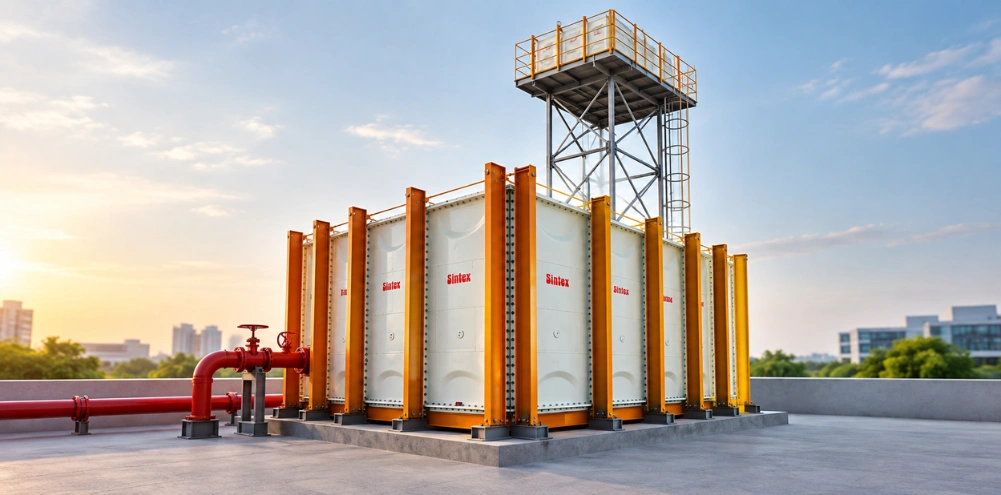
Quick Answer: An SMC panel tank stores water for fire protection systems in buildings and industrial facilities. Its modular construction allows easier transport and on-site assembly. Plan the required capacity, location, pump connections, inspection access and compartment layout to suit the fire protection system and site conditions.
A fire protection system is only as good as the water standing behind it. When the pumps call for water, the full required volume has to be there, and it has to reach the connected equipment without delay. That is why the fire water tank belongs in the fire protection plan from the start, not after the building is finished.
How much water you need comes down to the building, the fire protection systems it feeds, pump demand, and how long the supply has to last. Where the tank sits carries its own weight. The location has to leave room to run the pipe connections and to reach the tank for inspection and cleaning once it is in service.
This article works through the decisions those two questions set up: sizing the storage, choosing the tank, providing access, compartmenting it, and settling where it goes.
Key Takeaways
- Confirm fire water storage tank requirements from the fire protection design, building rules and any industry-specific requirements.
- Plan fire water storage tank capacity from the systems that will draw water and the required supply period.
- Review the tank material, site conditions, foundation and installation access before fixing the tank configuration.
- Ensure usable inspection, cleaning and maintenance access around the tank and associated equipment.
- Consider compartmentation where the project requires storage to remain available during cleaning or repair.
- Choose an above-ground or underground arrangement after checking site space, structure, access, water table and pumping needs.
Understanding Fire Water Storage Tank Requirements
Fire water storage tank requirements depend on the type of facility, the fire protection systems installed. A warehouse with sprinklers may need a different storage arrangement from an industrial plant with hydrants and other fire-fighting systems. In India, the base rule for providing and maintaining this supply is IS 9668:1990, the code of practice for water supplies for fire fighting, so check the design against it and against the local fire authority’s conditions.
For fire fighting water storage tanks, the connected systems, pump capacity, suction arrangement and water supply should be planned together. Some industrial requirements also cover storage during maintenance. For example, certain petroleum installations require two equal interconnected compartments, with at least 50% of the total water capacity kept available while maintenance is carried out.
This specific rule applies to those installations, so check the applicable requirements before deciding the tank size and arrangement. The arrangement should leave enough room for inspection, cleaning, valves and pipe connections. These details need to be confirmed during design so the stored supply remains usable and the equipment can be serviced safely when required.
How to Plan Fire Water Tank Capacity?
Start by identifying fire protection systems that will draw water from the tank. Note the flow needed by each system and the period for which that flow must continue. This gives the design team enough information to determine the site’s storage volume.
Check the fire water storage tank capacity against the applicable building code, fire authority conditions, project requirements and the fire pump and pipe network. As a floor, IS 9668 sets the reserve at a minimum of four hours of the fire pumps’ aggregate working capacity, measured above the suction point, and lets the stored quantity be halved where an efficient municipal hydrant system can make up the supply. The required volume can differ between facilities, so one capacity cannot suit every site.
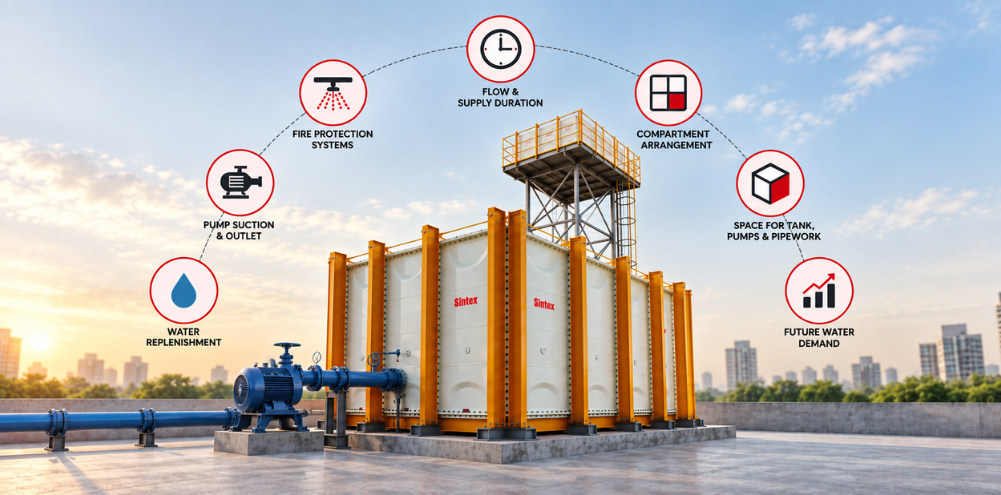
Capacity planning should include:
- Fire protection systems connected to the tank
- Required flow and supply duration
- Pump suction level and outlet position
- Water available for replenishment
- Compartment arrangement, where required
- Space for the tank, pumps and pipework
- Any change that could increase water demand
The tank’s physical volume may not equal the amount of water available to the fire pumps. Suction level, freeboard, outlet height and internal arrangement can reduce usable volume. These details should be checked before installation.
The final fire water tank size should come from the approved fire protection design, based on the site’s actual water demand and required supply period. This keeps the storage plan tied to the systems the tank must serve.
Why Choose SMC Panel Tanks for Fire Water Storage?
SMC means Sheet Moulding Compound. An SMC tank is made from separate panels joined on site. This modular construction makes transport and installation easier when a large finished tank cannot pass through narrow access paths. Panels can be carried into the location and assembled there.
Corrosion resistance is useful for fire-water storage. The parts that still need attention are the metal ones: under IS 14399, the Indian standard for GRP sectional tanks, the external support frame, bolts and tie rods are coated or galvanised mild steel, and Sintex recommends repainting these iron items periodically. That, not the panels, is the corrosion item to check.
Because the panels are bolted with a gasket at each joint, IS 14399 Part 2 calls for a leak test after assembly: the tank is filled to overflow level and checked for any visible leak over 48 hours before it goes into service.
Capacity can also be planned to suit the project. Different tank dimensions can be considered according to space, storage needs and structural support. Sintex builds SMC panel tanks up to 16,00,000 litres from food-grade material that is chemically resistant and fire retardant, which matters when the tank itself sits inside a fire-risk area.
Important points include:
- Modular panels for easier movement and assembly
- Resistance to rust and corrosion
- Flexible tank dimensions and storage capacity
- Suitability for large water storage projects
- Fire-retardant, chemically resistant material
An SMC panel tank still needs a suitable foundation, support system, pipe connection. Plan these parts before installation.
The Sintex SMC panel tank range can be considered for large fire-water storage projects when its size, structure and configuration match the site’s requirements.
SMC Panel Tanks vs Conventional Fire Water Storage Solutions
A modular panel tank and a conventional RCC or steel tank can meet the same broad storage purpose, but they differ in how they’re built and installed.
| Factor | SMC panel tank | RCC or steel tank |
| Construction | Panels assembled at the site | Cast or erected as a fixed structure |
| Transport | Smaller panels can help with restricted site access | Large components or construction materials may need wider access |
| Space planning | Dimensions can be configured around the approved layout | Shape depends on the structural design |
| Maintenance | Panels, joints and fittings need inspection | Structure, coatings, joints or lining may need inspection |
| Civil work | Requires a designed foundation or support system | Civil structure forms a major part of the tank |
| Future changes | Modular construction can offer layout flexibility | Changes may require structural or civil work |
The choice between an SMC panel tank and another fire water tank should be based on capacity, structure, site access, maintenance and the complete fire protection design.
Importance of Access in Fire Water Storage Tanks
Access should be planned before the tank is installed. The fire water storage tank requirements should include enough space to reach inspection openings, valves, pipe connections and other working parts. Cleaning access is also needed so the tank can be checked and serviced without blocking nearby equipment or pipework.
A proper access plan should cover:
- Safe entry to inspection openings
- Clear space around valves and pipe connections
- Access for cleaning and repair work
- Safe routes for maintenance staff
- Enough working space around the tank
The tank location should allow these tasks without moving other equipment. Poor access can make routine inspection harder and delay maintenance work. Planning these points at the design stage helps keep the tank usable and easier to service throughout its working life.
Compartmentation in Fire Water Storage Tanks: Why It Matters
Compartmentation divides a tank into separate sections that can be isolated when required. This arrangement helps during cleaning, inspection or repair because one section can be taken out of service while another continues to hold water. The exact layout depends on the fire protection system and the rules that apply to the site.
Indian practice is specific here. IS 9668 says that where a single tank is used, it should be built as two equal interconnected compartments, and that before one compartment is emptied for cleaning or repair, the other must be kept full and connected to the system. Two equal compartments is also the reason roughly half the storage stays available during maintenance. For petroleum installations, OISD-STD-116 sets the same two-compartment design and sizes the reserve at four hours of aggregate pump capacity.
When planning a fire water storage tank, consider how each section will connect to the pumps and pipework. Isolation valves should allow you to take a section out of service without unnecessarily affecting the rest of the system.
The fire water tank requirements should also cover:
- Number and size of compartments
- Isolation valves for each section
- Pump suction arrangements
- Connections between compartments
- Access for cleaning and inspection
- Minimum storage that must remain available during maintenance
Check the compartment arrangement as part of the complete fire protection design. Poorly planned divisions can affect available storage, pump operation or maintenance work.
Above-Ground vs Underground Fire Water Tanks
The tank location should suit the site, the fire protection system and the work needed around the tank. An above-ground fire water tank keeps the storage at grade, which can make inspection and access easier. A large SMC fire-water tank usually sits on a designed base rather than raised on a tower, so treat an “overhead” or elevated arrangement as the exception, checked against the structure that would carry the full weight of the tank. The site must have enough space for the tank, a suitable foundation or support structure and safe access for maintenance.
An underground fire water tank keeps the storage below ground and can save surface space. Sintex offers its SMC panel tanks in both above-ground and underground forms, so the same product covers either position; decide from the site. Installation requires careful planning for excavation, soil conditions, groundwater, structural strength and access to inspection openings. Also plan pump suction and pipe connections before construction.
When comparing the two arrangements, check:
- Available space and site layout
- Tank foundation or structural support
- Access for inspection and cleaning
- Pipe and pump connections
- Groundwater and soil conditions
- Cost and practical maintenance needs
- Applicable fire protection requirements
The choice should follow the complete project design. A location that looks suitable on the site may still create problems for access, pumping or maintenance if these points are not checked early.
Applications of SMC Panel Tanks for Fire Protection Systems
SMC panel tanks can be used where a facility needs a dedicated water supply for fire protection. Their panel-based construction suits sites where a large finished tank is difficult to transport or where the tank size must fit a planned space.
Common applications include:
- Industrial plants and factories with hydrant or sprinkler systems
- Commercial buildings that require dedicated fire-water storage
- Warehouses where stored goods need fire protection
- School, hospital and institutional campuses
- Infrastructure and utility projects with large water storage needs
A commercial fire water tank should be sized according to the fire systems it serves and the requirements that apply to the building. Industrial sites may have different storage needs based on their processes and fire risks.
The fire water tank should also have suitable pipe connections, pump access, inspection points and maintenance space. These details need to be included in the site plan so the tank works properly with the complete fire protection system.
How to Select the Right SMC Fire Water Tank for Your Project
Start by matching the tank to the fire protection system’s needs and the available on-site space. The tank size, layout and fittings should work with the pumps, pipework and maintenance plan.
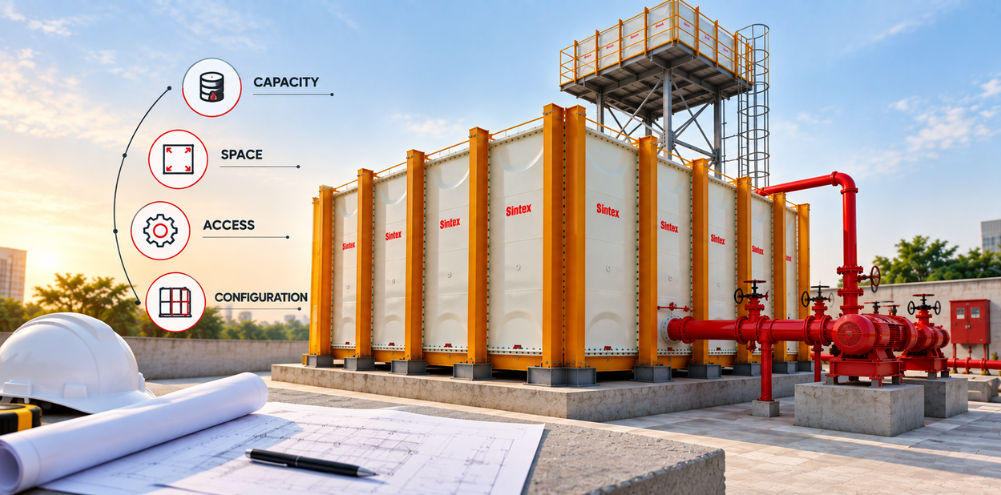
Use this checklist before making a selection:
- Determine the required capacity: Confirm the storage volume from the approved fire protection design and the systems connected to the tank.
- Evaluate the installation space: Measure the available area and check whether panels, tools and installation equipment can reach the proposed location.
- Check access requirements: Leave enough space for inspection openings, valves, pipe connections, cleaning and repair work.
- Select a suitable configuration: Check the tank dimensions, panel arrangement, compartments, inlet, outlet and overflow connections against the site plan.
An SMC panel tank should also have a foundation and support arrangement suited to its size and installation conditions. Sintex offers SMC panel tanks in different sizes and configurations for large water storage needs. Before installation, the selected tank should match the required capacity, available space and project requirements.
Conclusion
A fire-water storage plan should match the building, fire protection system and available site space. Check the required water volume, pump connections, tank position and access before installation starts. An SMC panel tank may suit a project where its size, modular construction and layout fit the site conditions. Check the foundation, support arrangement and pipe connections before assembly. The final tank size should come from the approved fire protection design and req
An SMC panel tank stores water for fire protection systems in large buildings and facilities. It can supply hydrants, sprinklers and other fire-fighting equipment when required. Its panel-based construction allows on-site assembly.
The fire water storage tank capacity is based on the water demand of connected fire protection systems and the required supply period. The design should also consider pump demand, suction level, replenishment and applicable building or industry requirements.
Fire fighting water storage tanks need enough capacity and suitable connections for the systems they serve. SMC construction lets you transport and assemble separate panels on site. This can help where access is limited or large storage volumes are required.
Check the required volume, site space, foundation, pipe connections, inspection access and maintenance needs. The fire water storage tank requirements should also be checked against the applicable fire protection design, building rules and any industry-specific conditions.
An overhead fire water tank is installed above ground and can provide easier access for inspection. An underground arrangement saves surface space but needs careful planning for excavation, groundwater, structural strength, pump suction and access to inspection openings.
Compartmentation divides storage into sections that can be isolated when needed. This can allow cleaning or repairs while another section remains available. The arrangement must suit the fire water tank design, pumps, valves and required available storage.
Good access allows staff to reach inspection openings, valves, pipe connections and internal areas safely. Cleaning and repair work also becomes easier. The layout should provide enough working space around the fire water storage tank without blocking nearby equipment.
Yes, SMC panel tanks can be considered for suitable projects. A commercial fire water tank needs to match the building's fire systems, required storage and site conditions. Industrial facilities may have additional requirements based on their processes, stored materials and applicable safety rules.