
How to Identify Quality PVC Pipes: A Quick Guide for Homeowners
Share
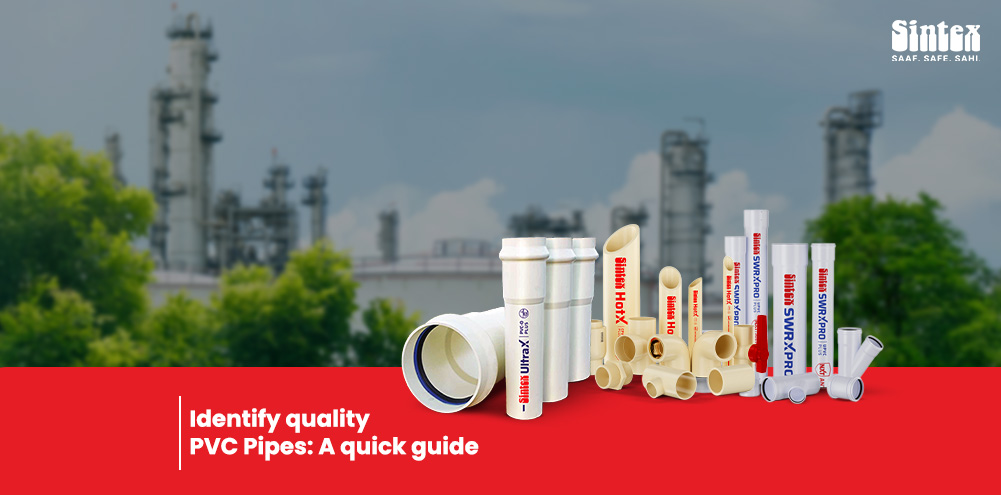
Table of Contents
Pipes are invisible until something goes wrong. Nobody thinks about them during a renovation or a new build. The decisions that matter get made quickly, often based on price per metre or whatever the supplier recommends.
That’s where most plumbing problems start.
Substandard PVC water pipes are far more common in the market than homeowners expect. They look similar to certified alternatives at the point of sale. The difference shows up later, sometimes years later, when a joint fails or a section cracks under normal working pressure.
This guide covers what actually separates good pipe quality from bad, what to physically check before buying, and what the warning signs of counterfeit products look like. No plumbing background needed.
Key Takeaways
- Substandard PVC pipes look nearly identical to certified ones at the point of sale; the difference only shows up later, usually inside a finished wall.
- The ISI mark is the first thing to check, and it should be verified through the BIS portal since some counterfeit products carry convincing imitations.
- PVC is not one product: CPVC is for hot and cold supply, UPVC for cold supply and drainage, and SWR for soil and waste. Using the wrong type for the application will cause failure regardless of pipe quality.
- Pressure class, wall thickness consistency, and legible manufacturer markings are all checkable on the spot with no tools or expertise needed.
- The price gap between certified and substandard pipe rarely comes close to the cost of a plumbing failure inside a finished wall.
Why Pipe Quality Matters
A cheap pipe that fails inside a wall doesn’t save money. It creates a repair job that involves cutting through finished surfaces, sourcing replacement materials, and dealing with water damage that’s been building quietly for months. That’s the real cost comparison when someone’s weighing up a certified product against a low-price alternative.
Pipe quality determines pressure tolerance, resistance to the chemical profile of the water being carried, and how the material behaves over years of thermal cycling. Get the specification right and the system runs without any attention for decades. Get it wrong and the problems compound.
Key Signs of a High-Quality PVC Pipe
Most quality checks don’t require tools. They just require knowing what to look at.
- ISI certification mark This is the first thing to confirm. The Bureau of Indian Standards ISI mark means the pipe has been independently tested against national standards. No mark is a red flag. Watch out for printed lookalikes too. Some counterfeit products carry a marking that resembles the real thing but carries no traceable certification number. If it can’t be verified through the BIS portal, treat it as uncertified.
- Wall thickness consistency Look at the pipe end. The wall should be the same thickness going all the way around. It’s a simple check and takes about three seconds. Uneven walls mean uneven pressure tolerance and a likely failure point at the thinnest section.
- Surface quality The outside should be uniform in colour with no roughness or patchy appearance. The internal bore needs to be smooth. Rough internal surfaces accumulate mineral deposits faster, reduce flow rates over time, and in supply lines, create conditions where bacterial films can establish.
- Manufacturer markings Quality pipe has legible, consistently spaced print along the body: brand name, product type, nominal diameter, pressure class, manufacturing details. Faded, smudged, or missing markings typically mean one of two things. Either the product is low-grade or it’s been relabelled.
- Colour Standard conventions in Indian plumbing: grey or white for potable supply, dark grey or brown for drainage, purple for reclaimed water. Off-colour or mottled pipe usually means inconsistent compound or reprocessed material in the mix.
- UV and chemical ratings for exposed applications Not assumed, confirmed. A pipe without UV stabilisers installed above ground will embrittle and start cracking within a few seasons. Check the spec sheet, not just the label.
What Should You Check Before Purchasing PVC Pipes for Home Use?
A few things need to be confirmed before any purchase goes through. Skipping these checks is common. It’s also avoidable.
Does the pipe type match the application?
PVC is not a single product. Pipes come in application-specific types, and using the wrong one creates failures that have nothing to do with manufacturing quality.
CPVC handles hot and cold potable supply. UPVC covers cold supply, outdoor irrigation, and drainage. SWR drainage pipes are purpose-built for soil and waste removal. A standard UPVC pipe in a hot water line will fail. So will a drainage pipe in a pressurised supply application.
Pressure class rating
Indian market pipes sell across Class 2 through Class 5. Higher class means thicker walls and higher pressure tolerance. Buildings with pumped supply systems or elevated storage tanks need a higher pressure class than a gravity-fed ground-floor system. An under-rated pipe in a high-pressure line is simply waiting to burst.
Schedule rating
Schedule 40 and Schedule 80 share the same outer diameter but differ significantly on wall thickness. Schedule 80 has the heavier wall. Better pressure resistance, better impact resistance. For exposed runs or locations where the pipe takes physical stress, the schedule rating matters more than the nominal diameter.
Fitting compatibility
Pipes and fittings from different manufacturers don’t always match dimensionally at the same nominal size. This is a practical problem. Mismatched components produce joints that leak or pull apart under pressure. Confirm compatibility before mixing product lines on a job.
Packaging and documentation
Certified products come packaged and documented. Loose pipes with no labelling sold out of an open truck or unmarked storeroom introduce genuine supply-chain risk. Documentation isn’t a formality in markets where counterfeits are in circulation.
Warning Signs of Low-Quality or Fake Pipes
Some are obvious. Misspelled brand names on the pipe body. Pricing well below the market rate for the same specification. Rough or uneven pipe ends. A chemical smell from the material.
Others are easy to miss if nobody’s looking. Fittings that don’t seat properly and need forcing. Markings that smudge when rubbed. Sellers who can’t produce any product documentation and don’t seem to expect to be asked.
One of these warrants caution. Several together should end the purchase immediately.
Why Should You Choose Sintex PVC Pipes Over Other Brands?
Sintex manufactures PVC pipe systems across application-specific types, all certified to Indian quality standards. CPVC for hot and cold potable supply, UPVC for cold supply and outdoor use, UPVC drainage pipes with anti-rodent resistance and chemical inertness for sewage lines.
The practical distinction between Sintex and lower-cost alternatives is manufacturing consistency and traceable certification. Each product line is built to a defined specification. The pipe that arrives on site is the pipe that was tested.
For homeowners comparing on price, it’s worth running the actual numbers. A plumbing failure in a finished wall costs excavation, replacement material, and repairs to water-damaged finishes. The price difference between a certified pipe and a substandard one rarely comes close to any of that.
Final Thoughts
Pipe quality gets decided at purchase. By the time a problem shows up, the pipe is already in the wall.
The good news is that checking quality doesn’t take expertise. ISI certification, even wall thickness, legible markings, correct application type, and appropriate pressure class are all verifiable on the spot. Most certified products pass all of these without any difficulty. Most substandard ones don’t.
Buying correctly once is cheaper than repairing the alternative later.
Also, Read: Types of PVC Pipes and Fittings
Depends entirely on the application. CPVC is right for hot and cold potable supply lines. UPVC covers cold supply, irrigation, and general drainage. SWR UPVC handles soil and waste. There's no single best PVC type for an entire home because different parts of the plumbing system have different requirements.
Schedule 80. Both share the same outer diameter but Schedule 80 has a significantly heavier wall. That reduces the internal bore slightly and substantially increases pressure and impact resistance. Schedule 40 handles most standard residential requirements. Schedule 80 is for higher-pressure environments or locations where physical stress on the pipe is likely.
Without lab equipment, a few hands-on checks work well. Look at the cut end for consistent wall thickness all the way round. Check the outer surface for uniform colour and texture. Verify the ISI mark is present and the manufacturer details are legible. Try a gentle flex: quality PVC has some give without any stress whitening. A pipe that shows white marks under light bending has either degraded or been made with poor compound. That one shouldn't be bought.
uPVC (rigid, used for cold supply, drainage, irrigation), CPVC (rated for hot and cold potable water up to around 93 degrees Celsius), RPVC or standard flexible PVC (lower-pressure and flexible applications), and mPVC or modified PVC (formulated for impact resistance). Each has a different temperature and pressure range.
Consistent wall thickness. Chemical resistance matched to the water type. UV stabilisation for anything installed outdoors or above ground. A smooth bore that doesn't scale heavily over time. Correct pressure class for the actual operating conditions. These aren't individually sufficient. They all need to be present together, along with correct installation technique and properly matched fittings.
For cold water, yes. UPVC and CPVC systems regularly exceed 50 years of service life under correct installation and operating conditions. PVC doesn't corrode, doesn't develop significant internal scaling under normal water chemistry, and maintains its dimensions over decades without requiring any major maintenance. The caveat is that all of this depends on using the right pipe type for the application and sourcing from a certified manufacturer.
For standard plumbing, Schedule 80 PVC has the highest wall thickness and pressure ratings. Between PVC types, CPVC handles higher temperatures without structural compromise, making it stronger in hot water applications than uPVC. For cold supply specifically, Schedule 80 uPVC from a certified manufacturer is the highest-strength option in the standard product range.
Categories
Year
Related blogs