
CPVC vs HDPE pipes: Which one should you choose and why?
Share
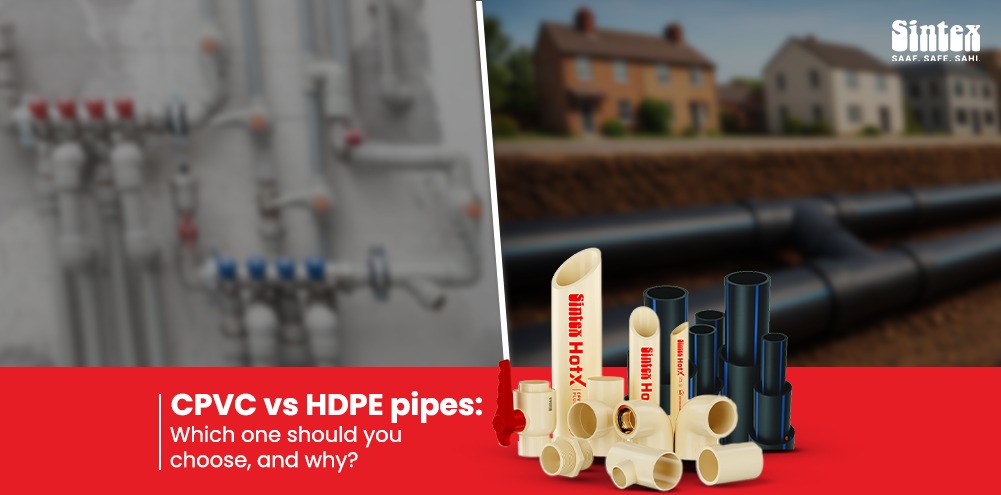
Table of Contents
Quick Summary
Choosing between CPVC and HDPE pipes can be quite challenging if you are considering a plumbing or water management project. Each pipe type serves a clear purpose. In this blog, we explain the real differences between CPVC pipes and HDPE pipes, where each one works best, and how to choose based on usage, temperature, pressure, and installation needs. The goal is simple. Help you make the right decision without technical overload.
Table of Contents
- Understanding the Purpose of Pipe Selection
- What CPVC Pipes Are Best Suited For
- What HDPE Pipes Are Best Suited For
- Key Performance Differences That Matter
- CPVC vs HDPE Comparison Table
- Installation and Maintenance Considerations
- Safety, Standards, and Long-Term Reliability
- Which One Should You Choose and Why
- Conclusion
- FAQs
It is hazardous to use the wrong pipe, as you can end up with leaks, bad water quality, or have to undergo repairs many times. The question that many homeowners, builders, and contractors put across to us is: Should I use CPVC or HDPE pipes?
The answer depends on where the pipe will be used, what kind of water it will carry, and the temperature and pressure involved. We will keep this simple and direct so you can decide with confidence.
At Sintex, we design water solutions keeping real site conditions in mind. This comparison is written to help you choose, not to sell.
Understanding the Purpose of Pipe Selection
Not all plumbing pipes do the same job. Some are meant for hot water inside homes. Others are designed for outdoor drainage or surface water flow.
Before comparing materials, ask yourself:
- Is the pipe for hot or cold water
- Will it be used indoors or outdoors
- Does it need to handle pressure or surface flow
Once you understand these points, it becomes very clear what the differences between CPVC and HDPE pipes are.
What CPVC Pipes Are Best Suited For
CPVC is mostly used in house plumbing, where heating and cleanliness are of high importance.
Where CPVC Pipes Are Used
- Hot and cold water supply inside buildings
- Residential bathrooms and kitchens
- Commercial plumbing lines
- Vertical and concealed plumbing
CPVC pipes and fittings are preferred where water temperature can rise and pressure remains consistent.
Why CPVC Works Well
- Handles high-temperature water
- Stable under pressure
- Resistant to corrosion
- Suitable for drinking water
Solutions like Sintex Hotx CPVC pipe are designed for demanding internal plumbing conditions, especially where heat and hygiene matter. Sintex HotX CPVC Plus features the world’s first antimicrobial CPVC pipe technology, designed to actively protect plumbing systems from harmful microbial growth.
What HDPE Pipes Are Best Suited For
HDPE pipes are widely used for surface water movement and external applications.
Where HDPE Pipes Are Used
- Surface drainage systems
- Outdoor water management
- Industrial and commercial drainage
- Areas exposed to sunlight and movement
Hdpe pipes and fittings are not only flexible but also very strong; it is thus fair to say that they can be used even in areas where the pipes have to resist movement or load.
Why HDPE Works Well
- Flexible and impact-resistant
- Suitable for outdoor use
- Handles surface water efficiently
- Long service life in exposed areas
This is why HDPE pipes are commonly used in drainage channels and external water flow systems.
Key Performance Differences That Matter
Let us break this down in a simple way.
1) Temperature Handling
CPVC pipes are built to manage hot water. HDPE pipes are not suitable for high-temperature internal plumbing.
2) Pressure Conditions
CPVC performs better in pressurised plumbing lines. HDPE is better for gravity-based or surface flow systems.
3) Installation Location
CPVC is ideal for indoor plumbing pipes. HDPE works best outdoors.
4) Jointing Method
CPVC pipes and fittings use solvent cement joints. HDPE pipes and fittings often use mechanical or fusion joints.
CPVC vs HDPE Comparison Table
| Feature | CPVC Pipes | HDPE Pipes |
| Primary Use | Internal plumbing | Surface and external drainage |
| Temperature Handling | High | Low |
| Pressure Handling | Good | Limited |
| Installation Area | Indoor | Outdoor |
| Flexibility | Rigid | Flexible |
| Common Use Case | Hot water supply | Drainage channels |
This table gives a quick decision guide based on real usage.
Installation and Maintenance Considerations
CPVC Installation
- Lightweight and easy to handle
- Solvent cement jointing
- Suitable for concealed plumbing
- Minimal maintenance required
This makes CPVC pipes and fittings a practical choice for residential and commercial plumbing.
HDPE Installation
- Requires proper alignment
- Flexible nature helps on uneven surfaces
- Suitable for modular drainage layouts
HDPE pipes and fittings are often chosen for projects where expansion or extension may be required.
Safety, Standards, and Long-Term Reliability
Pipes should meet Indian and global quality standards to ensure safety. At Sintex, products like Sintex Hotx CPVC pipe are designed keeping pressure, temperature, and hygiene requirements in mind. CPVC systems are commonly certified for potable water use.
HDPE drainage solutions are designed to handle long-term outdoor exposure and water flow without structural damage. Choosing the right pipe improves system life and reduces future repair risks.
Which One Should You Choose and Why
Choose CPVC if:
- You need a hot and cold water supply
- The system is inside a building
- Hygiene and temperature control matter
Choose HDPE if:
- You need surface or outdoor drainage
- The pipe will be exposed to sunlight
- Flexibility and durability are important
There is no single better option. The right choice depends on the job. CPVC pipes and HDPE pipes solve different problems.
Conclusion
The decision between CPVC and HDPE should always be based on application, not assumption.
Use CPVC pipes and fittings for internal plumbing where temperature and pressure are involved. Options like Sintex Hotx CPVC pipe are designed for such conditions.
HDPE pipes and fittings should be used in the drainage, surface water, and outdoor systems where the need for durability and flexibility is high. Your system will run smoother and for a longer time when the pipe material is in sync with the job.
Sintex CPVC and many other drainage solutions are there to help you have the safest and most reliable plumbing and water management systems.
Definitely. CPVC pipes can be used for potable water systems only when they are certified.
No. HDPE pipes are not recommended for high-temperature water supply.
Both last long when used correctly. CPVC lasts longer in plumbing. HDPE lasts longer in outdoor drainage systems.
Categories
Year
Related blogs