
- Description
- Features & Benefits
- Range and Specifications
- Applications
- FAQs
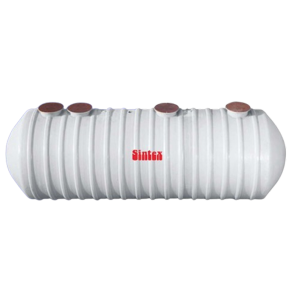
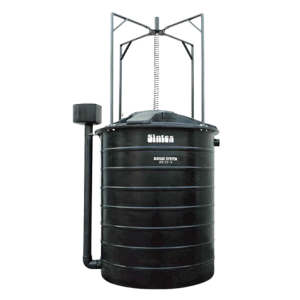
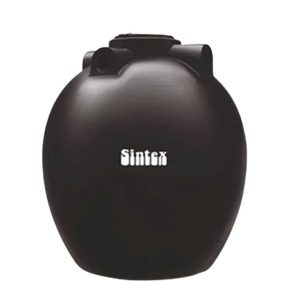
If you’re looking for a way to convert your organic waste into renewable energy, the Sintex Biogas Plant transforms waste such as cow dung, food waste, and kitchen waste into combustible biogas and nutrient-rich slurry through a natural biological process.
How it works: Organic waste goes into the digester tank, where microbes break it down in the absence of oxygen (anaerobic digestion). This process releases biogas, primarily methane (CH₄) and carbon dioxide, which you can use directly for cooking, heating, or power generation. The leftover material, called slurry, is a nutrient-rich by-product that works as organic manure for farming or gardening.
- Renewable, Clean Energy Source: Biogas replaces/supplements the use of LPG or fossil fuels, which helps reduce the carbon footprint and promotes sustainability.
- Usage: Customizable for residential, commercial, and industrial needs.
- Applications: Best suited for small, medium & large restaurants, hotels, clubs, resorts, hostels, institutes, religious establishments, industrial canteens, hospitals & communities.
- Low Maintenance & Adaptability: Easy to maintain and requires a smaller space.
- Saves Gas: Saves 130 to 135 kg of commercial gas per Month from 100 Kg/day food waste.
- Waste Reduction: It reduces organic waste disposal, lowering costs and eliminating the need to wait for a disposal van.
- Value from Waste: The by-product slurry from biogas production is useful as manure for agriculture or gardening.
- Swachh Bharat Mission: The ideal tool for advancing waste management.
- Government Recognised: Register for Subsidies by MNRE.
Are a biogas plant and a gobar gas plant the same thing?
Yes, "gobar gas plant" is the traditional Hindi term for the same technology, historically referring to plants fed primarily on cow dung ("gobar"). A modern Sintex Biogas Plant works on the same anaerobic digestion principle but accepts a wider range of organic feedstock, cow dung, kitchen waste, and food waste, and not cow dung alone. So every gobar gas plant is a type of biogas plant, but a Sintex Biogas Plant is built for broader waste input than the name "gobar gas" traditionally implies.
Features & Benefits
- Moulded in one piece for above-ground and underground installation reduces joints/seams and long-term leak risk
- Easy to use, install, dismantle & maintain at site
- Supplied in Knock Down condition simplifies transport and on-site assembly
- Constant gas pressure via spider mechanism
- Easy to relocate, if required
- Return on Investment in less than 2 years
- Dual output value produces usable biogas plus nutrient-rich slurry, an ideal manure for small-scale agriculture
- Renewable, clean energy output replaces or supplements LPG, reducing carbon footprint
Domestic Biogas Plant vs. Commercial/Industrial Biogas Plant
Feature | Domestic Biogas Plant | Commercial / Industrial Biogas Plant |
Typical Users | Individual homes, small families | Hotels, restaurants, hostels, dairies, factories, institutions |
Daily Feedstock | Kitchen/food waste from household use | Bulk food waste, canteen waste, dairy/agricultural waste |
Installation Space | Compact, suited to home plots | Larger footprint depending on capacity |
Investment | Lower, single-unit cost | Higher, scales with capacity |
Primary Output Use | Cooking gas for household kitchen | Cooking gas for institutional kitchens, potential power generation |
Common Applications | Residential homes, small farms | Restaurants, resorts, clubs, hostels, institutes, hospitals, industrial canteens |
Key benefits of Sintex Biogas Plant
Sintex Biogas Plant converts organic waste (cow dung, food waste, and kitchen waste) into combustible biogas and nutrient-rich slurry through a natural biological process. It's a renewable, clean energy source that replaces or supplements LPG and other fossil fuels, cutting your carbon footprint while turning daily waste into usable fuel and manure.
Key benefits at a glance:
- Saves gas: up to 130 to 135 kg of commercial gas saved per month from 100 kg/day of food waste
- Reduces waste disposal costs: less organic waste to haul away, no waiting on disposal vans
- Dual output: usable biogas plus nutrient-rich slurry for farming or gardening
- Low maintenance: Simple upkeep, smaller footprint than most waste-to-energy systems
- Supports Swachh Bharat Mission goals for organic waste management
- Government recognised: eligible for subsidy support under MNRE schemes
- Customizable: sized for residential, commercial, and industrial needs
What Affects the Cost of a Biogas Plant?
There's no single sticker price for a biogas plant because cost scales with a handful of variables:
- Plant capacity: sized by daily feedstock volume (kg/day of waste processed); larger digesters cost more but process more waste and generate more gas.
- Feedstock type: cow dung, food waste, and mixed kitchen waste digest at different rates and gas yields, which can affect the tank size and design needed for a given output.
- Installation type: a compact residential unit costs less than a commercial/industrial system designed for bulk institutional waste.
- Site preparation: above-ground vs. underground installation, ground conditions, and access for delivery/assembly all factor into total setup cost.
- After-sales and service needs: ongoing maintenance and spare-parts access can factor into total cost of ownership over the plant's lifetime.
How to Choose the Right Biogas Plant Capacity?
Choosing the right size comes down to three questions:
How much organic waste do you generate daily?
A household producing a few kilograms of kitchen scraps a day needs a very different plant than a hotel kitchen or dairy producing bulk waste. Daily feedstock volume (kg/day) is the primary sizing input.
How much space do you have?
Domestic units are built for compact home plots; commercial/industrial plants need a larger footprint that scales with capacity. Above-ground vs. underground installation also affects space planning.
What do you need the output for?
A household mainly wants cooking gas for the kitchen. Institutions (hostels, restaurants, hospitals) may want cooking gas at scale, and some industrial setups look at power generation as an additional use for the biogas produced.
Why Choose a Sintex Biogas Plant
As a trusted biogas plant manufacturer in India, Sintex brings decades of experience in engineering durable waste and water management solutions for Indian conditions. Sintex Biogas Plants are built for:
- Reliability across climates: Engineered for varied Indian soil and weather conditions
- Low-maintenance, long-lasting design: One-piece construction minimizes leakage and repair needs
- Institutional and project-scale support: Suited to large organisations, hospitality groups, and municipal or community waste-to-energy projects, not just individual households.
- Nationwide brand presence: Available Pan-India
Who Uses a Sintex Biogas Plant?
Sintex Biogas Plants are used across:
- Homes and residential communities
- Farms and dairy operations
- Hostels and educational institutes
- Hotels, resorts, and clubs
- Restaurants and industrial canteens
- Religious establishments
- Hospitals
- Municipal and community waste management projects
How a Sintex Biogas Plant Works?
Organic waste goes into the digester tank, where naturally occurring microbes break it down in the absence of oxygen, a process called anaerobic digestion. As digestion proceeds, the waste releases biogas, composed primarily of methane (CH₄) and carbon dioxide (CO₂), which you can use directly for cooking, heating, or power generation.
The leftover material, slurry, is a nutrient-rich by-product that doubles as organic manure for farming or gardening, giving the system a dual output: energy and fertilizer from the same feedstock.
Why this matters beyond the household kitchen:
- Waste reduction at the source: on-site processing means organic waste skips the landfill and the disposal pickup wait, cutting both volume and cost.
- Alignment with the Swachh Bharat Mission: decentralized, on-site organic waste treatment is one of the mission's core waste-management goals, making a biogas plant a practical tool for households, institutions, and municipalities working toward those targets.
- Emissions offset: every unit of biogas used in place of LPG is a unit of fossil fuel not burned, which is where the carbon-footprint reduction actually comes from (not just "green" in name)

Moulded in one piece for above-ground and underground installation
Durable and high-quality product, reduces waste disposal cost
Easy to use, install, dismantle & maintain – at site
Supplied in Knock Down Condition
Gives constant pressure due to spider mechanism
Easy to relocate, if required
Return on Investment in less than 2 Years
Ideal manure for small-scale agriculture
| Model | Capacity of Gas Generation/ Day | Cow Dung in Kg/ Day | No of Cows Required | Food Waste in Kg/ Day | Equivalent LPG Produced/ Day (Kg) | Avg Cooking Time Per Day (1.5-2 Hours) |
|---|---|---|---|---|---|---|
| FTGB 100-01 | 1.0 | 20-25 Kg + 20-25 Ltr Water |
3 | 10-12 Kg + 12-15 Ltr Water |
0.434 | 1.5-2 Hours |
| FTGB 200-01 | 2.0 | 40-50 Kg + 40-50 Ltr Water |
5 | 20-25 Kg + 25-32 Ltr Water |
0.868 | 2.5-4 Hours |
| FTGB 300-01 | 3.0 | 60-75 Kg + 60-75 Ltr Water |
8 | 30-36 Kg + 37-45 Ltr Water |
1.302 | 3.5-5 Hours |
| FTGB 400-01 | 4.0 | 80-100 Kg + 80-100 Ltr Water |
10 | 40-50 Kg + 50-65 Ltr Water |
1.736 | 5-6 Hours |
| FTGB 1000-01 | 10.0 | 200-250 Kg + 200-250 Ltr Water |
25 | 100-125 Kg + 125-150 Ltr Water |
4.340 | 12-14 Hours |
| FTGB 2000-01 | 20.0-25.0 | 400-500 Kg + 400-500 Ltr Water |
50 | 200-250 Kg + 250-315 Ltr Water |
8.680 | 20-22 Hours |
Small, medium & large restaurants
Hotels, clubs & resorts
Hostels and institutes
Religious establishments
Industrial canteens
Hospitals & communities
Cost depends on plant capacity, feedstock type, and installation type (residential vs. commercial/industrial). Contac
Sintex Biogas Plants fall under the category of technology supported by the Ministry of New and Renewable Energy's National Bioenergy Programme, which promotes biogas adoption for households, farmers, and institutions across India.
The main factor is capacity. A larger plant that processes more waste each day costs more than a compact household unit. Beyond size, the model you choose, the type and volume of feedstock, and whether it is installed above ground or underground all affect the final price. Site preparation and any add-on accessories also play a part. Sintex offers plants from 1m³ upward to match different needs.
Match capacity to how much organic waste you generate each day. A home producing a few kilograms of kitchen waste suits a compact 1 to 2 m³ plant, while restaurants, hostels and institutions with larger daily waste need bigger units. Also think about how much cooking gas you want to offset. Sintex plants range from 1m³ to 25m³ and above, so you can size it to your actual daily input.