
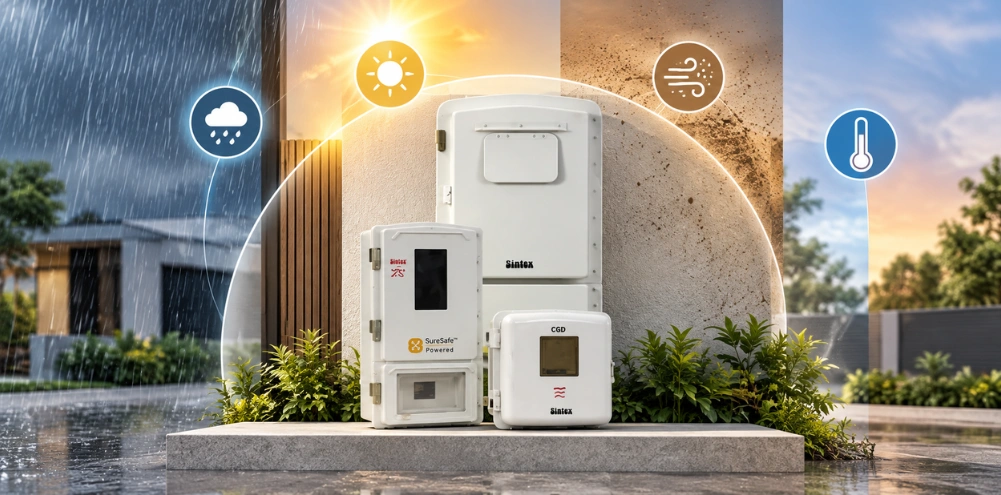
Table of Contents
tly. The sun bakes it for hours every day. And dust settles into every gap it can find, and temperature swings between a hot afternoon and a cool night put real stress on the material year after year.
None of that is a problem for the meter itself, as long as the enclosure around it is built well. A weatherproof meter box keeps rain and dust out, protects the wiring inside, and shields anyone who needs to access it later for a reading or a repair.
However, choosing the wrong one isn’t just a durability issue; it’s a safety one too, since exposed or damaged fittings around live electrical connections create a genuine hazard outdoors, one that only gets worse the longer it goes unnoticed.
Key Takeaways
- Outdoor meter boxes need protection from rain, dust, sun, and temperature swings, not just a basic cover.
- An IP-rated meter box resists dust and water, so check it closely before you buy.
- A weatherproof meter box should also stay easy to open for meter readings and routine inspections.
- Material choice affects how well a box holds up against UV, corrosion, and daily wear over time.
- Ventilation and mounting location both affect how long an enclosure actually lasts outdoors.
Understanding Outdoor Meter Boxes and Their Role
An outdoor meter box is the enclosure that houses your electricity meter, along with its wiring, terminals, and often a cut-out or fuse, when it’s mounted outside a building.
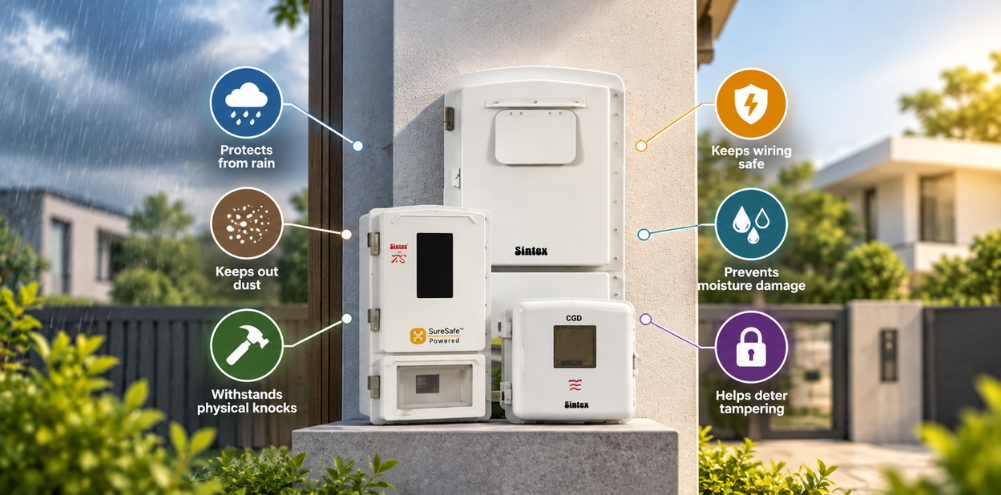
It does more than just hold the meter in place. A good electrical meter enclosure protects:
- The meter itself from rain, dust, and physical knocks
- Live wiring and terminals from accidental contact
- Connections from moisture that could cause corrosion or a short over time
- The overall installation from tampering or unauthorised access
Without a properly built enclosure, an outdoor meter is left exposed to weather it was never designed to handle on its own. Moisture creeping into a terminal block, for instance, can cause problems long before anyone notices a visible fault.
That’s why enclosure selection matters as much as the meter itself. A well-chosen outdoor meter box isn’t a small add-on purchase; it’s part of keeping the whole electrical connection safe for years, not just months, after installation. Which ultimately means fewer callouts for an electrician down the road, saving money and hassle.
Weather Protection: The First Requirement for Outdoor Meter Boxes
Weather is the first thing any outdoor enclosure has to deal with, and it’s relentless. Rain doesn’t just fall straight down; wind drives it sideways into gaps you might not expect. Humidity creeps in slowly, even on days without a drop of rain.
A weatherproof meter box needs to handle all of this without letting moisture reach the meter or wiring inside. That usually means:
- A tight-sealing door or lid, not just a loose-fitting cover
- Gaskets or seals around the opening edges
- Cable entry points that don’t leave gaps for water to creep in
Dust matters too, especially in areas with dry, windy conditions. A box that keeps out rain but lets dust build up inside still isn’t doing its job properly. Outdoor electrical enclosures need to handle both at once, not just whichever one seems more obvious for your climate.
Temperature swings add another layer. Afternoon heat from the sun that cools sharply at night can expand and contract the box each cycle, and poorly sealed joints are where that failure starts first.
UV Resistance: Protecting Enclosures from Sun Exposure
Sun exposure is easy to underestimate, because the damage builds up slowly. A meter box sitting in direct sunlight all day, every day, takes a very different kind of beating than one tucked in the shade.
Over months and years, UV rays can make plastic brittle, fade its colour, and weaken its structure. This is why UV-resistant meter box materials matter for any installation in direct sun. A UV-resistant electrical enclosure is built with additives or a material composition that slows this breakdown, keeping its strength and shape well beyond the first year or two.
If your installation site gets several hours of direct sun daily, UV resistance isn’t optional; it’s a must. Making it one of the first specifications worth checking, right alongside weatherproofing.
Importance of IP Rating in Outdoor Meter Boxes
IP rating is one of those terms that sounds technical but is actually simple once explained. It stands for Ingress Protection, and it tells you how well an enclosure keeps out solid particles and water.
An IP rating always has two digits. The first shows protection against dust and solid objects; the second shows protection against water.
| IP Rating | Dust Protection | Water Protection | Good For |
| IP54 | Limited dust ingress allowed | Splash-resistant from any direction | Sheltered outdoor spots |
| IP55 | Limited dust ingress allowed | Resists low-pressure water jets | Areas with regular rain |
| IP65 | Fully dust-tight | Resists water jets | Fully exposed outdoor sites |
For most outdoor meter installations in India, an IP-rated meter box of at least IP54 or IP55 is a sensible starting point. Sites with heavier rain exposure, coastal air, or direct hose-down cleaning nearby usually call for IP65.
Picking the right level isn’t about chasing the highest number. It’s about matching the rating to how exposed your specific installation actually is, since paying extra for protection you’ll never really need doesn’t make the box any better suited to the job.
Also Read: Why IP65 Certified Junction Boxes Are Essential for Electrical Safety
Material Selection: Why SMC Meter Boxes Are Suitable for Outdoor Use
Material choice shapes almost everything else about how an outdoor meter box performs over time.
SMC, short for Sheet Moulding Compound, has become a common choice for outdoor electrical enclosures, and for good reason. It’s a composite material that brings together a few properties that matter a lot outdoors:
- Corrosion resistance: unlike metal boxes, an SMC meter box won’t rust, even in humid or coastal conditions.
- UV and weather resistance: SMC holds up well against prolonged sun exposure without going brittle quickly.
- Lightweight yet strong: easier to mount and handle, without sacrificing durability.
- Fire-retardant properties: many SMC enclosures are rated for high heat resistance, adding a layer of safety.
Single-piece moulded SMC construction also means fewer joints and seams. Fewer joints means fewer weak points where water, dust, or pests could eventually work their way in, which matters more the longer a box stays outdoors untouched.
This combination of properties is a big part of why SMC has become such a common choice for meter boxes specifically, rather than just electrical enclosures in general. We at Sintex use the same construction for our SMC Junction Boxes.
Also Read: Powering Progress: Why Sintex SMC Enclosures Lead the Way in Energy Efficiency
Access & Maintenance Considerations for Meter Boxes
An outdoor meter box isn’t something you install once and forget. Meter readers need access, and electricians need to inspect it occasionally. You might also need to reach it yourself if something trips or needs checking.
Here are some good access and maintenance features to look for:
- A door that opens fully and easily, without needing tools every single time.
- Enough internal space to read the meter and reach terminals without straining.
- A secure locking mechanism, so access stays controlled without becoming a hassle.
- Simple, tool-free routine checks, where possible, for everyday inspections.
The electrical meter enclosure you choose should protect the meter and stay relatively easy to use, not just look secure from the outside. A box that needs to be forced open with a screwdriver every time tends to wear out its seals faster than one designed for easy, repeated access.
Outdoor Meter Box vs Indoor Meter Box: Understanding the Difference
It’s tempting to think a meter box is still a meter box, indoors or out. It isn’t quite that simple.
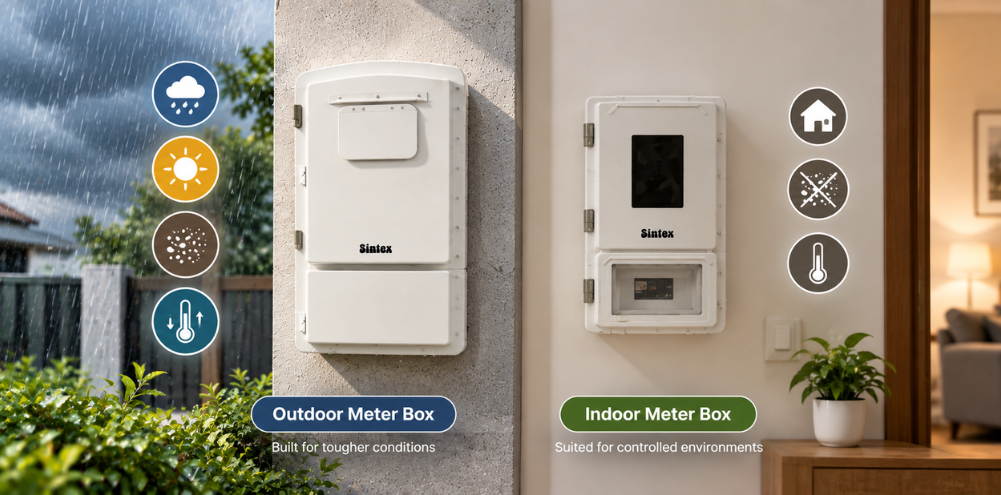
An electric meter box outdoor installation deals with rain, direct sun, dust, and temperature swings all year round. An indoor box, by contrast, sits in a relatively stable environment, no rain, limited dust, and far less sun exposure.
This difference shows up in what each box needs:
- An outdoor electrical meter box usually needs higher IP ratings, UV-resistant materials, and tighter seals.
- An indoor box can often use simpler, lighter enclosures without the same weatherproofing.
Using an indoor-rated box outdoors, just because it’s cheaper or already on hand, is a common shortcut that causes problems within a year or two. What starts as a small saving on the box often turns into a bigger repair bill once moisture works its way in.
Also Read: What is a Junction Box Used For? Evaluating Commercial Uses
How to Select the Right Outdoor Meter Box for Your Application
Bring everything together with a short, practical checklist before you buy:
- Installation location: fully exposed, partially sheltered, or under an overhang?
- Weather exposure: how much direct rain, sun, and wind will the box actually face?
- Required protection rating: IP54/IP55 for sheltered sites, IP65 for fully exposed ones.
- Material selection: SMC for corrosion and UV resistance, especially in humid or coastal areas.
- Maintenance needs: how often will it need opening, and by whom?
Walking through this list takes a few minutes, but it saves you from picking a weatherproof meter box that looks right on the shelf and underperforms once it’s actually mounted outside.
If you’re picking one out, Sintex’s SMC Meter Boxes tick all these boxes: single-piece moulded construction, concealed hinges, and weatherproof, shockproof protection built for exactly the conditions covered above. Browse our full electrical enclosures range to find the right fit, whether that’s an outdoor meter box, a junction box, or protection for the rest of your installation.
An outdoor meter box houses the electricity meter, along with the wiring and terminals behind it, keeping it safe from rain, sun, dust, and anyone who shouldn't be poking around live connections. It essentially acts as the meter's protective shell.
Start with how exposed the spot actually is, then work outward: IP rating, material durability, UV resistance, and how often someone will realistically need to open it. Choose an enclosure based on the installation requirements rather than price alone
Weatherproofing matters because unprotected boxes eventually let rain reach the wiring. That slow moisture creep is what causes corrosion and short circuits, which is why sealed doors, gaskets, and proper cable entries matter.
It depends on exposure. For a sheltered spot with occasional rain, IP54 or IP55 works well. Somewhere fully exposed, coastal, or near a hose-down area calls for IP65 instead, so match the rating to your installation.
Yes, SMC meter boxes suit outdoor use very well. SMC shrugs off corrosion and UV damage in a way plain plastic or bare metal struggles to, and being moulded in one piece, there aren't as many seams for water or dust to sneak through.
UV resistance keeps the enclosure from breaking down under sun exposure. Ordinary plastic left out for years gets brittle and starts cracking at the hinges, sometimes without warning. UV-resistant material slows that process considerably, so the box holds its shape far longer.
The main difference lies in build quality for exposure. Outdoor boxes are built to take a beating, with higher IP ratings, tougher seals, and UV-resistant material as standard. Indoor ones don't need any of that, since they're never dealing with rain or direct sun.
Corrosion resistance prevents the kind of damage you'd see in an old metal box with rusted hinges that won't shut properly anymore. A box made from something like SMC doesn't run into that problem, which matters if you're anywhere humid or near the coast.
Common materials include SMC, various plastics, and metal. SMC tends to win out for outdoor use because it handles corrosion and sun exposure much better, without the extra weight of metal, making it a popular choice across installations.
It depends on the application. For anything outdoors, composite options like SMC usually have the edge, mainly because they won't rust and cope with sun exposure better. Metal isn't a bad choice for strength, but it needs extra rust protection and ages faster in damp conditions.
A well-built, correctly rated outdoor enclosure can provide dependable protection over time. Factors such as material quality, exposure to sunlight and moisture, and installation conditions influence its durability, so choose an enclosure suited to your environment.