
Table of Contents
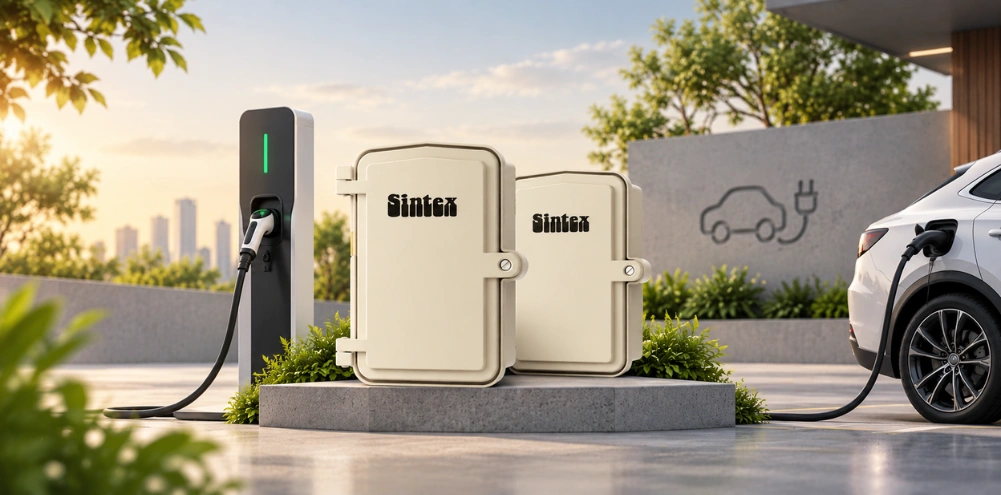
EV charging infrastructure places electrical equipment in locations where dust, moisture, rainfall, temperature changes and accidental contact may all affect long-term performance. The EV charger enclosure therefore has an important role in protecting electrical and control components from the conditions expected at the installation site.
Selecting an electrical enclosure for EV charger infrastructure requires more than choosing a box of the right size. Specifiers need to consider ingress protection, enclosure material, mechanical exposure, corrosion, heat, cable entry, mounting and future maintenance. In this guide, we’re going to explain how specifiers can choose an enclosure that supports safe, reliable operation of the complete charging system while remaining suitable for its actual environment and service conditions.
Key Takeaways
- Select the enclosure material according to the installation environment, electrical requirements and expected exposure.
- Choose an IP rated enclosure based on the required protection against solids and water ingress.
- Evaluate corrosion, sunlight, temperature and mechanical exposure separately from the IP rating.
- An SMC electrical enclosure can offer low weight, electrical insulation and resistance to conventional rusting.
- Allow for heat generated by internal components and external solar exposure.
- Include cable entries, mounting, access and long-term maintenance in the specification.
Understanding EV Charging Station Enclosures
An EV charger enclosure provides a protected housing for electrical and electronic components used within charging infrastructure. Depending on the equipment design, these components can include protective switching devices, terminals, contactors, controllers, metering equipment, communication hardware, wiring and cable connections.
- The enclosure helps restrict inappropriate access to internal components while providing the specified level of protection against dust and water ingress.
- It also gives equipment a defined mounting arrangement and provides controlled locations for cable entry, inspection and servicing.
An electrical enclosure for EV charger installations should be selected around the requirements of the complete assembly. The enclosure material, dimensions and protection rating therefore need to work with the electrical equipment installed inside it. A suitable EV charger enclosure should also leave adequate space for wiring, component clearances and maintenance without compromising seals, cable entries or the intended protection level.
Why SMC Is Suitable for EV Charging Enclosures
Sheet Moulding Compound, or SMC, is a fibre-reinforced composite material produced using resin, reinforcing fibres and fillers. Its combination of electrical and physical properties makes it suitable for many electrical housing applications, including EV charging infrastructure.
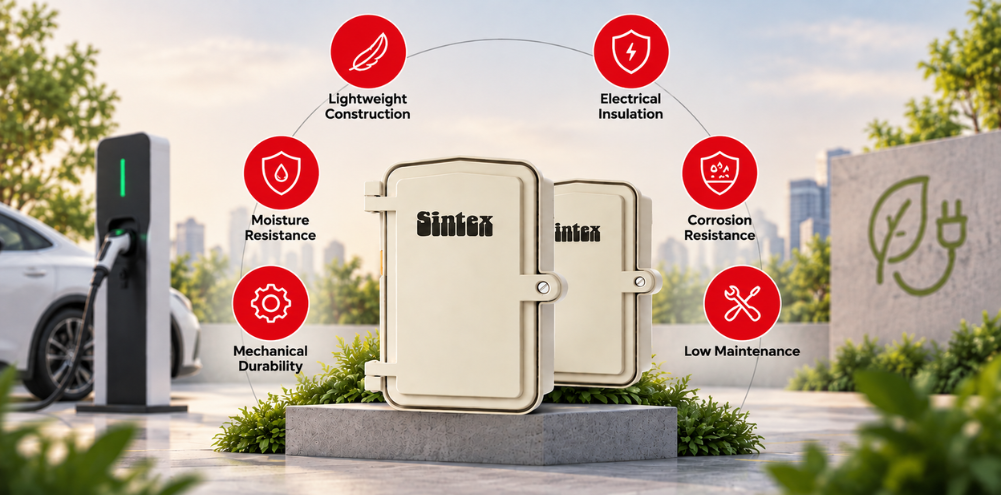
An SMC electrical enclosure can offer several practical characteristics:
- Lightweight Construction: SMC housings are generally lighter than comparable metal constructions, which can simplify handling, transport, lifting and installation.
- Electrical Insulation: The material has inherent dielectric properties and high electrical resistivity, which are useful around live electrical and control components.
- Corrosion Resistance: SMC does not rust in the conventional way that ferrous metals can and can resist many corrosive outdoor conditions.
- Moisture Resistance: Its low moisture absorption and non-hygroscopic behaviour support use in humid, rain-exposed and changing weather conditions.
- Mechanical Durability: Fibre reinforcement and moulded composite construction provide rigidity, dimensional stability and impact resistance designed for the intended application.
- Low Corrosion-related Maintenance: An SMC enclosure box does not depend on painted metal surfaces or protective coatings for conventional rust protection, reducing coating-related maintenance.
These characteristics make SMC particularly relevant where EV charging equipment needs electrical insulation, outdoor durability and manageable installation weight.
Also Read: What Is SMC Sheet? A Comprehensive Guide to Its Benefits, Applications & More
Key Specifications to Consider When Selecting an EV Charger Enclosure
A suitable EV charger enclosure should be specified against both the installation environment and the electrical equipment it will contain. Focusing only on one parameter, such as enclosure material or IP rating, can leave other important requirements unresolved.
| Specification | Reference or Standard | Evaluation Task |
| IP Protection | IEC 61851-1 recommends IP44 as the minimum for outdoor EVSE. Higher protection may be required in more exposed locations. | Select an IP rated enclosure based on rain, dust, water jets and cable-entry sealing. A highly sealed enclosure needs an appropriate thermal solution for internal heat and solar gain. |
| Material Properties | Fire-retardant SMC (with specifications such as FV-0 under IS 11731 or V-0 under UL 94), and heat distortion at high temperatures (up to 200°C) for suitable electrical installations. | Check electrical insulation, corrosion resistance, weight, heat behaviour and environmental resistance. |
| Mechanical Strength | Impact resistance is classified using the IK system. IK08 corresponds to 5 J and IK10 to 20 J. | Match impact resistance to accidental contact, public access or vandalism risk, and verify the tested IK classification required for the installation. |
| Environmental Exposure | SMC offers resistance to conventional rust, moisture, weathering and many corrosive conditions. Outdoor SMC construction can incorporate UV stabilisation and have a wide thermal range. | Assess humidity, coastal air, industrial pollutants, chemicals, sunlight and temperature variation. |
| Installation Requirements | SMC construction can accommodate side or bottom cable entry, pole mounting and tamper-resistant arrangements. Integrated mounts and corrosion-resistant hinges also benefit outdoor installation. | Confirm internal dimensions, component clearances, cable bends, gland positions, sealing, mounting type, security, service access and replacement space. |
Specifiers should also check the expected ambient temperature range, internal wiring space and how future cable entries may affect ingress protection. The final specification should apply to the actual enclosure and completed charging assembly, not to the material description alone.
Importance of IP Rating in EV Charging Station Enclosures
An IP rated enclosure is classified according to the level of protection it provides against access, solid foreign objects and water ingress. Under the IP Code, the first digit relates primarily to solid-object protection and access to hazardous parts, while the second relates to water protection.
- For EV supply equipment, IEC 61851-1 uses IP41 as a minimum reference for indoor equipment and IP44 for outdoor equipment.
- The actual project specification may need a higher rating where the installation faces greater dust, driven rain, water jets or similar exposure.
The complete enclosure system also needs to be considered. Greater sealing can affect ventilation and heat dissipation, while cable entries and later modifications must be done while preserving the intended IP rating. IP rating also does not describe every outdoor hazard. Corrosion, ultraviolet exposure, temperature, chemical exposure and mechanical impact require separate consideration during enclosure selection.
Also Read: Why IP65 Certified Junction Boxes Are Essential for Electrical Safety
SMC Enclosures for Outdoor EV Charging Applications
An SMC enclosure for outdoor applications can be useful where charging infrastructure is exposed to rainfall, humidity, sunlight and changing weather conditions. SMC does not conventionally rust and can offer resistance to moisture and many environmental conditions when the enclosure is designed for outdoor service.
Material selection is only part of outdoor suitability. A weatherproof enclosure’s effectiveness depends on its construction, seals, doors or covers, cable glands, fasteners and installation method. Poorly sealed cable entries can undermine the intended ingress protection regardless of the material used for the enclosure body.
Specifiers should also consider solar exposure. An outdoor cabinet exposed to direct sunlight can experience internal temperatures above the surrounding air temperature, particularly where electrical components generate additional heat.
UV exposure, mechanical impact and corrosive atmosphere should be evaluated independently. An IP rating does not certify resistance to all of these conditions. The final specification should therefore combine material suitability with appropriate ingress, temperature, impact and mounting requirements.
Corrosion Resistance: Why It Matters for EV Infrastructure
Corrosion resistance is essential for outdoor EV charging infrastructure, especially in coastal, humid, industrial and exposed parking environments. Moisture, chloride-laden air, pollutants and repeated wetting can degrade enclosure hardware and interfaces over time.
- Corrosion can affect hinges, fasteners, locks, cable glands, mounting hardware and other exposed metal parts, increasing maintenance and replacement needs.
- Metal enclosures depend heavily on alloy selection, galvanisation, coatings or other surface treatments to control oxidation and corrosion. This can increase costs and introduce failure points for quality control.
- An SMC enclosure body does not rust like ferrous metal and does not rely on painted surfaces for conventional rust protection.
- A corrosion resistant electrical enclosure helps maintain structural integrity and reliable component protection in moisture-prone and chemically aggressive locations.
- Other corrosion-resistant hardware should be considered alongside the enclosure body so hinges, fasteners and cable-entry points do not become weak points.
SMC vs Other Electrical Enclosure Materials
An enclosure material should be selected around the electrical system and site conditions rather than from a single performance characteristic. A composite electrical enclosure and a metal enclosure can both be suitable for EV infrastructure when correctly designed.
| Factor | SMC/Composite Enclosure | Metal/Conventional Enclosure |
| Weight | Generally lightweight | Usually heavier |
| Electrical Behaviour | Material is electrically insulating | Conductive and requires appropriate earthing/bonding |
| Conventional Rust | Does not rust | Depends on metal and protective finish |
| Corrosive Environments | Can offer an advantage in many corrosive conditions | Performance depends on alloy, coating and exposure |
| Heat Conduction | Lower thermal conductivity | Generally conducts heat more readily |
| Mechanical Performance | Depends on formulation, moulding and enclosure design | Depends on material, gauge and construction |
| Maintenance | Low corrosion-related upkeep | Depends on material, coating and exposure |
| Surface Protection | Does not rely on paint for conventional rust protection | Coatings may require inspection depending on environment |
| Outdoor Suitability | Depends on tested enclosure design | Depends on material, finish and tested design |
An FRP SMC enclosure uses fibre reinforcement within an SMC composite system. SMC is therefore one form of fibre-reinforced composite construction rather than a term that should be treated as interchangeable with every FRP product.
Metal may still be preferred where thermal conduction, fabrication requirements or a particular mechanical construction supports the project. The comparison should remain application-specific.
Also Read: Metal vs Plastic Electrical Enclosures: Which One Wins?
How Specifiers Can Select the Right EV Charging Enclosure
Selecting an electrical enclosure for EV charger infrastructure should begin with the installation conditions and the requirements of the finished electrical assembly.
Use the following checklist:
- Identify whether the location is indoor, sheltered outdoor or fully exposed.
- Assess rainfall, dust, humidity, sunlight and corrosive conditions.
- Confirm the applicable EV charging equipment and electrical requirements.
- Define the required IP rating.
- Evaluate mechanical impact and public accessibility.
- Compare metal, SMC enclosure and other material options against the environment.
- Check ambient temperature, internal heat generation and solar loading.
- Confirm enclosure dimensions and component clearances.
- Plan cable entries, gland positions and sealing.
- Select a suitable wall, pole, pedestal or equipment-mounted arrangement.
- Consider locks, fasteners and access for public locations.
- Review testing and performance claims for the actual enclosure being specified.
The final choice should reflect the whole installation rather than being based only on enclosure material, size or a single IP number.
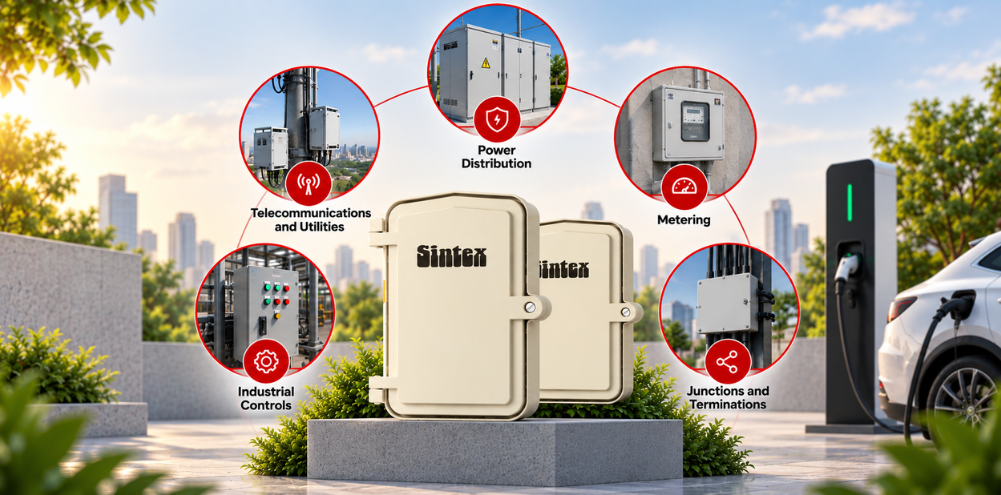
Applications of SMC Enclosures Beyond EV Charging
The same properties that make a composite electrical enclosure useful for EV infrastructure also suit other electrical and industrial applications. An SMC enclosure box can be used where insulation, low weight and environmental resistance are important.
- Power distribution: Distribution boxes, feeder enclosures and electrical connection points.
- Metering: Meter boxes and associated electrical housings for utility installations.
- Junctions and terminations: Junction boxes, cable connections and protected terminal points.
- Industrial controls: Control equipment, switches, relays and instrumentation used in factories or outdoor facilities.
- Telecommunications and utilities: Housings for electrical, communication and infrastructure equipment exposed to outdoor conditions.
This versatility makes SMC an ideal fit across the broader EV ecosystem, allowing charging enclosures to be seamlessly tailored to specific equipment demands and varied installation environments.
Conclusion
Choosing the right EV charger enclosure means looking at the complete installation, from ingress protection and corrosion resistance to heat, impact, access and long-term maintenance. SMC brings together low weight, electrical insulation, weather resistance and durable outdoor performance, making it a strong choice for EV charging infrastructure. With Sintex’s SMC enclosure solutions designed for demanding electrical applications, specifiers can bring these advantages into real-world charging projects. Explore the Sintex GS JB 2817 enclosure for EV charging and find the right fit for your installation.
An EV charging station needs an enclosure suited to its electrical equipment and installation environment. Specifiers should consider ingress protection, material, mechanical exposure, temperature, dimensions, mounting, cable entries and maintenance access. Outdoor equipment will likely need greater weather and corrosion resistance than equipment installed indoors or under permanent shelter.
SMC enclosures are used for EV charging applications because the material combines low weight, electrical insulation, corrosion resistance and useful outdoor durability. An SMC electrical enclosure can be particularly suitable where moisture or corrosive conditions are concerns, provided the complete enclosure meets the required ingress, mechanical and environmental specifications.
IEC 61851-1 uses IP41 as a minimum reference for indoor EV supply equipment and IP44 for outdoor equipment. A project may require a higher IP rating where there is heavier dust, driven rain, water jets or other exposure. Specifiers should select the rating from actual site conditions and applicable equipment requirements.
Yes, SMC enclosures are well suited to outdoor EV charging stations. The material resists conventional rust, moisture and weather exposure, while its electrical insulation and durable composite construction support use in exposed environments. Combined with the required IP rating, sealed cable entries and suitable UV and impact protection, SMC provides a strong enclosure option for outdoor charging infrastructure.
SMC electrical enclosures can provide low weight, electrical insulation, corrosion resistance and good environmental durability. They do not rust like ferrous metal or rely on painted surfaces for conventional rust protection, which can reduce corrosion-related upkeep. Their moulded composite construction also supports good dimensional stability, moisture resistance and easier handling during installation.
An enclosure protects EV charging equipment by restricting access to internal electrical components and providing a defined level of protection against dust and water ingress. It can also provide physical housing, cable-entry control, component mounting and service access. Other risks such as impact, corrosion and heat require separate design consideration.
Before selecting an EV enclosure, specifiers should assess installation location, IP rating, enclosure material, corrosion exposure, mechanical impact, ambient temperature, internal heat generation, dimensions, cable entry, mounting, security and maintenance access. They should also confirm that the actual enclosure and completed charging assembly meet the applicable electrical and EV charging requirements.