Biogas Digesters Explained: Types & How to Choose One
Share
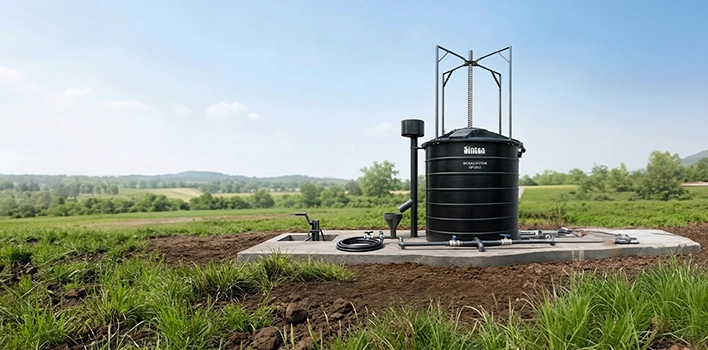
Table of Contents
You already know biogas turns kitchen waste into cooking fuel. That part is easy to find. The part nobody explains is which digester to actually buy.
Start shopping and you hit five names in a row: fixed dome, floating drum, prefabricated, flexi bag, plug flow. None of the guides tells you which one belongs at your house.
This piece skips the chemistry. It compares the main types of biogas digesters on the four things that decide your purchase: cost, lifespan, space, and who each one suits. If you want the science first, our guide on what a biogas plant is and how it works covers the digestion process end to end.
Key Takeaways
Here’s the short version if you’re skimming.
- Four designs cover almost everything sold in India: fixed dome, floating drum, prefabricated, and flexi bag. MNRE approves models in all four.
- Fixed dome lasts longest. Over 20 years, no moving parts. It needs land, digging, and a mason who has built one before.
- Prefabricated units install fastest and suit homes with no room for civil work.
- Subsidy starts at 1 cubic metre. Smaller units get nothing, and 1 m³ needs 10 to 12 kg of kitchen waste every day.
What is a Biogas Digester?
A biogas digester is a sealed, airless tank. You feed it organic waste mixed with water, bacteria break the waste down, and the gas they give off pipes to your stove. What’s left drains out as slurry and works as manure.
Every design does that same job. They differ in one thing only: how they hold the gas once it exists. A fixed dome traps it under a rigid roof. A floating drum catches it under a lid that rises. A bag simply inflates.
Types of Biogas Digesters: 4 Designs Compared
MNRE’s Biogas Programme approves four families of small biogas plant, which makes them a sensible shortlist. Here’s how they compare.
| Design | How it works | Who builds it | Lifespan | Best suited for |
|---|---|---|---|---|
| Fixed dome (Deenbandhu) | Brick masonry or ferro-cement dome, built underground. Gas gathers under the fixed roof and pushes slurry into a compensation tank. | A mason. Masonry and plumbing, with construction supervised by an experienced biogas technician | 20 years or more | Your own land, steady dung and water, plus a builder who has done it before |
| Floating dome (KVIC) | Masonry or ferro-cement digester with a steel, FRP or HDPE gasholder sitting on the slurry. It rises as gas collects and drops as you use it. | A mason and a welder. Masonry, plumbing and welding | Drum up to 15 years, about five in tropical coastal regions | Small to mid-size farms and institutions, and anywhere gas is needed at constant pressure, such as engines |
| Prefabricated | A factory-made RCC digester fitted with a KVIC floating drum. Delivered, not built on site. | An MNRE-approved OEM or its certified service provider | Maker must warrant five years including O&M and design for at least ten | Sites where the plant is bought rather than built. No on-site construction, and no turnkey fee either |
| Bag type (Flexi) | Heat-sealed plastic or rubber bag that is digester and gasholder in one. Weights on top raise the pressure. MNRE’s approved domestic size is 2 m³, PVC coated. | Plumbing only | Usually no more than 2 to 5 years | Warm, even temperatures and a high groundwater table, somewhere the skin won’t get damaged |
Two trade-offs are worth sitting with. A fixed dome has no rusting steel parts and lasts twenty years or more, but its gas pressure swings as the dome fills and empties, so burners can’t be set at their best. A floating dome fixes the pressure and hands you a drum that needs de-rusting and repainting instead, yearly on the coast and every second year inland.
One thing to know before you shop. Prefabricated on MNRE’s list means one specific thing: an RCC digester with a KVIC floating drum. Moulded plastic units are approved too, but they sit under the floating dome heading, as digesters with a floating gasholder made of HDPE, PVC, FRP or RCC. Ask a seller where their model sits on the list, and expect a plastic tank to point at floating dome rather than prefabricated.
How Do Portable Biogas Digesters Work?
A portable biogas digester is the prefabricated design sold as a finished product, tank and gasholder together.
Day to day, it runs like this.
- Feed it. Kitchen waste or cow dung goes into the inlet with water. Sintex’s smallest unit takes 2 to 2.5 kg of mixed kitchen waste plus 3 to 4 litres of water a day.
- Wait. Bacteria work through it over roughly a day. Gas gathers under the drum, which lifts visibly, so you can see how much fuel you have.
- Cook. The gas pipes to an ISI-marked biogas stove.
- Drain. Slurry leaves through the outlet and goes straight on the garden.
The advantage is speed. No excavation, no mason, no curing time. Energypedia rates the contractor skill needed for plastic-container designs as low and plumbing-only, against high for masonry designs that also demand welding.
One honest note on the word portable. It describes how the unit arrives and how easily you can resite it, not something you carry about. A live digester holds a bacterial culture that needs to sit undisturbed at a steady temperature. Move it mid-cycle and you kill the culture and start again.
That makes it a fit for homes and flats with a balcony or side yard, small farms, restaurants, hostels, temple kitchens, and any site where digging isn’t an option.
Small-Scale Biogas Digesters for Homes: Which Type Fits?
A small scale biogas digester is sized by daily feed weight, not by family size. Sintex publishes the figures in its biogas plant range.
| Model | Gas per day | Kitchen waste needed | LPG equivalent | Cooking time |
|---|---|---|---|---|
| FTGB-20 | 0.2 m³ | 2 to 2.5 kg | 0.086 kg | about 20 minutes |
| FTGB-50 | 0.5 m³ | 5 to 6 kg | 0.217 kg | about 1 hour |
| FTGB-100 | 1 m³ | 10 to 12 kg | 0.434 kg | 1.5 to 2 hours |
Read the last column again. A normal home kitchen fills the smallest unit and gets roughly twenty minutes of flame a day. That’s worth real money over a year and it clears your wet waste at source, but it supplements your cylinder rather than replacing it.
The units that cover serious cooking need serious feed. One cubic metre wants 10 to 12 kg of kitchen waste daily, or 20 to 25 kg of cow dung. That’s a canteen, a hostel, a temple, or a house with cattle.
So the filter is simple:
- Kitchen waste only, city home: smallest prefabricated unit.
- Two or more cattle and land to dig: fixed dome, cheapest gas over twenty years.
- Restaurant, hostel or canteen: prefabricated, sized to your actual daily waste weight.
Biogas Digester in India: Cost, Availability & Government Support
Price moves with design, size, region and installer, so treat any single number carefully and ask for a written quote covering tank, pipeline, stove and commissioning.
The subsidy, though, is published. Under MNRE’s Biogas Programme, which absorbed the older NNBOMP, central assistance for a biogas digester in India runs ₹9,800 to ₹52,800 per plant by size, rising to ₹17,000 to ₹70,400 in hilly and North Eastern states, on islands, and for SC and ST beneficiaries. Add ₹1,600 for linking to a sanitary toilet and ₹1,600 for an approved slurry filter.
Three details the brochures leave out:
- It starts at 1 m³. Anything smaller qualifies for nothing.
- It’s a reimbursement. The money reaches your bank account after commissioning, not off the invoice.
- The turnkey fee is for built plants only. MNRE’s ₹3,000 to ₹5,000 installation fee doesn’t apply to prefabricated units.
Apply on the MNRE biogas portal. On availability, Sintex reports large-scale installations across Kerala, Tamil Nadu, Karnataka and Gujarat.
How to Choose the Right Biogas Digester?
Work through this before you speak to any seller.
- Weigh your waste for one week.
- Under 3 kg a day of kitchen waste: smallest prefabricated unit only.
- 10 kg or more, or two-plus cattle: you’re in subsidy territory.
- Measure your space.
- MNRE’s eligibility note asks for roughly 50 to 60 sq m of your own land for a 1 to 25 m³ plant.
- Prefabricated units need far less. Check the manufacturer’s stated footprint before you commit.
- Check your water. Every kilo of feed needs water alongside it. No steady supply, no gas.
- Decide who maintains it. Masonry plants need a mason on call. Prefabricated ones carry a five-year warranty with O&M from the manufacturer under MNRE’s rules.
- Confirm the model is approved. Only MNRE-approved models qualify for subsidy. Ask the seller to show you where theirs sits on the list.
Now, you can match your answers against this.
| If you need | Choose | Why |
|---|---|---|
| Longest life and lowest cost per m³, with land and cattle to hand | Fixed dome | 20+ years, no moving parts, nothing to rust |
| Steady gas pressure for an engine or a large kitchen | Floating drum | The drum’s weight holds pressure constant |
| Gas at a home or restaurant with no room to dig | Prefabricated | Arrives finished, needs plumbing only |
| A cheap trial, or a site you’ll leave | Flexi bag | Lowest upfront, but budget to replace it in 2 to 5 years |
Biogas Digester Types at a Glance
One table, everything above, for a quick decision.
| Fixed dome | Floating drum | Prefabricated | Flexi bag | |
|---|---|---|---|---|
| Typical capacity | 1 to 25 m³/day | 1 to 25 m³/day | 0.2 to 20 m³/day | 2 m³/day |
| Portable | No, it’s buried | No | Resitable before piping | Yes |
| Maintenance | Very low, watch for dome cracks | De-rusting and repainting | Low | Low, but fragile |
| Upfront cost | Low per m³ | Highest | Mid | Lowest |
| Lifespan | 20+ years | Drum 5 to 15 years | 10+ years, MNRE minimum | 2 to 5 years |
| Best use | Village home with cattle | Institution or engine | Urban home, restaurant, hostel | Temporary site |
Maintenance & Safety Tips for Biogas Digesters
A digester holds a live culture, not a machine. Treat it accordingly.
- Feed it daily at a steady rate. Bacteria settle into a diet. Skip a week and output drops until the culture recovers.
- Never let slurry back up. A blocked outlet raises pressure inside the tank. Clear it the moment flow slows.
- Find leaks with soapy water, never a flame. Biogas is mostly methane.
- Drain the water remover. Condensate pools at low points and chokes the gas line. That’s what MNRE requires one for at commissioning.
- Paint a steel drum before it rusts, not after. Yearly near the coast, every second year inland.
- Never enter a digester. The gas space holds no oxygen. It is a confined space and it kills.
- Use an ISI-marked biogas stove. MNRE allows only ISI-marked double burner stoves, and an LPG burner won’t run properly on biogas anyway.
Conclusion
There’s a reason the Deenbandhu dome has been India’s village default for decades. Given land, cattle and a good mason, nothing beats it on lifespan or on cost per cubic metre.
Most people reading this have none of those three. If you have a kitchen, a corner of yard, and no appetite for a construction project, a prefabricated unit is the honest answer. Sintex’s biogas range runs from 0.2 to 20 m³ a day, which covers a flat and a hostel canteen out of the same catalogue.
Also Read: How to Set Up a Biogas Plant?
Four: fixed dome, floating drum, prefabricated, and flexi bag. MNRE approves models in each family. They all digest the same waste and differ mainly in how they store the gas and how long they last.
A prefabricated unit, in the smallest size. A home kitchen rarely produces more than 2 to 3 kg of waste a day, which is what the smallest models are built for. Fixed dome plants need cattle and land to make sense.
Per kilo of feed, yes. The bacteria don't care about the tank. The difference is lifespan and scale: a fixed dome runs 20+ years, while MNRE holds prefabricated makers to a 10-year design life and a five-year warranty.
It depends on design, size and region, so get a written quote covering tank, pipeline, stove and commissioning. As a reference point, MNRE's subsidy alone runs ₹9,800 to ₹70,400 depending on plant size and your category.
Yes, through MNRE's Biogas Programme. Assistance ranges from ₹9,800 to ₹70,400 per plant, with more for hilly and North Eastern states, islands, and SC and ST beneficiaries. It applies from 1 m³ upward and is paid after commissioning. Apply at biogas.mnre.gov.in.
Dairy farms. It's a long covered trough, fed at one end daily, with each new load pushing the last along. The US EPA notes it suits operations that collect thick, scraped manure. It isn't a household design.