Biogas vs LPG for Commercial Kitchens
Share
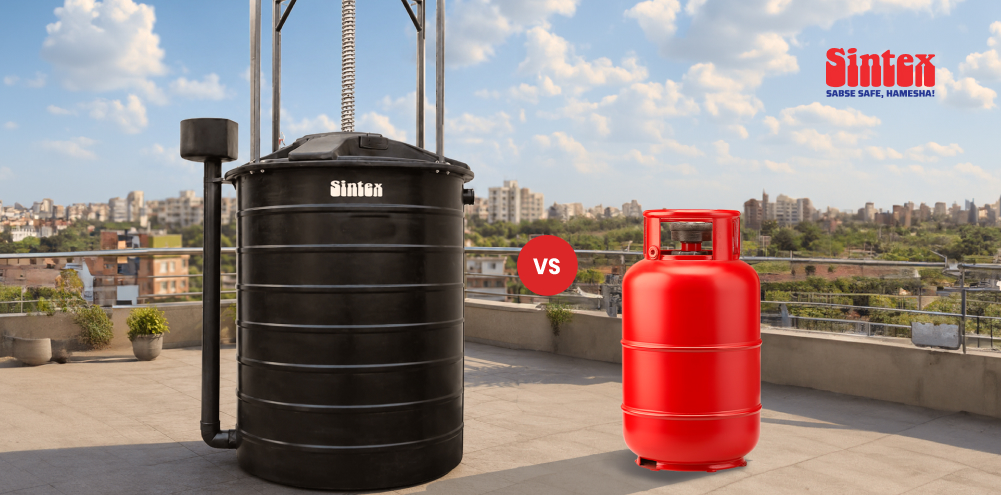
Table of Contents
Commercial kitchen owners across India are feeling the pressure from rising fuel prices. Each price revision directly cuts into already thin profit margins. Many owners now ask a simpler question: is there a smarter way to fuel their kitchens?
Biogas is emerging as the most practical answer. Produced from organic kitchen waste through anaerobic digestion, it offers a renewable, on-site alternative to imported LPG. For commercial kitchens generating significant quantities of food waste, the switch from a biogas vs lpg tank comparison almost always favors biogas, provided the right system is chosen.
Key Takeaways
- A commercial biogas plant can cut cooking fuel costs by nearly half compared to a kitchen running entirely on LPG.
- While the initial installation cost is higher, the system typically pays for itself within two to four years, after which it delivers nearly free fuel.
- Biogas burns cleaner than LPG and its methane is lighter than air, making it safer in the event of a leak.
- Modern biogas plants are compact and low maintenance. They can be installed above or below ground in most commercial kitchen spaces.
Understanding the Cost Difference: Biogas vs LPG
The most immediate concern for any restaurant or hotel owner is the biogas vs lpg cost. Commercial LPG prices have become a major operational headache after repeated hikes. A single 19 kg commercial cylinder now costs well above three thousand rupees in most Indian cities. A moderately busy kitchen can go through several cylinders each day. These costs do not include the hassle of managing cylinder deliveries, dealing with supply disruptions, or coping with market volatility.
Biogas operates on a completely different financial model. The fuel cost is nearly zero because the system runs on the kitchen’s own organic waste. Vegetable peels, leftover food, and other kitchen scraps become the feedstock. Many commercial kitchens throw away hundreds of kilograms of wet waste daily. A biogas plant transforms that waste disposal problem into a cooking fuel solution.
The initial investment for a commercial biogas plant is significant, but the payback period makes it attractive. Small commercial plants require a manageable upfront amount, while larger installations for high-volume kitchens run higher. Sintex offers customizable biogas solutions designed precisely for these commercial applications. Their systems treat and convert organic waste directly at the source. Once installed, the effective cost of heat drops dramatically. Many owners recover their entire investment in two to four years. After that, the fuel comes for free.
The Difference Between a Biogas Tank and an LPG Cylinder
The core difference between bio gas tank vs lpg gas systems lies in what they store and how they store it. An LPG cylinder contains a mixture of propane and butane. These gases are compressed into a liquid state and stored under high pressure. This high-pressure storage makes LPG potentially dangerous. Butane is heavier than air, so a leak causes the gas to settle at ground level. That creates a significant explosion risk.
A what is a biogas tank question leads to a very different answer. A biogas tank, or digester, is not a high-pressure vessel. It stores biogas at very low pressure in a flexible gas holder or floating dome. Sintex’s biogas plants use a durable floating dome design that maintains consistent pressure without the risks of pressurized cylinders. The methane produced is lighter than air. If a leak occurs, the gas simply rises and disperses harmlessly instead of pooling dangerously on the floor. This safety advantage makes a bio gas tank vs LPG gas comparison heavily favor biogas systems for enclosed kitchen environments.
| Metrics | LPG Cylinder | Biogas Tank (Digester) |
| Gas composition | Propane and butane mix | Mostly methane, with carbon dioxide |
| Storage pressure | High pressure, gas held as liquid | Very low pressure, gas held as vapor |
| Storage vessel | Steel cylinder rated for pressure | Flexible holder or floating dome |
| Density vs air | Heavier, settles near the floor | Lighter, rises and disperses |
| Leak behavior | Pools at ground level, raises explosion risk | Escapes upward, lowers explosion risk |
| Fuel source | Fossil fuel, extracted and refined | Organic waste, cattle dung, kitchen scraps |
| Refill process | Cylinder swap or refill at a dealer | Continuous gas as the digester is fed daily |
| Maintenance | Minimal, just cylinder handling | Daily feeding and periodic slurry removal |
| Running cost | Recurring cylinder expense | Low recurring cost once installed |
| Best suited for | Compact kitchens, quick setup | Homes and farms with steady organic waste supply |
Also, Read: What Is a Biogas Plant?
Biogas vs LPG for Cooking: Performance and Efficiency
One common concern about biogas vs lpg for cooking involves flame temperature and cooking speed. LPG has a higher calorific value, meaning it burns hotter per unit. However, this does not tell the whole story. For most cooking applications, the practical difference is smaller than many assume.
Biogas vs LPG for cooking tests show that biogas can match or even slightly outperform LPG for certain tasks when using the right burners. Standard LPG burners are optimized for a different gas. Switching to biogas requires replacing cylinder nozzles and burners with biogas-compatible ones, but once done, cooking times become comparable. Some commercial kitchens add ceramic burners and sensors to reduce overall fuel consumption further. The result is a kitchen that performs at the same level while spending far less on fuel.
Environmental and Supply Security Benefits
India imports a large share of its LPG, and most of that passes through volatile shipping routes. When supply chains get disrupted, commercial kitchens face immediate shortages. Restaurants have to cut menus, reduce operating hours, or pay black market prices for a cylinder. Establishments with biogas plants simply keep cooking.
A biogas plant for a hotel kitchen provides true energy independence. The fuel comes from on-site waste, not from imported fossil fuels subject to geopolitical shocks. The environmental footprint is also dramatically smaller. The waste that would otherwise go to a landfill gets converted into valuable fuel. The leftover slurry serves as an excellent organic fertilizer, creating an additional revenue stream or cost saving.
Sintex’s biogas solutions are engineered specifically for this circular economy approach. With successful large-scale installations already operating across Kerala, Tamil Nadu, Karnataka, and Gujarat, Sintex has proven that commercial biogas plants deliver real energy savings while contributing to sustainable waste management.
Also, Check Out Other Blog: Sustainable Environmental Products
Installation and Maintenance Considerations
Switching from LPG to biogas is not an overnight job. The kitchen requires hardware modifications to handle the different gas characteristics. Cylinder nozzles, burners, and sometimes piping need replacement or adjustment. However, once these changes are complete, the daily operation becomes remarkably simple. The kitchen staff feeds organic waste into the digester each day. The plant handles the rest automatically.
Sintex biogas plants are designed for easy operation and minimal maintenance. They feature durable, high-quality construction that withstands continuous use. The plants come in various capacities, allowing owners to match the system size to their specific waste generation volume. Whether a small café produces fifty kilograms of wet waste daily or a large hotel processes five hundred kilograms, Sintex offers a plant for the job. The systems can be installed above ground or underground, fitting into almost any kitchen layout. Government programs have also recognized the value of biogas, offering higher purchase guarantees and subsidies for new plants.
The Bottom Line
For commercial kitchens tired of unpredictable fuel bills and supply disruptions, biogas offers a clear path forward. The biogas vs lpg tank choice ultimately comes down to long-term thinking. LPG delivers convenience today at a rising cost tomorrow. Biogas requires an upfront investment but rewards owners with years of stable, low-cost, and secure fuel. As more restaurants, hotels, and canteens across India make the switch, biogas is moving from an alternative energy source to the standard choice for smart kitchen operations. With Sintex’s range of customizable biogas plants, converting kitchen waste into cooking fuel has never been more accessible or more practical for Indian businesses.
Full replacement depends on how much organic waste your kitchen produces and how well the digester matches that volume. A kitchen generating steady food waste, paired with a correctly sized plant, can run almost entirely on biogas. Most operators still keep an LPG cylinder on standby for peak hours or sudden shortfalls, treating biogas as the primary fuel rather than a guaranteed swap from day one. Get the waste volume and plant size right, and LPG use drops near zero.
Most commercial kitchens need roughly 50 to 150 kilograms of food waste a day to keep a digester producing steady gas, though the exact figure depends on plant size. Sintex sizes digesters around your actual waste volume rather than a fixed number, since restaurant scraps, vegetable peels, and plate waste carry different organic content. A useful starting point is tracking your kitchen's waste output for a week before choosing capacity. Feed the digester less, and gas output drops too.
Yes, when you install and feed the plant correctly. Biogas runs at low pressure, so there's no compressed cylinder sitting in the kitchen waiting to fail. Methane rises and disperses instead of pooling near burners, which lowers fire risk compared to LPG storage in a busy kitchen. Hotels and restaurants across India already run biogas kitchens safely, provided staff check the gas line, dome, and burner fittings regularly. Good ventilation and trained handling matter just as much as the equipment.
Daily feeding keeps the digester active, so staff need to add waste and water in the right ratio every day without skipping. Slurry builds up over time and needs periodic removal, both to keep gas production steady and to collect the fertilizer by-product. The floating dome or gas holder needs a visual check for damage, and gas lines need occasional cleaning to clear condensate or blockages. Plants also benefit from a professional inspection every few months to catch problems early.
Start by measuring your actual waste output, not an estimate, since vegetable trimmings, plate scraps, and prep waste vary by kitchen. Track the kilograms generated daily for a week to get a realistic average. Next, match that figure against your cooking demand, which depends on burner hours and how many burners run during peak service. Sintex offers digesters across a range of capacities, and a site visit usually nails down the right size faster than guesswork.