
Why Antimicrobial Water Tanks Are Becoming Essential for Indian Families
Share
Table of Contents
Fill a bucket of water and leave it in a warm room for six hours. Come back and look at it again.
You can’t see what’s changed, but something has.
India stores a lot of water. Overhead tanks, underground sumps, individual apartment units with supplementary tanks on terraces, the practice of storing water for hours at a stretch is the norm, not the exception. And in a country where temperatures stay high for most of the year, stored water creates conditions that microbes find extremely hospitable.
Most households haven’t thought about this beyond whether the tank is clean. The bigger question, the one getting increasing attention, is whether the tank itself does anything to prevent microbial growth between cleaning cycles.
That’s where antimicrobial technology comes in.
The Problem with How Most Indian Homes Store Water
Overhead tanks in most Indian homes sit on rooftops exposed to heat for the better part of the year. Even in relatively cooler months, terrace temperatures during the day push water temperatures well above comfortable levels.
Warm, still water is where bacteria, algae, fungus, and viruses thrive. They don’t need much to get started. A small breach in the tank lid, water that hasn’t cycled through in a few days, a bit of residual organic matter from the supply line, any of these gives microbes something to work with.
Standard plastic tanks, regardless of quality, offer no active defence against this. They store the water. That’s the extent of what the material does. The tank interior doesn’t slow or stop microbial growth on its surfaces.
For families getting municipal supply once a day or less frequently, water sits for extended periods. Children bathe in it. Adults wash their faces, brush their teeth, wash vegetables. The assumption is that if the water looked fine going in, it’ll be fine coming out. That assumption has limits.
Why Antimicrobial Water Tanks Are Needed in Indian Homes
The conditions that make India’s climate what it is, the warmth, the coastal humidity, the intense heat across the interior, are also exactly what microbes prefer.
The case for antimicrobial protection is considerably stronger here than in temperate climates. A tank in Chennai, Hyderabad, or Ahmedabad spends most of the year in temperatures that accelerate bacterial and algal growth. A tank in Mumbai or Kochi deals with humidity on top of that.
The microbes that colonise stored water in domestic tanks fall into four broad categories: bacteria, viruses, algae, and fungus. Each causes different problems. Bacteria and viruses carry the most immediate health risks. Algae produce musty tastes and odours, and create surface films that give other microbes a ready foothold. Fungus growth, less common but not rare in tanks with poor lid seals, introduces its own set of issues.
A standard tank does nothing about any of these between cleaning cycles. With recommended cleaning every six months, that’s a long window of unprotected storage.
How an Antimicrobial Water Tank Actually Works
This is worth understanding properly, because a real difference exists between a tank that claims hygiene features and one with genuine built-in protection.
Sintex’s approach sits firmly in the second category. The antimicrobial agents are incorporated directly into the polymer material during the tank’s manufacturing process. This is not a surface treatment applied after the tank is formed. Instead, the antimicrobial properties are integrated throughout the material itself, providing long-lasting protection across the entire tank.
Why does that distinction matter? Because antimicrobial coating in water tanks, the kind some brands apply as a surface finish, wears over time. It degrades with repeated cleaning, with temperature cycling, and with the general wear of water moving through the tank. A coating eventually stops protecting.
When the technology integrates into the material at the manufacturing stage, it doesn’t peel or degrade in the same way. The protection stays active across the full life of the tank.
These tanks target all four categories of microbial threat: bacteria, viruses, algae, and fungus. This is what makes a Sintex tank a genuinely microbial resistant water tank rather than one that protects against a subset of what’s actually out there.
The Real Benefits an Antimicrobial Tank Brings to Your Household
The most immediate benefit of an antimicrobial water tank is active protection between cleaning cycles.
Cleaning the tank twice a year, as every plumber and public health guideline recommends, handles contamination that’s already happened. The tank’s antimicrobial coating works in the gaps. Between cleans, the tank interior inhibits microbial growth rather than just hosting it passively. For households where the six-month cleaning window sometimes stretches, this is a meaningful safety margin.
The benefits of antimicrobial water tank technology become evident in everyday use, not just in laboratory testing. For example, water stored in an antimicrobial water tank for 24 or 48 hours is exposed to an interior environment designed to resist microbial growth. The surfaces that bacteria and algae would typically colonise do not provide the same favourable conditions for their development, helping maintain better water hygiene over time.
This matters particularly for households with young children, elderly family members, or anyone with lower immunity. These are the people most vulnerable to waterborne illness, and they’re also the people most likely to use water from every tap in the house, not just the purified kitchen supply.
Why antimicrobial tanks are important isn’t a complicated argument. A hygienic water tank for home use should do more than hold water. It should actively work to maintain that water’s quality between the times anyone gets around to cleaning it.
Sintex’s Antimicrobial Range: What’s Available
Sintex builds its antimicrobial protection into a focused range of water storage products, each designed to meet different household requirements.
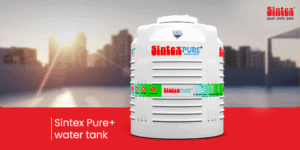
The Pure and Pure+ tanks are the core antimicrobial offering in the residential range. Pure+ takes protection levels up a notch above the standard Pure model. For households where hygiene is the primary consideration, including those with young children or family members managing health conditions, these are the natural starting point.
The Eterno sits at the premium end of Sintex’s antimicrobial tank range, combining durability, thermal performance, and antimicrobal protection in one product. It’s for households that want their water storage working as hard as every other part of their home.
The antimicrobial approach at Sintex extends beyond the tank. The HotX is the world’s first antimicrobial CPVC pipe, carrying antimicrobial protection through the plumbing system itself. Most families focus on the tank and don’t think about what happens to water as it moves through the pipes toward each tap. HotX addresses that gap. CoolX pipes bring the same antimicrobial thinking to cold water lines.
A Sintex antimicrobial tank paired with HotX or CoolX pipes creates a system where antimicrobial protection covers the full storage and delivery chain, not just one point in it.
The Bigger Picture
India’s urban water reality involves more storage, longer waiting periods between supply cycles, and aging infrastructure that affects the quality of what reaches your building’s tank in the first place. Families store more water than they used to, for longer periods, under conditions that don’t favour water quality.
An antimicrobial water tank doesn’t replace good maintenance habits. You still clean it. You still check the lid and the inlet. But between every maintenance cycle, the tank works actively to keep what’s inside it cleaner.
For a product most families buy once and expect to last fifteen years, that kind of built-in protection is worth choosing deliberately.
Categories
Year
Related blogs