
Plastic Pipes Size Guide for Homes & Apartments
Share
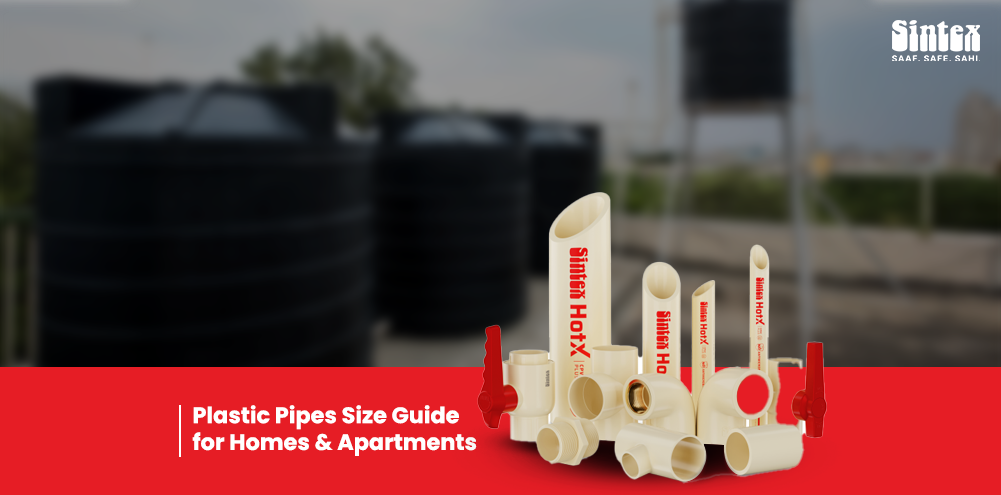
Table of Contents
Choosing the right pipe size is one of the most important steps in home plumbing. Incorrect sizing can cause low water pressure, frequent leakage, noise and long-term repair costs. This guide explains how to select the correct plastic pipe sizes for kitchens, bathrooms, overhead tanks, drainage lines and external connections. It also covers common pipe materials used in Indian homes and apartments, helping you avoid plumbing failures and plan long-lasting water systems.
Plumbing problems in homes often start with one basic mistake: choosing the wrong pipe size. Water pressure issues, pipe bursts, slow drainage, and frequent leakage usually come from incorrect sizing rather than poor-quality material.
At Sintex, we see that many homeowners focus only on pipe material but ignore diameter planning. A proper size guide helps ensure smooth water flow, safety, and long service life across apartments and independent homes.
Why Pipe Size Matters in Homes
Pipe size directly controls three things:
- Water pressure
- Flow speed
- Long-term durability
If the pipe is too small, the pressure drops, and taps deliver weak flow. If it is too large, water movement slows down and sediment builds up. Correct sizing ensures:
- Balanced pressure across floors
- Reduced leakage risk
- Lower maintenance cost
- Better performance of fittings
This applies to every water pipe used in the house.
Common Pipe Materials Used in India
Modern homes use different plastic pipe types based on temperature, pressure, and purpose.
1) PVC Pipes
A PVC pipe is commonly used for drainage and waste lines. It is light, affordable and corrosion-resistant. Many homeowners compare PVC pipe prices while planning plumbing budgets.
2) CPVC Pipes
A CPVC pipe is suitable for hot and cold water supply. It handles higher temperatures and pressure, making it ideal for bathrooms and geysers.
3) UPVC Pipes
A UPVC pipe is mainly used for cold water distribution and external plumbing. It offers strong chemical resistance and durability.
4) HDPE Pipes
HDPE pipes are used for underground water supply and drainage. They are flexible, leak-proof, and suitable for long pipelines. Matching HDPE pipe fittings is critical for performance. Buyers often compare HDPE pipe prices based on diameter and pressure rating.
5) OPVC Pipes
OPVC pipes are used in large infrastructure and high-pressure water systems. Their strength-to-weight ratio supports long-term use.
Understanding Pipe Diameter Basics
Pipe size is measured in millimetres or inches and refers to the internal diameter. Common residential sizes include:
- 20 mm for internal fittings
- 25 mm for branch supply
- 32 mm for vertical risers
- 40 mm and above for mainlines
Using the wrong diameter is one of the most common plumbing errors in apartments.
Pipe Size Guide for Bathrooms
Bathroom plumbing needs balanced pressure for showers and taps. Recommended sizing:
- Basin and tap lines use a 20 mm plastic pipe
- Shower lines work best with a 25 mm diameter
- The geyser inlet and outlet should use 25 mm CPVC pipe
- Vertical bathroom risers require a 32 mm size
Hot water always needs CPVC-grade piping.
Pipe Size Guide for Kitchens
Kitchen water usage includes sinks, filters, and washing machines. Suggested sizes:
- The sink inlet uses a 20 mm water pipe
- RO purifier supply works well with 15 mm
- The washing machine inlet uses 25 mm
- The kitchen drain requires a 40 mm drainage pipe
Larger diameters prevent choking caused by grease and food waste.
Pipe Size for Overhead Tank Connections
Tank connections control the flow to the entire house. Standard sizing:
- The inlet from the borewell or pump uses 32 mm or 40 mm
- The outlet from the tank uses 32 mm
- The overflow pipe should be a minimum of 40 mm
UPVC is commonly preferred for this area due to UV exposure.
Pipe Size for Main Water Lines
Main lines distribute water across floors and blocks. Typical sizes include:
- Single-floor homes use 32 mm
- Two- to three-floor buildings use 40 mm
- Large apartments use 50 mm or more
This sizing avoids pressure loss during peak usage.
Drainage Pipe Size Selection
Drainage requires smooth flow and slope support. Common sizes:
- Washbasin waste uses 32 mm
- Bathroom floor traps use 75 mm
- Toilet discharge uses a 110 mm drainage pipe
- External sewer lines use 160 mm
HDPE and PVC are commonly used for drainage systems.
Reclaimed Water and Separate Pipe Systems
Modern buildings now install reclaimed water networks. A reclaimed water pipe system is used for:
- Gardening
- Flushing
- Landscaping
- Cleaning driveways
Sintex ReclaimX UPVC pipes use purple identification to prevent cross-connection with potable water. This separation improves water conservation and safety.
Outdoor and Agricultural Pipe Requirements
For farms and landscaping, pipe strength matters more than aesthetics.
AgriX pipe systems are widely used for:
- Irrigation
- Drip systems
- Water transport
These pipes offer smooth internal flow, corrosion resistance, and long life.
Comparison Table
| Area of Use | Recommended Pipe Type | Common Size |
| Bathroom hot water | CPVC | 20 mm to 25 mm |
| Bathroom cold water | UPVC | 20 mm |
| Kitchen supply | UPVC CPVC | 20 mm |
| Mainline | UPVC HDPE | 32 mm to 50 mm |
| Drainage | PVC HDPE | 75 mm to 160 mm |
| Underground supply | HDPE OPVC | 40 mm and above |
| Reuse water | UPVC Purple | 25 mm to 50 mm |
Installation Tips to Avoid Plumbing Problems
- Never reduce pipe size after the mainline
- Maintain proper slope in drainage lines
- Use the correct solvent or fittings
- Avoid mixing hot- and cold-rated pipes
- Label reclaimed water lines clearly
- Plan future extensions while sizing
Correct planning saves repair costs for years.
Conclusion
Pipe sizing is not about cost saving. It is about system balance. Using the right diameter improves water pressure, prevents leakage, and increases pipe life.
Whether selecting PVC pipe, CPVC pipe, UPVC pipe, HDPE pipe, or OPVC pipe, size planning must match the usage area and building height. With correct sizing and proper installation, plastic pipes can perform safely for decades in Indian homes and apartments.
No. Different areas require different diameters based on flow and pressure.
No. Oversized pipes slow water movement and can cause sediment buildup.
HDPE and OPVC pipes are suitable due to their strength and leak resistance.
Categories
Year
Related blogs